… New law takes effect January 1, 2026
By Charles Ebi
Federal government is targeting a revenue of N50trn from taxes with the signing of the Tax Reform Bill into law by President Bola Tinubu.
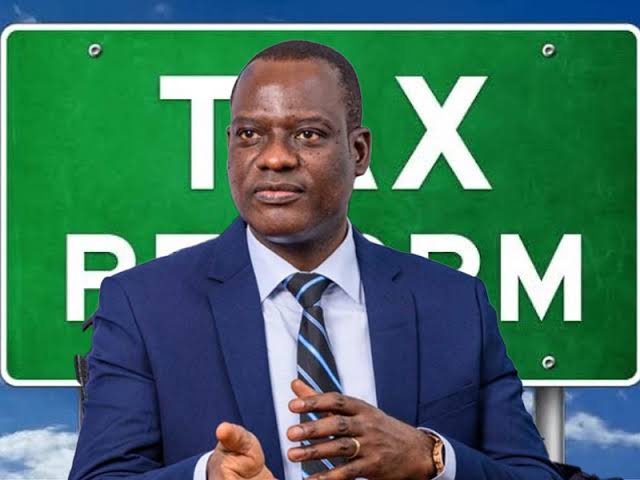
The Chairman of the Presidential Tax Reforms Committee, Taiwo Oyedele revealed this during an interview on Channels TV Politics Today monitored by our Correspondent .
He said that the N50tn tax revenue would move Nigeria’s Tax to Gross Domestic Product ratio to between 18 and 20%.
According to him, Nigeria’s tax to GDP ratio currently stands at 13%, which is far lower than the 23%, which is earned by a country like South Africa.
The FIRS earned about N21.6trn from tax revenue in 2024.
This is just as Nigeria’s newly enacted tax reform laws will officially take effect on January 1, 2026, providing a transitional window for proper implementation and alignment with the national fiscal calendar.
This was announced on Thursday by the Executive Chairman of the National Revenue Service ,NRS, Zacch Adedeji, following the presidential signing of the new tax laws at the State House.
Addressing journalists, Adedeji said the six-month lead time will allow government agencies, businesses, and other stakeholders to align systems, conduct sensitisation, and ensure a seamless rollout in line with international standards.
“Based on best practices globally, because when you have this kind of change, it takes time for all stakeholders—participants, operators, and regulators—to adjust the system.
“So with the magnanimity of the National Assembly and Mr. President, the effective date will be January 1, 2026, by the special grace of Almighty God”, he said.
Adedeji stressed that implementing such significant reforms mid-year could disrupt fiscal consistency and institutional planning.
“When you have this kind of change, it’s not what you do mid-year. It’s better to start from the beginning of the year”, he added.
He further noted that the January start date was carefully chosen to align with the government’s annual budget cycle, providing the needed time for widespread public education and institutional readiness.
Joining Adedeji at the briefing, Chairman of the Presidential Fiscal Policy and Tax Reforms Committee, Mr. Taiwo Oyedele, described the reforms as “pro-poor” and tailored to protect low-income earners and small businesses.
“More than one-third of workers in both the private and public sectors will now be completely exempt from PAYE. They will not have to pay personal income tax”, Oyedele revealed.
He added that the new laws introduce extensive tax exemptions and a simplified framework to encourage enterprise growth and fairness in the system.
“Over 90% of small, micro, and nano businesses will no longer need to worry about corporate income tax, VAT, withholding tax, or PAYE for their employees”, he disclosed.
Oyedele emphasized that the reforms aim to make Nigeria’s tax system more inclusive, transparent, and development-oriented, ensuring that the most vulnerable are protected while expanding the tax net in a more equitable manner.