Nigeria and Ghana have jointly condemned the continuing wave of anti-immigrant violence in South Africa and are pushing for the issue of what they described as “Afrophobia” to be formally discussed at the next African Union (AU) Summit.
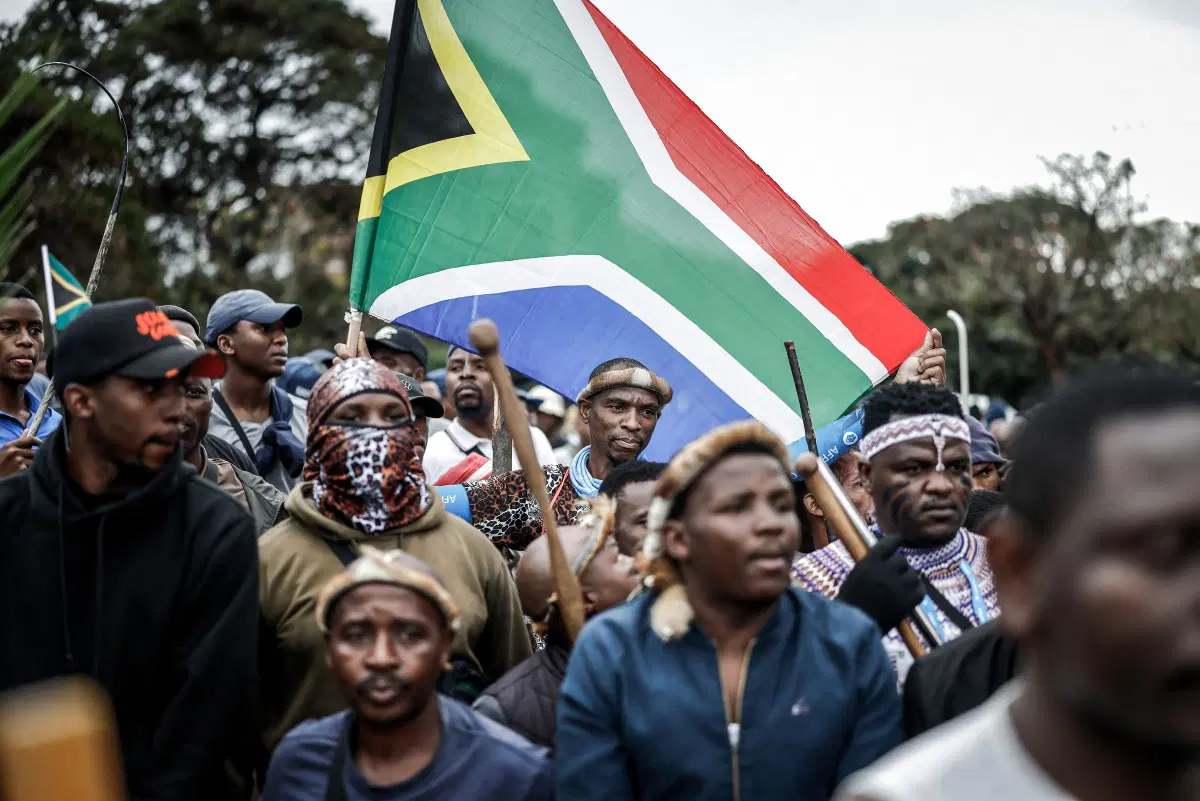
The renewed call follows weeks of violent protests and unrest across parts of South Africa targeting undocumented African migrants, forcing tens of thousands to flee the country.
According to an AFP compilation based on figures released by African governments repatriating their citizens, nearly 150,000 people have left South Africa in recent weeks due to the violence.
The matter featured prominently during a meeting between Nigeria’s Minister of Foreign Affairs, Sola Enikanolaiye, and Ghana’s Minister for Foreign Affairs, Samuel Okudzeto Ablakwa, on Friday.
The bilateral meeting took place on the sidelines of the Economic Community of West African States (ECOWAS) ministerial gathering held in Liberia.
In a statement issued on Saturday, the Nigerian government said both ministers discussed the growing attacks against African nationals living in South Africa.
According to the statement, the two countries strongly condemned the violence and called for urgent continental intervention.
“They condemned all forms of xenophobia, Afrophobia, intolerance and violence against fellow Africans,” the statement said.
Nigeria and Ghana also stressed the need for African leaders to adopt a coordinated regional and continental strategy capable of addressing both the immediate violence and the underlying causes fueling anti-immigrant sentiments.
The two ministers agreed that the issue should be tabled for discussion during the next African Union Summit scheduled to hold early next year.
The governments argued that the continued attacks threaten African unity, regional integration and the principle of free movement across the continent.
Nigeria and Ghana have both undertaken emergency evacuation exercises following the violence.
The Nigerian government confirmed that it has successfully evacuated 1,490 of its citizens from South Africa since the unrest intensified.
Similarly, Ghana has repatriated at least 926 of its nationals.
South Africa has historically attracted migrants from across Africa because of its relatively advanced economy and employment opportunities, making it one of the continent’s leading destinations for foreign workers.
However, periodic outbreaks of violence targeting foreign nationals have continued to raise concerns among neighbouring countries and regional organisations.
The latest development follows an earlier diplomatic effort by Ghana.
In May, Ghana formally requested that the African Union hold a debate on what it described as xenophobic attacks against African migrants in South Africa.
It remains unclear whether that proposed discussion was eventually held.
Meanwhile, diplomatic relations between Ghana and South Africa have also been affected by the crisis.
Earlier this month, Ghana announced that a planned official visit by South African President Cyril Ramaphosa to Accra had been postponed.
Although no official reason was provided at the time, the postponement came amid growing diplomatic tensions surrounding the attacks on foreign nationals.
Nigeria and Ghana maintain that stronger cooperation among African governments is essential to preventing future incidents and preserving the continent’s commitment to unity and peaceful coexistence.