By Blessing Otobong-Gabriel
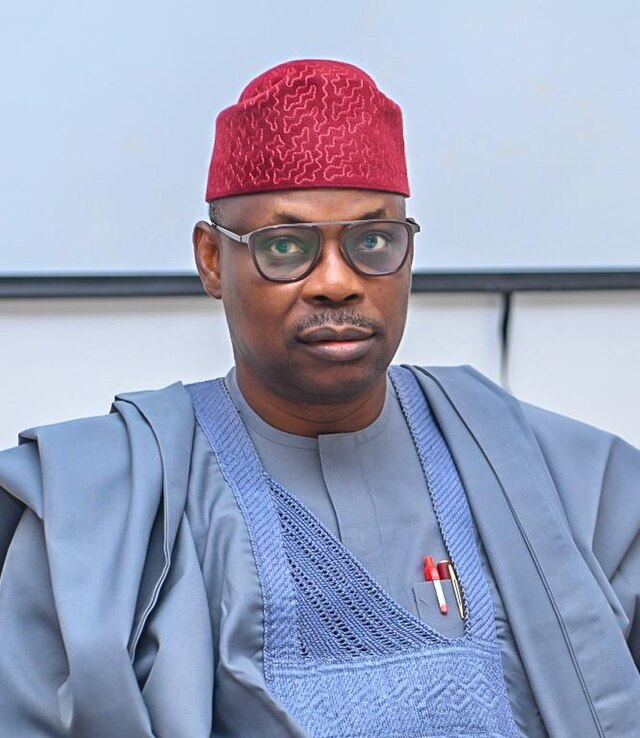
Minister of State for Health and Social Welfare, Dr Iziaq Salako has called for intensified cross-border collaboration to combat Africa’s growing cancer crisis, revealing sweeping reforms, expanded cancer infrastructure and ambitious prevention strategies under President Bola Tinubu’s administration.
Speaking at Africa Oncology Collaboration and Innovation Forum held between December 5-8 in Luxor, Egypt; Salako said Africa must urgently unite to address what he described as a silent epidemic claiming more lives than war, AIDS, malaria and tuberculosis combined on the continent.
Deputy Director/Head, Information and Public Relations, Alaba Balogun in a statement, revealed that Africa recorded 1,185,216 new cancer cases and 763,843 related deaths, figures largely driven by lifestyle and environmental risk factors, ageing populations, late detection and weak treatment infrastructure.
He noted that Nigeria alone accounts for 10.5 percent of Africa’s cancer burden, ranking among the top three on the continent alongside Egypt and South Africa.
The minister announced that Nigeria has significantly scaled up its national cancer control efforts, citing the establishment of the National Institute for Cancer Research and Treatment in 2017 as the foundation of recent progress.
He said in the last 31 months under President Tinubu’s leadership, political will and budgetary allocations for oncology care have increased markedly.
Key interventions include the establishment of six new cancer centres of excellence across the country, procurement of specialised oncology equipment, expanded human capital development in cancer care and enhanced cross-border collaboration.
He also revealed the development of two landmark national policy documents designed to transform Nigeria’s cancer response: National Nuclear Medicine Policy and Strategic Plan and the Nigeria National Cancer Control Plan 2026–2030.
The new Cancer Control Plan, scheduled for launch in the first quarter of 2026, aligns with global frameworks such as WHO Global Breast Cancer Initiative, Global Initiative for Childhood Cancer and the Global Cancer Declaration by the Union for International Cancer Control. It outlines strategies for prevention, early detection, treatment, palliative care, survivorship, research, resource mobilisation and quality improvement.
In a major public health milestone, Dr Salako disclosed that Nigeria, through its National Task Force on Cervical Cancer Elimination, is aiming to screen at least 50 per cent of eligible women by 2027 and treat 100 percent of detected precancerous lesions.
He highlighted the success of the HPV vaccination programme, introduced in October 2023, which had already immunised nearly 15 million Nigerian girls aged nine to 14, positioning Nigeria as one of Africa’s most aggressive nations in cervical cancer prevention.
To reduce the catastrophic cost of cancer treatment, Salako announced that the National Health Insurance Programme is finalising plans to introduce a health insurance scheme that includes cancer care coverage.
In addition, it is implementing a National Cancer Health Fund and supporting the Nigeria Cancer Society’s private-sector-led Cancer Intervention Fund to ease the financial burden on patients and families.
The minister declared Nigeria’s support for the proposed African Oncology Network, describing it as a crucial platform to consolidate expertise, mobilise investments and promote equitable access to quality cancer care across the continent.
The minister described the facility as a phenomenal African achievement driven by vision, commitment and professional dedication.
He called for a shift in continental priorities, saying Africa must move healthcare, especially cancer care, to the centre of its integration agenda in line with the African Union’s Agenda 2063.
He stressed that beyond politics, security and trade, the continent must embrace healthcare Pan-Africanism as a collective response to shared health challenges.