By Blessing Otobong-Gabriel
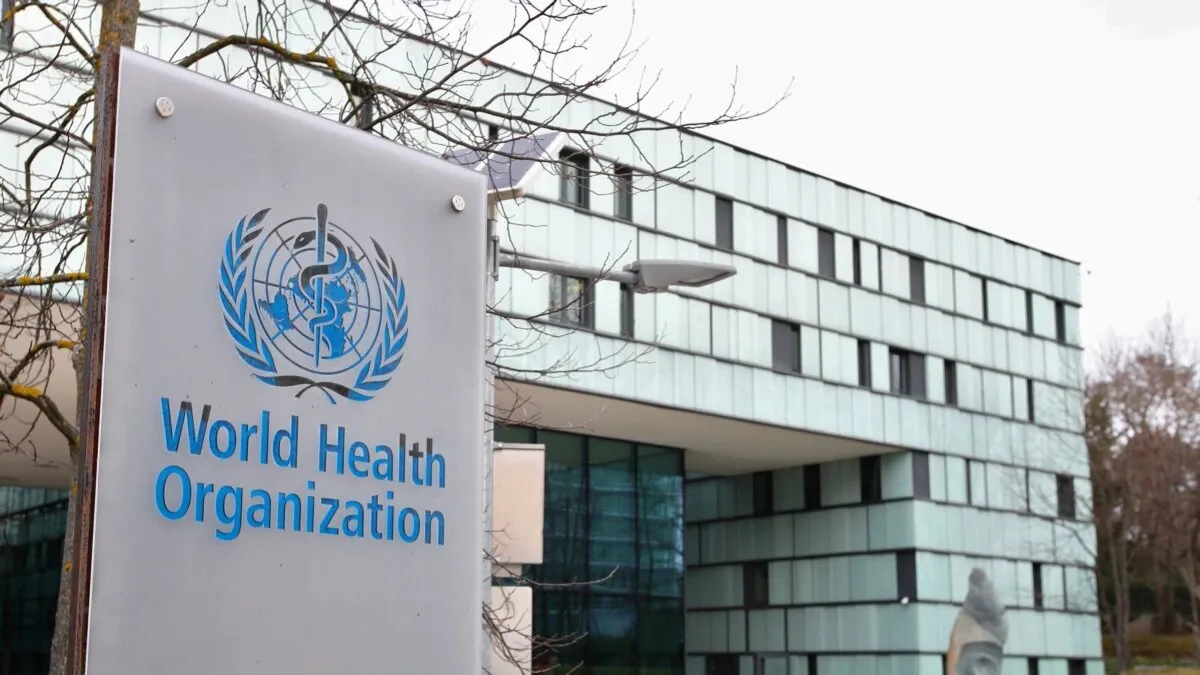
Minister of State for Health and Social Welfare, Dr Iziaq Salako said Nigeria has set up measures to achieve the three ambitious targets of the World Health Organisation’s, WHO, Global Strategy for the elimination of cervical cancer, endorsed in 2020, aimed at eliminating the disease in Nigeria by 2030.
He disclosed this in his keynote address at the flag-off of cervical cancer screening programme for the South-East zone in Owerri, in collaboration with the Partnership for Cervical Cancer Elimination in Nigeria, PECCIN, and the Imo State government.
Dr Salako revealed that the strategy set a clear global roadmap anchored on three ambitious targets: that by 2030, 90 percent of girls should be fully vaccinated against Human Papillomavirus, HPV, by age 15; 70 percent of women should be screened using a high-performance test by ages 35 and 45; and 90 percent of women identified with cervical disease should receive appropriate treatment and care.
The minister described the inauguration of the screening programme and the investments being made, as a clear testimony that Nigeria is formally committed to this global strategy as part of a sustained and structured national response.
He appreciated President Bola Tinubu and the First Lady, Senator Oluremi Tinubu for their personal donation of N1 billion to the National Cervical Cancer Taskforce.
Salako noted that cervical cancer screening programme and the broader cancer control agenda of the Federal Ministry of Health and Social Welfare reflects the strategic emphasis of the President Tinubu-led federal government on prevention as the best and most cost effective approach to control diseases of public health significance including cancers in our country.
He stated that the federal government in recognising cancer as a national health priority, in 2023, established the National Institute for Cancer Research and Treatment, NICRAT, a dedicated institutional framework to anchor cancer research, policy and treatment at the highest scientific level.
The minister commended the Director-General of NICRAT, Professor Usman Aliyu and his team for the ongoing efforts to lay a solid foundation for the agency.
He announced that the first phase of implementation in Imo State will focus on delivering cervical cancer screening services using high-performance and evidence-based methods to eligible women across selected health facilities and communities.
He noted that it will strengthen local capacity for service delivery coordination, data collection and management, community engagement and referral systems, emphasizing that it is not a one-time intervention, but the foundation of a permanent and scalable cervical cancer screening infrastructure in Imo State.
In his inaugural speech, Governor Hope Uzodimma stressed the significance of health in the development of a nation and urged traditional and religious leaders, market women and civil societies in the state to embark on massive campaign with a view to sensitise women to present themselves for the screening programme.
He expressed appreciation to the president for providing an enabling environment, the Federal Ministry of Health and global development partners for their unwavering support to the health sector.
In her remarks, the wife of the Imo State governor, Chioma Uzodimma, expressed optimism that the programme will expand access to quality cervical cancer screening, promote early detection and awareness, strengthen referral pathways for diagnosis and treatment, and build lasting local capacity within our health system.
She noted that women across selected facilities and communities in Imo State will benefit directly from the first phase of implementation, as a firm foundation is being laid for broader reach and sustained impact.
The director-general, National Institute of Cancer Research and Treatment described the event as a significant landmark, pointing out that cervical cancer continues to impose a significant toll on women in Nigeria despite being preventable and highly treatable when detected early.
He assured that the institute remains resolute in its mandate to provide strategic leadership, technical coordination and evidence-driven direction for cancer control in Nigeria.
“This marks the commencement of an ambitious yet necessary target to screen at least 10,000 women across Imo State, while simultaneously strengthening the state’s capacity to scale and institutionalize routine cervical cancer screening services”.
Professor Aliyu explained that by design, the programme goes beyond a one-off intervention to a strategic collaboration between the institute and the sub-national stakeholders, stressing that it is intended to establish a sustainable and resilient system in which early detection becomes standard practice rather than the exception, which requires strong and coordinated partnership .
He cited the partnership for cervical cancer elimination programme in Nigeria as a clear demonstration of what is possible when strategic intent is matched with effective collaboration and disciplined implementation.
The director-general expressed profound gratitude to the president whose renewed health agenda has created the political will and policy framework that makes broad public health intervention such as this possible.
Earlier in his remarks, the Chairman, National Taskforce For Cervical Cancer Elimination Initiative, Professor Isaac Adewale disclosed that the first rollout exercise will screen 60,000 Nigerians in six states including Imo, Niger, Ogun, Bauchi, Rivers and Sokoto and thereafter, it evolve into subnationals and local government areas, subsequently enabling PHCs to conduct HVP screening for women.