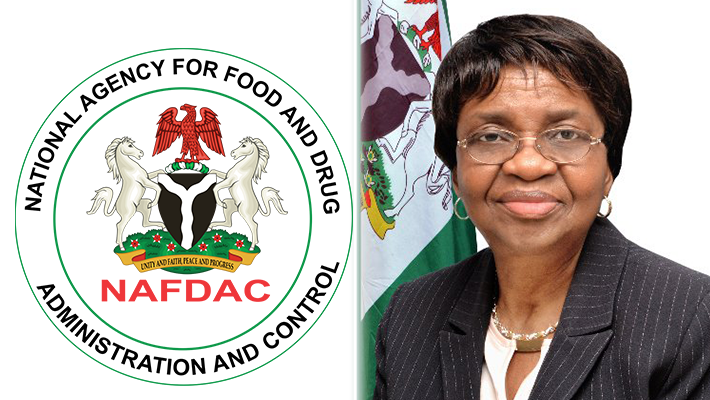
Director-General of the National Agency for Food and Drug Administration and Control, Professor Mojisola Adeyeye, has called for strong and transparent regulation of psychotropic medicines.
She said this is vital to build public trust and ensure safe access to mental health care in Nigeria.
Adeyeye stated this at Vanguard’s third Mental Health Summit held Friday in Lagos.
She emphasised that mental health care must go hand in hand with strict oversight of controlled substances to prevent abuse and guarantee the availability of safe and effective medicines.
Adeyeye said, “Mental health is a state of mental well-being that enables people to cope with the stress of life.
“NAFDAC’s mission goes beyond regulation; it is about protecting lives,” she said.
Adeyeye stressed that mental health is a basic human right that every Nigerian is entitled to, noting that no one should be denied access to care or made to feel ashamed for seeking help.
“Mental health is a basic human right — every Nigerian is entitled to it,” she added.
The director-general noted that stigma remains a major barrier to mental health care access, discouraging many from seeking medical help despite the availability of effective drugs.
“People run away from drugs for mental illness because of stigma. There are drugs for depression, anxiety and others along the line,” she said.
She warned that poor regulation can lead to drug abuse and misuse, while strong regulation ensures public safety and builds trust in mental health care.
“Poor regulations can lead to drug abuse and misuse. Strong regulation ensures safety,” she said, stressing that collaboration across all sectors is essential in achieving national goals around drug control and mental health advocacy.
“Collaboration is key across sectors. We will work together to fulfil the mandate of the nation to stop drug abuse.
“NAFDAC has a programme called Catch Them Young. Beyond going to different places, we go to schools to train children. That way, every child talks about drug abuse and stigmatisation. We work with faith-based organisations to create a stigma-free environment for mental health awareness,” she explained.
She added that reducing stigma around mental health and encouraging young people to speak up and seek help are essential to building a healthier and more resilient society.
Adeyeye reaffirmed NAFDAC’s commitment to protect lives through transparent, science-based regulation and collaboration with partners across the public and private sectors to ensure safe access to psychotropic medicines for all Nigerians.
Mental health remains one of the most misunderstood and under-addressed public health challenges in Nigeria.
Depression, anxiety, substance abuse, trauma and bipolar disorders are increasingly prevalent, yet few people seek or receive adequate care. According to the World Health Organisation, WHO, about one in four Nigerians — nearly 50 million people — suffer from some form of mental illness. Shockingly, less than 10 percent receive any form of treatment.
Mental illness is often perceived as weakness, spiritual affliction or moral failure. Many suffer in silence, fearing judgment or rejection from family, employers, religious circles or even healthcare providers. For others, treatment options are simply unaffordable or unavailable, especially outside major cities.