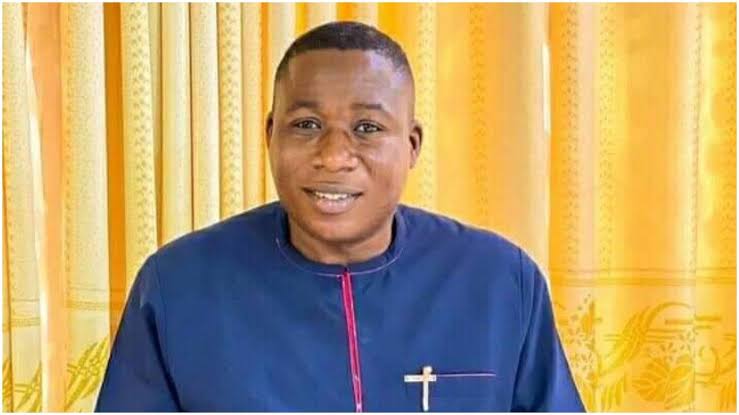
Yoruba Nation activist, Sunday Adeyemo, popularly known as Sunday Igboho, has reiterated that his advocacy for improved security across the South-West and other parts of Nigeria is aimed at criminal elements threatening lives and property, not at any ethnic group.
Igboho made the clarification on Monday in response to a call by the Concerned Fulani People of Nigeria (CFPN), which urged President Bola Ahmed Tinubu and Oyo State Governor Seyi Makinde to caution him over his comments regarding insecurity in the region.
Rejecting the group’s position, Igboho described the demand as a misrepresentation of his long-standing views and argued that it distracts attention from the urgent challenge of insecurity facing communities across Nigeria.
In a statement issued through his spokesman, Olayomi Koiki, the activist stressed that the fight against kidnapping, banditry, rape, violent attacks, and killings should not be viewed through ethnic, religious, or political lenses.
The statement read: “It is obvious that since my agitation for improved security in the South-West and other parts of the country, I have never declared war against any ethnic group but have consistently voiced my position against criminal elements responsible for kidnapping, vicious killings, rape and violent attacks across Yoruba communities.”
“The call by this faceless CFPN is myopic, uninformed and ridiculous. Our concern and primary focus have always been the protection of innocent lives and the preservation of peace, security and justice.”
“We will never advocate hatred against any ethnic group. Our position has always been very clear: criminals should be identified, arrested and prosecuted by the law enforcement agencies regardless of their ethnic, religious and political inclinations because crime has no colour or race.”
“It is absolutely wrong and misleading to portray our reaction to security breaches in the South-West as ethnic profiling when the rights to life, freedom and economic livelihoods of our people are being threatened by mindless hoodlums who are obsessed with gruesome killings and kidnapping of innocent people in rural communities.”
Igboho maintained that the growing security crisis remains a national issue that requires collective action from citizens, communities, and security institutions rather than divisive narratives based on ethnicity.
He also commended the efforts of security agencies in tackling criminal activities across the country.
“I want to specifically commend the noble efforts of the Inspector-General of Police, the Director-General of the Department of State Services (DSS), and heads of other security agencies for their sustained onslaught against criminals in the South-West and other parts of the nation.
“While we would not hesitate to collaborate with security agencies in order to strengthen peace and safety in our communities in the South-West, the collective task of ensuring a secure environment in our society should not be left to the government and stakeholders in the security sector alone,” the statement added.
The activist further argued that those calling on the government to caution him should instead focus on supporting stronger measures to combat criminal networks, protect vulnerable communities, and secure justice for victims of kidnapping and other violent crimes.
He concluded by reiterating that Nigeria’s security challenges can only be addressed through national unity, effective law enforcement, and a collective commitment to fighting criminality regardless of ethnic or religious identity.