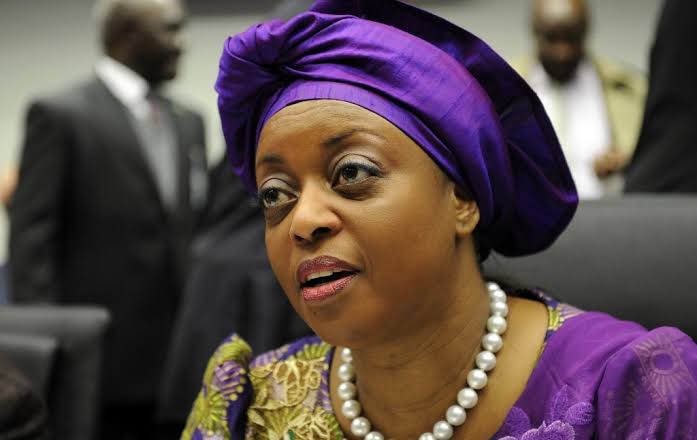
Former Minister of Petroleum Resources, Diezani Alison-Madueke, has claimed that her anti-corruption efforts in Nigeria’s oil industry and the powerful interests they disrupted contributed to the legal challenges she faced after leaving office.
Speaking in an interview with the BBC following her acquittal in a London court, Alison-Madueke said investigators from the UK’s National Crime Agency failed to properly understand the complexities of Nigeria’s oil sector before pursuing allegations against her.
She argued that she was treated as “low-hanging fruit” and insisted that the authorities overlooked the reforms she attempted to introduce during her tenure as Petroleum Minister.
“I think that being such a low-hanging fruit in terms of opposition and the accusations they were throwing at me throughout that period, I wish they had taken a step back and looked with a little more depth at the actual truth of the situation on ground,” she said.
Alison-Madueke added that her attempts to confront corruption within the oil industry created powerful enemies among entrenched interests in the sector.
“I was the first female to enter this sort of position as petroleum minister and as head of OPEC in a very misogynistic society,” she stated.
The former minister, who served under former President Goodluck Jonathan between 2010 and 2015, was recently cleared of five counts of bribery and one count of conspiracy to commit bribery by a jury at Southwark Crown Court after a lengthy trial.
She also questioned how evidence in the case was handled, alleging that key documents seized from her Abuja residence in 2015 were never properly accounted for during the proceedings.
According to her, the missing materials included financial records she believed would have supported her defence by showing reimbursement of certain payments.
When asked who should bear responsibility for the collapse of the prosecution’s case, she said: “There’s a bit of blame everywhere.”
She further argued that Nigerian authorities should review their investigative processes in politically sensitive cases, especially when such matters involve international jurisdictions.
“The Nigerian authorities need to look into the processes and practices that they deploy in these cases,” she said.
Alison-Madueke also warned that foreign investigations into politically exposed persons require greater sensitivity to local political and institutional realities.
Her comments come days after her acquittal alongside oil executive Olatimbo Ayinde and her brother Doye Agama, bringing an end to one of the most closely watched corruption trials involving a former Nigerian public official in the United Kingdom.