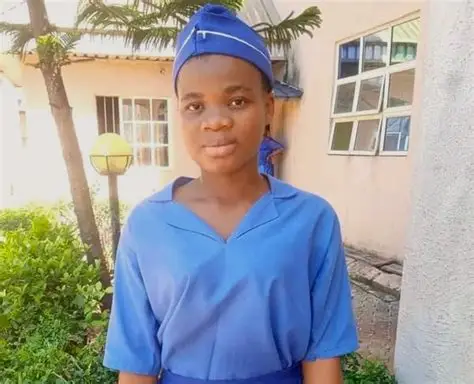
Three years after the controversy that shook Nigeria’s education sector, the three-year suspension imposed on Anambra student, Ejikeme Joy Mmesoma, by the Joint Admissions and Matriculation Board (JAMB) is expected to lapse this July, paving the way for her to participate once again in the Unified Tertiary Matriculation Examination (UTME).
Mmesoma attracted nationwide attention in July 2023 after publicly claiming she scored 362 in the UTME, a result that would have placed her among the highest-performing candidates in the country that year.
The claim initially generated widespread sympathy after she accused JAMB of refusing to acknowledge what she believed was her outstanding performance.
However, the issue soon developed into one of Nigeria’s most talked-about examination scandals after JAMB rejected the result she presented, insisting that it had been falsified.
According to the examination body, Mmesoma’s authentic score was 249, not the 362 she publicly displayed.
JAMB alleged that she manipulated the examination result using her mobile phone before printing a forged copy at a cybercafé.
The board said several inconsistencies exposed the document as fake, including discrepancies in her registration number, date of birth, examination centre and the format of the result notification.
It also noted that the template used to generate the document had been discontinued since 2021.
Despite initially insisting that she downloaded the result directly from JAMB’s portal and denying any wrongdoing, the Anambra State Government established an independent investigative panel to determine the facts surrounding the controversy.
The panel, headed by Professor Nkemdili Nnonyelu, questioned JAMB officials, Mmesoma, representatives of her school and other relevant witnesses before reaching its conclusions.
In its report released on July 8, 2023, the panel affirmed that Mmesoma’s actual UTME score was 249 and concluded that the document showing a score of 362 had been manipulated.
According to the findings, Mmesoma admitted during the investigation that she personally altered the result using her Airtel mobile phone before taking it to a cybercafé for printing.
The panel further stated that she accepted responsibility for her actions, acknowledged acting alone and apologised to JAMB, the Anambra State Government and her school.
Following the outcome of the investigation, JAMB invalidated the forged result and imposed a three-year ban on her from participating in any examination conducted by the board.
The examination body maintained that the disciplinary action was consistent with its regulations on examination malpractice and result falsification.
“In the meantime, the management of the Board, after considering the weighty infraction committed by Ms. Ejikeme Joy Mmesoma, and in line with its established procedures, has withdrawn her 2023 UTME result and also barred her from sitting the Board’s examination for the next three years,” JAMB spokesman Fabian Benjamin said at the time.
JAMB also insisted throughout the controversy that its examination system remained secure and uncompromised, stressing that the issue involved the manipulation of a result slip rather than any breach of its database.
The incident had significant consequences for the student.
Innoson Vehicle Manufacturing withdrew the scholarship it had previously awarded her after the alleged outstanding result became the subject of controversy.
Her father, Romanus Ejikeme, later apologised publicly to JAMB and Nigerians, saying his daughter failed to disclose the truth to him at the appropriate time.
“My daughter didn’t open up to me on time. When I realised the mistake she did, I blamed her a lot but I’m still apologising to JAMB and Nigerians to pardon her,” he said during an interview with the Nigerian Television Authority.
Anambra State Governor, Prof. Chukwuma Soludo, subsequently directed that Mmesoma undergo three months of psychotherapy and counselling.
The controversy generated widespread reactions across the country, drawing comments from political leaders, education stakeholders and civil society organisations.
Although some individuals initially questioned JAMB’s handling of the matter, many later accepted the board’s position after Mmesoma admitted to manipulating the result before the state investigative panel.
The House of Representatives also called on JAMB to suspend the implementation of the ban pending investigations, while former Minister of Education, Oby Ezekwesili, and former Minister of Aviation, Osita Chidoka, advocated counselling and rehabilitation instead of sustained public condemnation.
With the three-year suspension expected to expire this month, Mmesoma will once again become eligible to register for the UTME if she chooses to continue her pursuit of admission into a tertiary institution.
Her case remains one of Nigeria’s most notable examination fraud controversies and continues to be referenced in conversations surrounding examination integrity, digital result verification and the consequences of academic dishonesty.