A recently signed agreement aimed at ending the Middle East war is already facing significant challenges after planned negotiations in Switzerland were postponed and fresh clashes erupted between Israel and Hezbollah in Lebanon.
The setbacks emerged just days after Iran and the United States agreed to a preliminary framework designed to halt hostilities and pave the way for broader diplomatic negotiations.
Diplomatic sources confirmed that mediators, including representatives from Pakistan, Saudi Arabia and Türkiye, are expected to meet in the Egyptian city of Alamein on Sunday to discuss the implementation of the agreement and explore ways to sustain the fragile peace process.
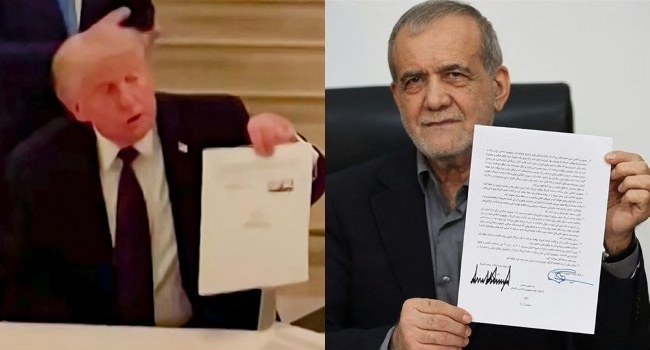
Preparations had initially been made for Iranian and American delegations to meet at the Swiss resort town of Burgenstock overlooking Lake Lucerne. The discussions were expected to focus on implementing the recently signed accord between US President Donald Trump and Iranian President Masoud Pezeshkian.
However, the planned talks were postponed.
The Swiss Foreign Ministry confirmed the development, stating that negotiations involving the United States, Iran, Qatar and Pakistan had been delayed, although preparations at the venue would continue while a new date is being considered.
The postponement followed an announcement from the White House that US Vice President JD Vance would no longer attend, citing logistical difficulties surrounding the negotiations.
Despite the delay, Washington indicated that technical discussions would begin as soon as conditions permit.
Meanwhile, Iran’s lead negotiator, Mohammad Bagher Ghalibaf, warned that Tehran would respond forcefully to any violation of the agreement or attempts to impose additional demands beyond the agreed framework.
According to him, Iran remains prepared to defend its interests and would not hesitate to retaliate if it believes the deal has been undermined.
Lebanon Violence Threatens Fragile Progress
The agreement was also intended to halt hostilities between Israel and Hezbollah in Lebanon.
However, the ceasefire came under pressure after the Israeli military announced a series of fresh strikes against Hezbollah positions.
Lebanese health authorities reported that at least 18 people were killed in the attacks.
Israel also confirmed that four of its soldiers were killed in southern Lebanon, marking the first Israeli military fatalities since the agreement was signed.
The deaths triggered strong reactions within Israel, with National Security Minister Itamar Ben Gvir calling for a tougher military response.
The renewed violence has raised concerns that tensions in Lebanon could derail broader diplomatic efforts involving Iran and the United States.
Iran Signals Cautious Support
Iran’s Supreme Leader, Ayatollah Mojtaba Khamenei, revealed that he approved the agreement despite having reservations about certain aspects of the arrangement.
According to him, the decision was based on commitments made by Iranian officials who assured him that the country’s interests and rights would be protected throughout the process.
Khamenei also accused Washington of using extensive political and military pressure to secure the agreement, arguing that the United States pursued the deal because it had limited alternatives.
His remarks reflected growing scepticism within segments of Iran’s political establishment regarding American intentions.
Strait of Hormuz and Sanctions Relief
One of the key objectives of the agreement is the reopening of the Strait of Hormuz, a crucial maritime route through which a significant portion of the world’s oil and gas shipments pass.
The waterway had been effectively disrupted during the conflict, contributing to rising global energy prices and increased uncertainty in international markets.
Although the US military has lifted its naval blockade of Iranian ports, maritime activity in the region remains limited.
Iranian authorities have introduced new oversight measures requiring vessels seeking passage through the Strait of Hormuz to obtain approval from a newly established government body responsible for monitoring traffic in the area.
The agreement also includes provisions aimed at easing economic pressure on Iran.
Under the framework, the United States has committed to removing certain oil-related sanctions that have severely affected Iran’s economy.
In addition, both sides are expected to negotiate a final arrangement concerning Iran’s nuclear programme.
If a comprehensive deal is reached, the agreement provides for the creation of a reconstruction fund worth approximately $300 billion, supported by regional partners, to assist with rebuilding efforts and economic recovery.
Trump Defends Decision to End Conflict
President Trump defended the agreement against critics who argued that military pressure should have continued.
He maintained that extending the conflict would have achieved little beyond further destabilising the region and disrupting global energy supplies.
According to Trump, continued military operations could have prolonged the closure of the Strait of Hormuz and worsened economic conditions worldwide.
He argued that diplomacy offered a more sustainable path toward stability and security in the Middle East.