By Blessing Otobong-Gabriel
Igbo Unification Movement and ‘Ndi Na Asu Bia’ Socio-Cultural Organisation have demanded more federal projects across Igbo land.
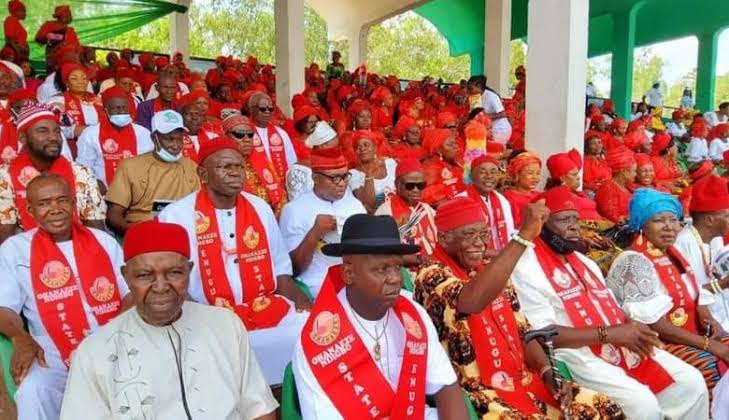
The group made the demand after a two-day gathering of Igbos in Asaba, the Delta State capital.
The demand is coming on the heels of renewed calls for equity, unity and development by Igbos in Nigeria, particularly amid ongoing concerns about marginalisation in federal infrastructure and political representation.
Their position was contained in a communique signed by the President and Secretary/Legal Adviser, Kingsley Kainebi and Ofochi Atagana respectively, and the Chairman, Local Organising Committee for the Igbo Unification Movement and ‘Ndi Na Asu Bia’ Socio-Cultural Organisation, Cosmas Chikeobi Agada, which was made available to journalists yesterday.
It reads, “We, the Igbos, are demanding more federal projects across Igbo land, even as we are calling for greater unity of all Igbos in Nigeria.
“We urge President Bola Tinubu to immediately lift the economic blockade unfairly imposed on Igbo land almost 60 years ago, which closed the main coastal ports of Port Harcourt, Bonny and Opobo.
“We appeal to the president to dredge, modernise and functionally reopen those coastal ports to re-trigger a pole of development in the east, with spillover effects to the Middle Belt and down to Lake Chad.
“Igbo dialects are close, mutually intelligible and facilitate easy and smooth Igbo interactions.
“The Igbos thank President Tinubu for the perceived gradual improvement in security nationwide, but a lot still needs to be done. The Igbos are in full support of the quest for Anioma State, for the sake of equity and justice to the Igbo-speaking group in Nigeria.”
The communique stressed the unity of Igbo-speaking people and condemned those they described as entities and circles that either sponsor or permit themselves as instruments of division, dismemberment and land-locking.
Igbo Unification Movement explained the historical grievances, regional identity dynamics and political motivation behind the movement’s communique and also highlighted how historical exclusion, geopolitical fragmentation and economic neglect continue to drive Igbo advocacy for unity and federal attention.