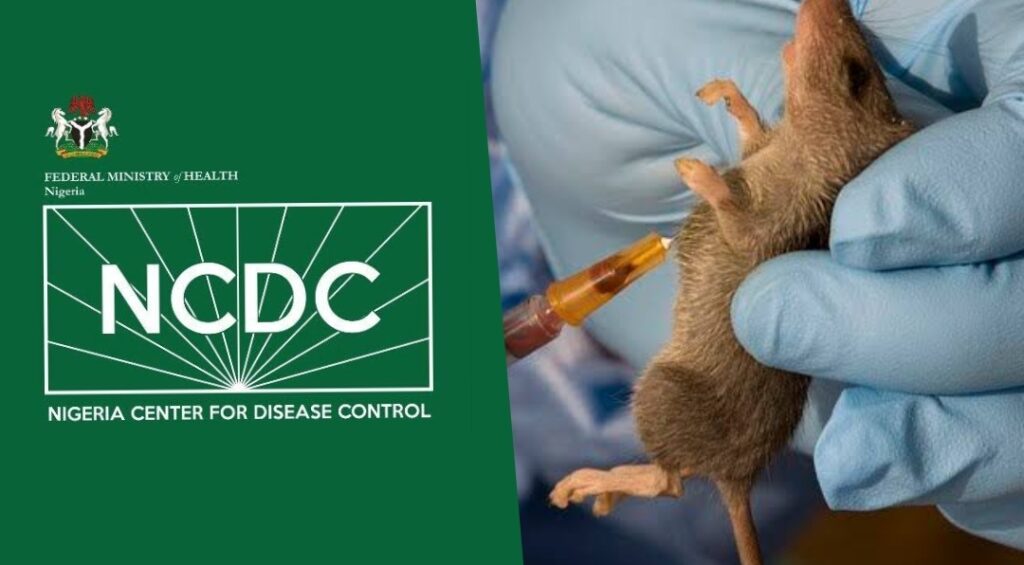
The Nigeria Centre for Disease Control and Prevention (NCDC) has expressed renewed concern over the continued spread of Lassa fever, revealing that the disease has claimed 221 lives nationwide in 2026 as fresh infections continue to rise across several states.
According to the agency’s latest epidemiological reports covering Weeks 24, 25 and 26, confirmed infections have increased consistently over the three-week period, indicating renewed transmission in affected communities.
The reports showed that Nigeria recorded 13 confirmed cases in Week 24, which rose to 22 cases in Week 25 before climbing further to 31 confirmed infections in Week 26.
By the end of Week 26, which covered June 22 to June 28, the country had recorded a cumulative total of 922 confirmed cases and 221 deaths.
The NCDC said this translates to a case fatality rate (CFR) of 24.0 per cent, considerably higher than the 18.7 per cent recorded during the corresponding period in 2025.
According to the reports, the latest 31 confirmed infections were detected in Ondo, Taraba, Benue and Bauchi states, with Ondo and Bauchi continuing to rank among the country’s most affected locations.
The Week 25 report recorded 22 confirmed cases from Ondo, Taraba, Benue and Bauchi states, while the Week 24 report documented 13 infections from Ondo, Edo, Taraba, Benue and Bauchi.
The agency noted that despite intensified surveillance, laboratory testing and public health interventions, the outbreak has now spread across 23 states and 111 local government areas.
The NCDC stated that five states account for the overwhelming majority of confirmed cases recorded so far this year.
According to the agency, Bauchi, Ondo, Taraba, Benue and Edo collectively contributed 85 per cent of all confirmed infections in 2026, highlighting the continued concentration of cases in established endemic areas.
The epidemiological reports also indicated that adults between the ages of 21 and 30 years remain the demographic most affected by the disease, a pattern that has remained largely unchanged since the outbreak began.
Healthcare workers also continue to face occupational exposure while treating infected patients.
The agency disclosed that one healthcare worker contracted the disease in Week 24, none was infected during Week 25, while another healthcare worker tested positive in Week 26.
The cumulative figures reveal a gradual increase in both confirmed infections and fatalities throughout the reporting period.
By the end of Week 24, Nigeria had recorded 868 confirmed cases and 216 deaths, resulting in a case fatality rate of 24.9 per cent compared to 18.9 per cent recorded during the same period in 2025.
The Week 25 report showed that confirmed infections increased to 891 cases, while deaths rose to 219, although the fatality rate declined marginally to 24.6 per cent. However, this figure remained significantly higher than the 18.6 per cent recorded during the corresponding period last year.
Public health experts have repeatedly linked the persistently high fatality rate to delays in diagnosing infected patients, late presentation at healthcare facilities and continued exposure to infected rodents, which remain the primary carriers of the Lassa virus.
The NCDC reiterated the need for Nigerians to adopt preventive measures capable of reducing the spread of the disease.
The agency advised residents to maintain proper environmental sanitation, ensure food is safely stored to prevent contamination by rodents, avoid contact with rat urine and droppings, and immediately seek medical attention if symptoms such as persistent fever, weakness, severe headache or unexplained bleeding occur.
The agency also reminded healthcare workers to continue observing strict infection prevention and control protocols while managing suspected or confirmed cases to minimise the risk of hospital-acquired infections.
Lassa fever is an acute viral haemorrhagic illness that is endemic in Nigeria and several other West African countries.
The disease is mainly transmitted through contact with food, household items or surfaces contaminated with the urine or faeces of infected multimammate rats.
Health authorities also warn that human-to-human transmission can occur, particularly in healthcare facilities where infection prevention measures are inadequate.