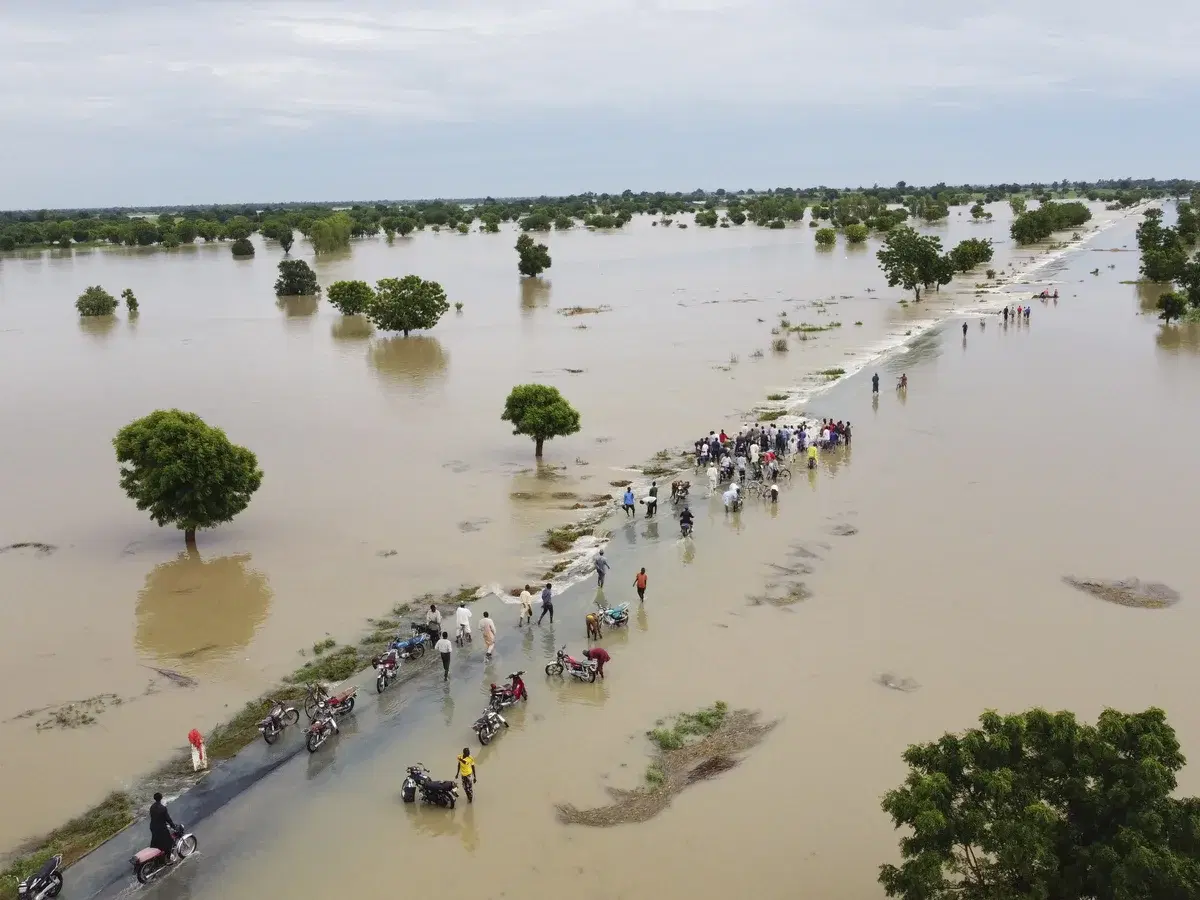
Residents of Ajah, Mafoluku and several flood-prone communities across Lagos have narrated their experiences after Thursday’s heavy rainfall triggered severe flooding that submerged roads, inundated homes and left many commuters stranded.
Speaking on Friday, residents appealed to the government to urgently address the persistent flooding, which they blamed on inadequate drainage systems and poor maintenance of existing infrastructure.
Along Muri Okunola Road in Ajah, one of the worst-hit locations, floodwaters reportedly covered about 200 metres of the roadway, forcing pedestrians to walk through waist-deep water to reach their destinations.
A resident, Mrs Rukayat, described the situation as frightening, saying many commuters had no option but to brave the flood.
“The water level was almost up to my lap. People literally had to wade through it to get home,” she said.
She explained that several motorists were compelled to turn back after discovering that their vehicles could not pass through the flooded stretch, while others abandoned their cars and completed their journeys on foot.
“The only way to pass through the water was by walking or using a tricycle. Even then, the tricycles broke down and had to be pushed,” she added.
According to her, some youths took advantage of the situation by helping stranded tricycle operators push their vehicles through the flooded sections in exchange for payment.
Rukayat said residents had repeatedly informed the relevant authorities about the flooding challenges in the area since the onset of the rainy season but claimed that no meaningful intervention had taken place.
“We reported this when the rains started, but apparently nothing has been done about the problem,” she said.
She attributed the recurring flooding to poor drainage and suspected that a major canal serving the community had become blocked.
“There is a big canal here, but I don’t know what is preventing water from flowing through it properly,” she said.
She suggested that accumulated sand deposits and overgrown vegetation might be restricting the canal’s ability to channel stormwater effectively.
Although she noted that floodwaters often recede after several hours, she said parts of the road usually remain waterlogged long after the rain stops.
Residents of Mafoluku also described widespread flooding that submerged streets, residential compounds and access roads, preventing many people from returning home after their daily activities.
Mrs Iriagbonse Okunkpolor, who resides on Agboola Street, said a routine outing became a lengthy ordeal after the downpour flooded the neighbourhood.
“I left my house to buy a few items nearby, but the rain started suddenly and flooded the entire street.
“I was stranded for hours because there was no safe way back home,” she said.
Another resident, Mr Mukaila Idris, said the force of the floodwaters made movement both risky and exhausting.
“The current was very strong. I watched people pay young men to carry them across the water because they were afraid of being swept away or falling,” he said.
According to him, only physically strong residents could safely navigate the floodwaters, while many others remained stranded until the water level gradually reduced.
Mr Williams Ekpo, a resident of the Eyinogun area, said the flooding extended beyond the roads and entered residential compounds, causing damage to household property.
“The floodwater entered our compound and damaged some household items.
“This happens almost every rainy season, yet nothing seems to be done to address the drainage problem,” he said.
The affected residents appealed to the Lagos State Government and other relevant agencies to investigate the recurring flooding and undertake comprehensive improvements to drainage infrastructure before the rains intensify further.
They warned that without urgent intervention, more communities could continue to experience avoidable destruction during the rainy season.