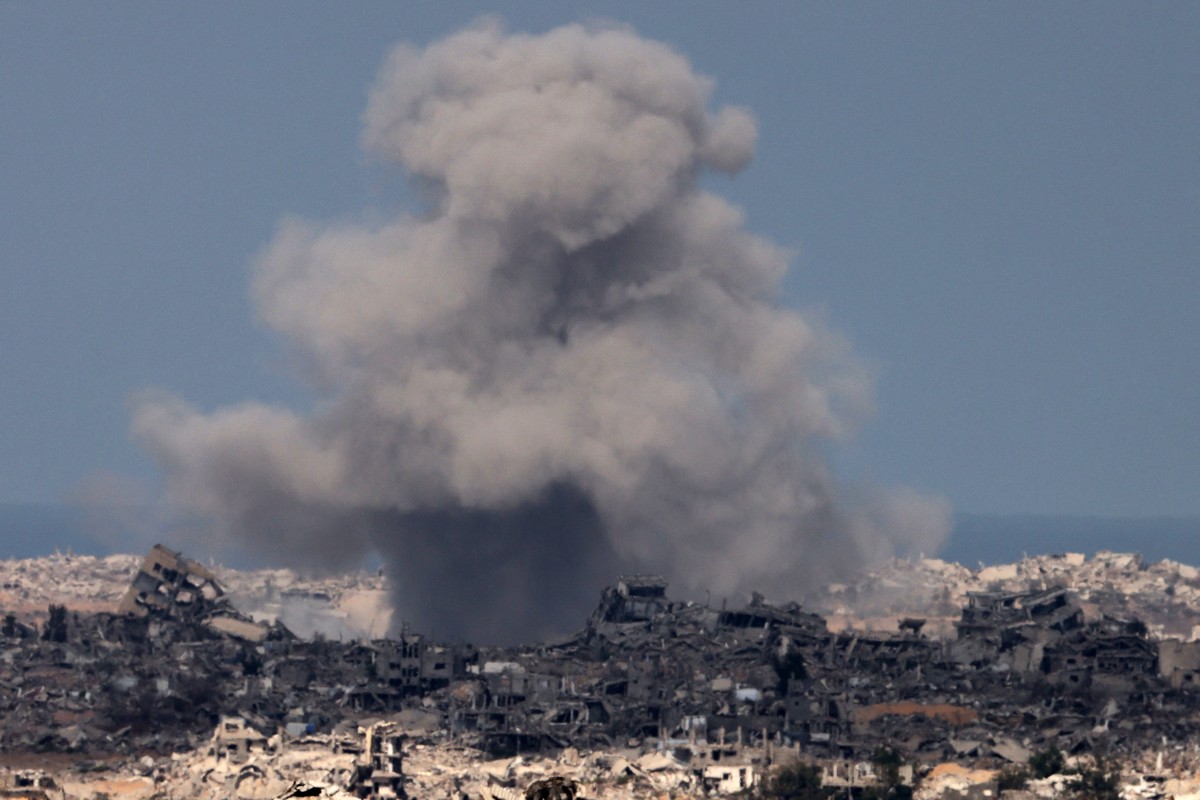
Israel and the Iran-backed Hezbollah have agreed to a new ceasefire following days of deadly clashes in Lebanon that threatened to derail a broader Middle East peace agreement, according to a United States official.
The truce comes less than two days after a wider accord aimed at ending the regional conflict was signed by Donald Trump and Masoud Pezeshkian.
The fighting had cast uncertainty over the implementation of the agreement, particularly because Iran had insisted that hostilities in Lebanon be included in any comprehensive settlement.
As a result of the renewed violence, planned negotiations between the United States and Iran in Switzerland were postponed. The talks, which were expected to focus on unresolved issues including Iran’s nuclear programme, have not yet been rescheduled.
Despite the delay, both sides signalled that diplomatic efforts remain ongoing.
According to reports, the ceasefire between Israel and Hezbollah was brokered through mediation by the United States and Qatar after consultations involving Israeli and Iranian representatives. A Gulf diplomatic source also confirmed the agreement.
Before the ceasefire announcement, Israel’s military said it had carried out strikes on more than 80 Hezbollah targets across Lebanon and claimed to have killed dozens of members of the group.
Lebanese authorities reported that at least 21 people were killed in Israeli airstrikes in southern Lebanon, while the Israeli military said four of its soldiers lost their lives during the hostilities.
The deaths sparked strong reactions within Israel, with some political figures calling for a tougher military response.
Earlier in the day, Israeli Prime Minister Benjamin Netanyahu had stated that Israeli forces would remain in Lebanon for as long as necessary and vowed that Hezbollah would face severe consequences for continued attacks.
Meanwhile, Iran’s Foreign Minister, Abbas Araghchi, accused Israel of pursuing a policy of perpetual conflict and undermining diplomatic progress.
Iran-US Talks Delayed
The postponed negotiations were expected to bring together Iranian negotiator Mohammad Bagher Ghalibaf and US Vice President JD Vance at the Swiss resort of Burgenstock.
The discussions were intended to launch a two-month diplomatic process addressing key issues not fully covered by the recent peace agreement, particularly Iran’s nuclear activities.
Swiss authorities confirmed the postponement and reiterated their readiness to facilitate future talks.
Regional diplomats suggested that opposition from both Israeli officials and hardline factions within Iran contributed to the delay.
Iran Reaffirms Its Position
Speaking after the postponement, Ghalibaf insisted that Iran would not compromise on its core national interests.
“If the enemy seeks to be excessive, we have proven that our fingers are on the trigger and we have no hesitation in giving a crushing response to the enemy,” he said.
At the same time, Vice President Vance appeared to criticise Israel’s military approach, arguing that long-term security challenges cannot be solved solely through military force.
Iran’s new Supreme Leader, Mojtaba Khamenei, also confirmed that he approved the agreement with the United States despite previously holding reservations about the deal.
Strait of Hormuz Reopens
A major outcome of the peace agreement has been the reopening of the Strait of Hormuz, one of the world’s most important energy shipping corridors.
The waterway had been effectively closed during the conflict, contributing to rising global energy prices and concerns about disruptions to international trade.
Maritime tracking data indicated that commercial traffic through the strait increased significantly following the agreement, with dozens of vessels resuming transit.
The United States also announced the lifting of its naval blockade of Iranian ports, although American naval forces will remain in the region.
Iranian maritime authorities have nonetheless introduced new requirements, directing vessels seeking passage through the Strait of Hormuz to submit transit requests 48 hours in advance.