By Blessing Otobong-Gabriel
The National Information Technology Development Agency (NITDA) has restated its commitment to advancing innovation, research, and digital transformation in Nigeria through strengthened global partnerships and policy implementation.
Speaking on behalf of the Director General of NITDA during the International Conference on Digital Governance (ICEGOV) in Abuja, Lukman Lamid said one of President Bola Ahmed Tinubu’s key priorities is to improve governance through efficient and technology-driven service delivery.
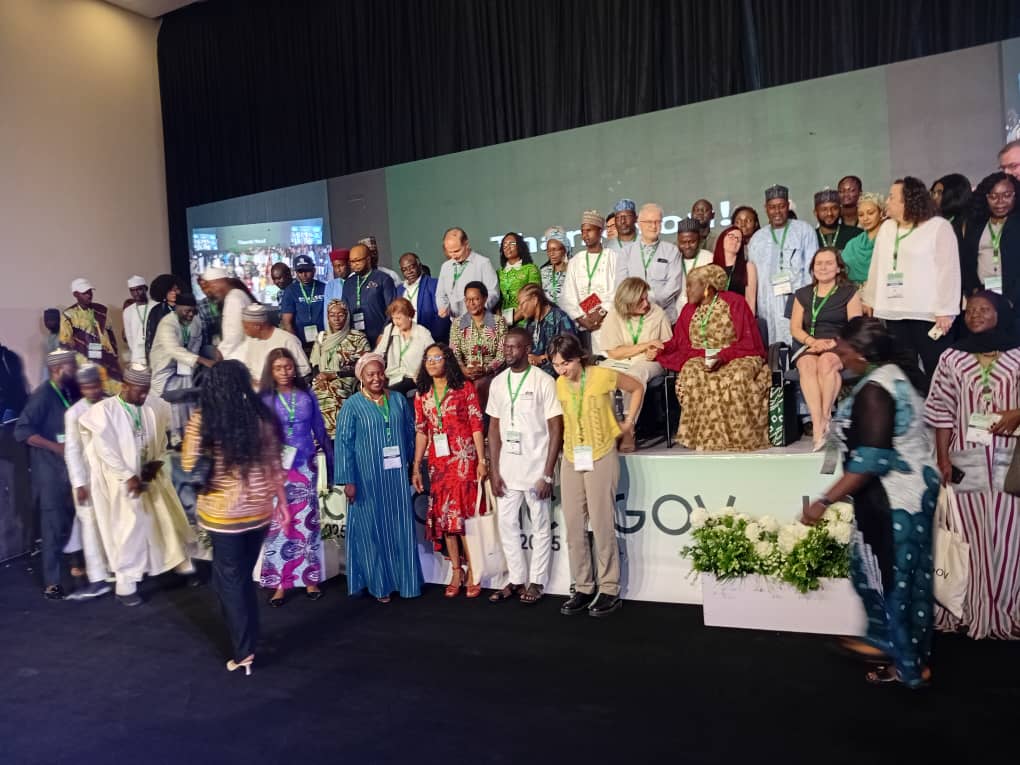
He explained that the five-day global conference, which brought together experts and innovators from around the world, aimed to produce a well-researched paper and actionable recommendations to help Nigeria and other participating nations shape the future of digital governance through cooperation, innovation, and inclusion.
“At the end of this conference, we expect that some of the recommendations and best practices discussed here will serve as a framework to develop our digital economy,” Lamid said. “At NITDA, we will ensure the implementation of some of these recommendations to achieve meaningful impact.”
Lamid further noted that the agency is reviewing some of the best research papers presented at the conference to identify practical solutions that can be adapted into Nigeria’s digital strategy.
Highlighting key recommendations, he emphasized the importance of strengthening digital policies and investing in digital public infrastructure to support innovation and economic diversification. He revealed that the Ministry of Communications, Innovation and Digital Economy is currently implementing a major project to roll out 95,000 kilometers of fiber optic cable by 2027, which will significantly expand broadband access across the country.
“This is a major step towards ensuring last-mile connectivity so that every Nigerian can have access to the Internet,” Lamid stated. “When more people are connected, it transforms not just governance but also the economy, empowering citizens and creating new opportunities for growth.”
He reaffirmed NITDA’s determination to continue promoting innovation, research, and digital inclusion in alignment with the Renewed Hope Agenda of President Tinubu’s administration, ensuring that technology becomes a key driver of sustainable national development.
Tomasz Janowski of the Gdańsk University of Technology, Poland, and the University for Continuing Education Krems, Austria, has emphasized the significance of the International Conference on Digital Government (ICGGOV) as a platform for fostering collaboration between researchers, policymakers, and practitioners across the world.
Janowski noted that ICGGOV serves as a unique forum that connects experts working on digital government initiatives, particularly with a focus on developing countries.
“In this sense, it’s a unique platform that has a strong impact on digital government policy and research in the developing world and across the Global South,” he said.
He explained that one of the most valuable outcomes of the conference is its ability to connect Nigerian researchers with their counterparts from both the Global North and the Global South, creating opportunities for knowledge exchange and joint research.
Also, Director of UNEGOV, Delphine Soares, lauded Nigeria’s increasing engagement and progress in the field of digital governance, describing it as a reflection of the country’s strong commitment to innovation and technology-driven public administration.
Soares highlighted the conference’s multi-level impact, particularly in strengthening the global community of researchers and practitioners through collaboration and networking.
“One of the key impacts of this conference is the strengthening of the community that gathered here,” she said.
She noted that another significant outcome of the event was the exchange of information on the latest frameworks, policies, and developments shaping the global digital governance landscape.
Soares also underscored UNEGOV’s long-standing cooperation with Nigeria, recalling that since 2018, Nigerian delegations have actively participated in international digital governance events such as ICEGOV.
“Last year, NITDA organized a fantastic workshop in Pretoria during ICEGOV, and through these interactions, I’ve come to appreciate the priority that Nigeria places on advancing digital governance,” she said.
According to her, the high number of research papers submitted by Nigerian authors to ICEGOV this year further demonstrates the country’s growing leadership and development in the digital governance space.
“It’s very clear—not just to me but to the entire community—that Nigeria is making remarkable progress in this area,” Soares concluded.
Professor Adegboyega Ojo, Research Chair in Governance and Artificial Intelligence at Carleton University, Canada, and Programme Committee Chair for ICGGOV 2025 conference, emphasized the importance of using technology to enhance the efficiency and effectiveness of governance.
He noted that the government’s support for platforms like ICEGOV provides an essential space for dialogue on how technology can improve internal operations, policy development, and service delivery to citizens.
According to him, hosting global conferences such as ICEGOV in Nigeria demonstrates the country’s readiness to engage in international conversations on the use of emerging technologies—particularly artificial intelligence—in transforming public administration. “My hope is that the government not only provides a platform for these discussions but also benefits from the ideas shared here and explores how they can be implemented within Nigeria’s specific realities,” he said.
Speaking on Africa’s role in digital transformation, Prof. Ojo stressed that the continent must take ownership of its technological development agenda.
He noted that solutions cannot simply be handed down to Africa but must be adapted to local needs and contexts. “Africa understands its own challenges and must leverage technologies like AI to strengthen governance systems,” he stated. “Good governance is the foundation for achieving broader benefits from technology—whether in the economy, healthcare, or improving the overall quality of life. African leaders must clearly define their priorities and navigate both the opportunities and challenges that emerging technologies present.”