
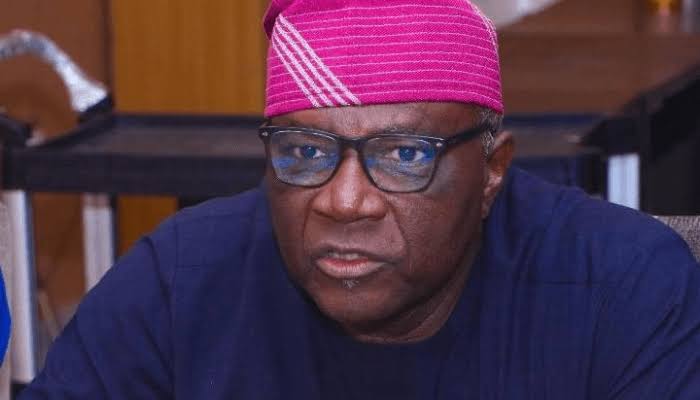
The Special Adviser to the President on Information and Strategy, Mr. Bayo Onanuga, has defended the economic policies of President Bola Ahmed Tinubu, stating that he does not personally observe the level of hunger and hardship frequently highlighted in public discussions about the country’s economic situation.
Speaking during an interview on Arise Television on Tuesday, Onanuga said several policies and infrastructure projects initiated by the Tinubu administration are already yielding positive results for Nigerians.
According to him, major investments in road infrastructure have significantly improved travel experiences and reduced commuting time in different parts of the country.
Recalling a recent journey from Ibadan to Lagos, the presidential aide said he was impressed by the quality of road infrastructure he encountered.
“One day, I was travelling from Ibadan to Lagos and Google Maps informed me there was heavy traffic approaching Lagos. I decided to take the Ijebu-Ode route through Shagamu.
“What struck me most was that I suddenly found myself driving on a newly constructed concrete road. I asked myself when the road was built,” he said.
Onanuga noted that residents of the area appeared satisfied with the development and no longer complained about poor road conditions.
“I discovered that many people in the area have stopped complaining because they now have a brand-new road, not just an asphalt road but a concrete one,” he added.
The presidential spokesman also highlighted the ongoing coastal highway project, which he said has reduced travel time for residents and commuters along the Lagos corridor.
“I live in Ajah. Whenever I travel to Lagos and ask Google Maps to estimate my journey home, it now says about one hour and seven minutes. Previously, the same trip could take up to two hours and thirty minutes.
“The reason is simple. We now have a coastal road that has significantly shortened travel time,” he said.
Questioning criticisms of the administration’s performance, Onanuga argued that such infrastructure projects provide tangible benefits to citizens.
“Is that not beneficial? What exactly are people talking about?” he asked.
He also cited the Federal Government’s student loan programme and access to low-interest credit facilities for workers as key interventions designed to ease economic pressures on households.
According to him, families with children in tertiary institutions can now access interest-free educational loans, while civil servants can benefit from affordable single-digit interest loans.
“If you are a parent with four children in the university and they are able to access federal student loans that are interest-free, are they not benefiting?
“If you are a civil servant and can access a low-interest loan at a single-digit rate of about seven per cent, is that not a benefit as well?” he queried.
Onanuga maintained that public conversations about the economy often overlook some of the gains recorded by the administration.
“We have been pigeonholed into certain assumptions and conclusions,” he said.
He also referred to a viral video from the early days of the Tinubu administration in which a voice-over repeatedly stated in Yoruba that people were hungry.
“I remember when the President visited Lagos after attending prayers at the Central Mosque. Someone made a voice-over saying, ‘Ebi n pawa o,’ meaning people are hungry. Since then, many people have continued repeating the same narrative,” he said.
While acknowledging that Nigerians are experiencing economic challenges, Onanuga insisted that his personal interactions with workers and people around him do not reflect the level of hardship often portrayed in public discourse.
“I am a Nigerian. I have people who work for me privately. I interact with them regularly and ask them how they are coping, how they are adjusting and what challenges they face.
“I do not personally see the level of hunger people are talking about,” he stated.