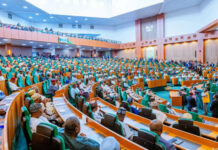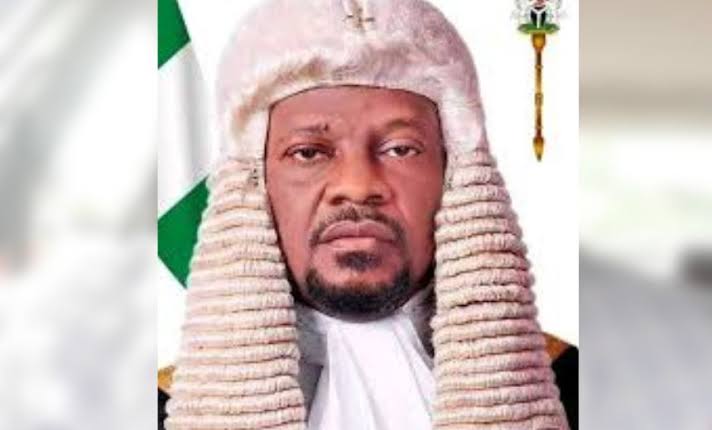
Rivers State House of Assembly, under the leadership of Speaker Martin Amaewhule, has formally directed the chief judge to constitute a seven-man panel to investigate allegations of gross misconduct against Governor Siminalayi Fubara and his Deputy, Professor Ngozi Ordu.
The resolution was reached during plenary yesterday, following the adoption of a motion by lawmakers, who cited relevant provisions of the 1999 Constitution, empowering the legislature to commence impeachment proceedings against a sitting governor or deputy governor, where allegations of misconduct arise.
Lawmakers said the decision was guided by the principles of transparency, accountability and the rule of law, stressing that the move does not amount to a declaration of guilt but represents a procedural step to allow the allegations to be independently examined.
If constituted, the panel is expected to invite all parties involved, review evidence and submit its findings to the Assembly for further legislative action in line with constitutional requirements.
The development came amid heightened political tension in Rivers State, with political stakeholders and civil society organisations urging restraint and strict adherence to due process as the situation unfolds.
Earlier, the lawmakers addressed a live press conference in Port Harcourt, where they accused Governor Fubara of allegedly engaging in acts of blackmail and intimidation against the legislature.
The Deputy Speaker, Dumle Maol, said the governor had lost the trust required to resolve the political crisis in the oil-rich state.
The lawmakers accused the governor of infringing on the provisions of the Constitution, insisting that the Assembly was left with no option, but to exercise its legislative powers, including impeachment, to safeguard democracy.
Four members of the Assembly who had earlier called for a political solution reportedly recanted their positions and declared support for the impeachment process.
At of the time of filing this report, Fubara and his deputy had yet to issue official statements on the matter.
Reacting to the worrisome development, Special Adviser to the governor, Mr Darlington Orji, alleged that members of the Assembly received N350 million each for constituency projects, despite claims by some of them that certain payments were not appropriated.
Orji made the allegation yesterday, while appearing on a television programme, where he addressed questions surrounding the budget process and recent tensions between the executive and legislature.
He also referred to a N100,000 payment made in December to civil servants as an end-of-year appreciation, noting that the same amount was extended to members of the Assembly, though some reportedly rejected it on the grounds that it was not appropriated.
Orji questioned the rejection, arguing that the lawmakers had previously accepted N350 million each for constituency projects without raising concerns about appropriation.
He said: “You know that your platform is a very respected one and I will not come here to tell lies. I will not say what I am not sure of now. Because the governor did not agree with them on that, so they did not come up with a presentation.
“You know that in preparing the budget, there are too many things that will be improved that will make up the appropriation bill. When they say their interest was not captured, and the man (Fubara) said, don’t worry, by December.
“So the specific amount I do not know as it stands today, because that presentation was not made because the governor refused to accept that. But don’t forget, in December, there was N100,000 that was given to civil servants as a way of appreciating them and end of the year package, it was also given to the lawmakers. Some people rejected the money.
“They rejected it that it was not appropriated. You cannot build something from nothing. Can you ask them, please, sir, the N350 million that was given to each of them for their constituency projects, where did it come from? Why did they not reject it, since it was not appropriated?”