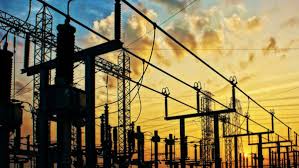
Experts have commended the Federal Government’s plan to construct a national super grid in partnership with sub-national governments.
They said this would address the nation’s persistent power challenges.
Prof. Yemi Oke, a lecturer in Energy Law, University of Lagos, said that while the initiative was laudable, global energy trends were shifting away from traditional grid systems.
Oke said that grid construction and maintenance were capital-intensive and faced several operational challenges, adding that decentralised energy solutions offered better resilience.
“The construction and operation of a grid system come with huge costs and risks.
“More effective off-grid options now exist, as many states are already building and managing their own energy projects without interference”, he said.
Oke noted that the world was embracing mini-grid and renewable energy systems to prevent nationwide blackouts.
He added, “Alternative energy options such as mini-grids and renewables are more suitable for sustainable development because they operate in clusters.
“This is similar to how advanced countries are reducing car emissions, while we seem to be expanding old models instead of innovating”.
Also, Dr Kayode Akinrolubu, Chairman of the Consultative Forum of Festac and Satellite Town, Lagos, welcomed the project but urged the government to prioritise transparency and guard against sabotage.
“Government should adopt strict monitoring mechanisms to prevent sabotage and human interference that often undermine progress in the power sector”, Akinrolubu said.
He advised that the government carefully screen the technical partners involved and ensure accountability throughout the project implementation.
“We must ensure that only competent experts handle the construction to avoid repeating past mistakes.
He explained, “There should also be an independent agency to monitor the grid after completion”.
Akinrolubu added that such an agency should establish monitoring units across the country to detect and address technical faults and human interference early.
Nigeria is currently in talks with the Export-Import Bank of China ,China Exim Bank, for a $2 billion loan to finance the national super grid project.
According to the Minister of Energy, Adebayo Adelabu, the initiative aims to provide a stable power supply, stimulate industrial growth, and revitalise Nigeria’s manufacturing sector