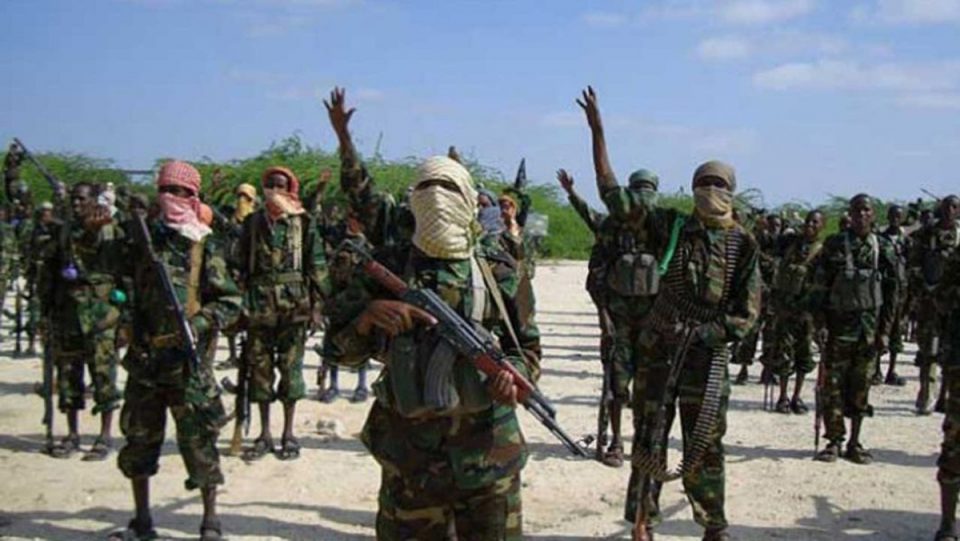
· As banditry, violent conflicts wrecking livelihoods across rural communities
· Collapsing food systems driving a surge in acute child malnutrition
· Hopelessness rising as families flee farms, homes, futures
Despite repeated declarations from the Federal Government that Nigeria is “winning the battle” against insecurity, an investigation across multiple frontline states reveals a starkly different picture—one of expanding bandit networks, collapsing agricultural systems, spiralling malnutrition and rising despair, write DAVID MAXWELL and DAUDA ISMAIL.
Field findings from communities in the North-West, North-Central and parts of the North-East suggest that far from receding, rural insecurity is becoming more entrenched. Interviews with officials, health workers, displaced families and local traders paint a portrait of communities exhausted, abandoned and fighting for survival in the face of armed groups that now wield extraordinary influence over daily life.
Our investigation shows that what began as isolated rustling incidents more than a decade ago has hardened into organised criminal territories stretching across forest corridors from Zamfara to Taraba. In these zones, bandits operate parallel governments—levying taxes, regulating access to farms, enforcing curfews and dictating planting seasons.
Farmers told this newspaper they now pay bandits before entering their own land, and again before harvesting. Some communities negotiate seasonal “access fees”, while others watch armed men harvest and cart away entire fields. Those who resist risk abduction or death.
A senior state official, speaking under anonymity, called it “an undeclared rural war the authorities are reluctant to publicly admit”. He confirmed that in some districts, up to 70 per cent of arable land is now inaccessible.
Though the military has launched operations including Hadarin Daji, Safe Haven, Whirl Stroke and Operation Accord, residents consistently described the response as sporadic and reactive. Troops secure villages briefly; once redeployed, bandits return—often with greater force.
Local vigilante groups, many armed with little more than dane guns and cutlasses, are no match for criminal gangs equipped with assault rifles, motorcycles, drones and sophisticated communication tools.
Investigators observed that several local markets across Kaduna, Zamfara and Niger have either shut down or now operate under the watch of armed groups who collect daily levies and regulate movement.
The consequences for Nigeria’s food systems are severe. Interviews with farmers, traders and agricultural officers reveal steep declines in grain production, livestock losses, abandoned irrigation schemes and disrupted supply routes.
Farmers in Zamfara, Kaduna and Katsina said they can no longer cultivate or harvest without paying gangs. In Plateau, Benue and Taraba, herder–farmer clashes, left to fester for years, have destroyed crop cycles. In the North-East, insurgency continues to restrict access to fertile areas around the Lake Chad basin.
Storerooms inspected in parts of Sokoto and Kebbi were either half-empty or completely vacant—an anomaly in communities that traditionally stockpile grains for a year. Food prices in rural markets have tripled, pushing staples far beyond the reach of poor households.
Traders reported that the price of beans and maize has become “unpredictable by the week”, with transporters avoiding highways notorious for ambushes.
But the most alarming consequence is the surge in child malnutrition. Health workers across Niger, Kebbi, Borno, Yobe and Sokoto say they are witnessing levels of Severe Acute Malnutrition, SAM, unseen in years.
Garba Sulaimon, a nutrition officer in Niger State, told our reporters of “children arriving in skeletal condition, anaemic, dehydrated and too weak to stand”. His clinic, designed for a few dozen cases a month, now receives hundreds.
In Benue State, an investigative review of Benue State Emergency Management Agency, BSEMA, data showed that between June and July alone, 1,174 children were screened: 316 were malnourished, 133 severely, 183 moderately.
UNICEF figures show over 336,000 stunted children in Benue—up dramatically from 283,727 the previous year.
Several clinics visited reported an acute shortage of therapeutic foods. At Primary Healthcare Centre, PHC Asase, staff said they once received Ready-To-Use Therapeutic Food, RUTF, supplies from the United Nations Children’s Fund, UNICEF, but those shipments have stopped. “We now see children when they are already at the brink,” one doctor said. Two children who arrived in critical condition in October had to be rushed to a general hospital; one did not survive.
USAID funding cuts have further limited access to nutritional supplements. A recent commitment of 7,670 cartons of blended flour from the Federal Ministry of Humanitarian Affairs may provide temporary relief, but medical officers insist the supplies are “nowhere near enough”.
Investigators found that insecurity is not only destroying farmlands but also unravelling the social fabric of rural life. Entire communities have fled under cover of darkness, leaving behind generations-old homes and livelihoods. Primary schools, town halls and uncompleted buildings now double as IDP shelters.
Children who should be in classrooms sit idle or engage in menial labour to support their families. Teachers in Kaduna and Niger described schools with fewer than half their pupils still attending.
The psychological toll is devastating. Community health worker Jamila Abdulmumin said adolescents report chronic anxiety, fear of loud noises and uncertainty about their futures. Farming, once a proud inheritance, is now seen as a dangerous occupation.
Traditional institutions—long the arbiters of rural disputes and custodians of community identity—are weakening. Village heads and local chiefs have either fled or been assassinated, creating a governance vacuum that criminals exploit.
Women and girls face heightened risks of sexual violence and forced marriage. Many widows, left without support after husbands were killed, struggle to feed children already suffering from malnutrition.
Public affairs analyst Shuna Fakum called the situation “a slow erosion of hope”. According to her, “When communities lose faith in the future, the damage runs deeper than destroyed farms—it weakens the very will to rebuild.”
Despite federal claims that security is improving, evidence gathered across multiple states points to a deepening crisis. While some corridors have witnessed temporary relief, the broader patterns indicate that armed groups still outmanoeuvre security agencies, and key drivers of instability—poverty, unemployment, porous borders, weak governance and climate pressures—remain unresolved.
Without sustained, coordinated interventions, Nigeria risks sliding into a protracted food and nutrition emergency that could define the next decade.