By ABAH ADAH, Abuja
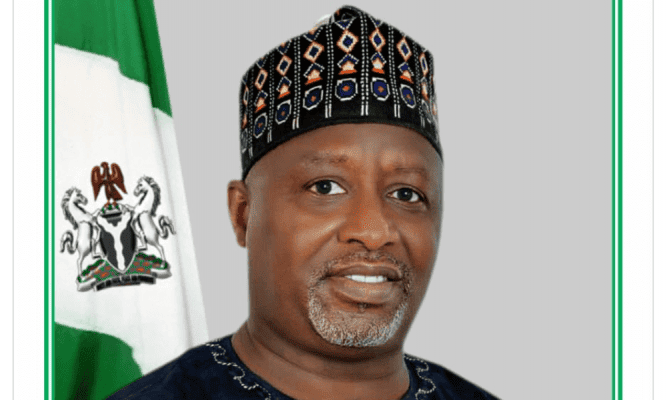
President of the Council for the Regulation of Engineering In Nigeria, COREN, Professor Sadiq Abubakar has urged all stakeholders to put their hands on the plough to ensure that the country attains membership of the Washington Accord, Sydney Accord and even the Dublin Accord so as to earn global standard recognition in engineering for national development.
Abubakar made the call on Sunday in Abuja while delivering an address at a one-day workshop on Sydney Accord and Dublin Accord Application by Nigeria, jointly organised by COREN and the National Board for Technical Education, NBTE.
The Washington Accord, Sydney Accord and Dublin Accord are subgroups of the larger International Engineering Alliance, IEA, with recognition agreements for engineers and engineering technologists and technicians respectively in signatory countries, thereby promoting quality engineering education and mobility of labour across national boundaries.
As it stands now, Nigeria is on the verge of becoming a full member of the Washington Accord. COREN secured provisional signatory status for Nigeria since 2023.
According to the COREN boss, it is an opportunity that Nigeria must not miss, as it stands to improve the quality of engineering education, while affording Nigeria’s certified professionals mobility
and international practice.
“The opportunity has come for us to be formalised to ensure that we have global recognition by joining these accord,” he said, referring primarily to the Washington and Sydney Accords which were in focus at the one-day workshop.
According to Abubakar, membership of the accords allows Nigeria to sign MRA (Mutual Recognition Agreement) with any member country, so that its talents can be gainfully engaged beyond the shores of the country.
He stressed that it is a national assignment which all hands must be on deck to ensure that it succeeds so that Nigeria could export its abundant human capital through certified engineering practitioners.
“We implore all hands to be on deck to change the narrative in Nigeria and globally. We need joint efforts as we commence this very important journey”, he said.
Also welcoming the resource persons, including Professor Megat Johari of the Board of Engineers Malaysia and participants, the Executive Secretary, NBTE, Professor Idris Bugaje, said, “The meeting today is very important for Nigeria. It is an attempt, as mentioned by the president, to bring our international accreditation.
“It is not enough to have national accreditation by the Nigerian Universities Commission, NUC, and NBTE. More importantly, it should be an international bench-mark and that is what the three accords are all about”, Bugaje said.
He said, “We are almost through with the Washington Accord for university degrees in engineering; we are now trying to do same with the Sydney Accord for Higher National Diploma and the Dublin Accord for Ordinary National Diploma.
“That is why we have selected very resourceful people from the Technical and Vocational Education and Training, TVET, centre to join the committee, from the technologists, technicians and artisans. So it involves the entire ecosystem.”
The NBTE boss pledged the readiness of his board to work with COREN for national development.
Earlier, while giving the workshop orientation, one of the event facilitators, Professor Baba El-Yakub, highlighted the expectations at the end of the workshop to include, but not limited to participants having knowledge of key requirements for successful application of the Washington and Sydney Accords; developing “a roadmap that would lead us to the final application”.
Sliding into the technical session, Professor Megat, one of the two trainers invited, mounted the stage and spoke on “Rules and Procedures of Sydney and Dublin Accords”.
Megat is a member, Board of Engineers Malaysia, BEM, Chair, Dublin Accord, president, Malaysian Society of Engineering and Technology, MySEF, vice president, Federation of Engineering Institutions of Islamic Countries, FEIIC.
Megat and Professor Nasir Khan of Pakistan Engineering Council, PEC, were the two resource persons at the workshop, while Professor Baba El-Yakub and Engr A. D. K. Muhammad were the facilitators. Among the participants were six NBTE nominees, four NBTE leadership, eight COREN nominees and four COREN leadership.