Joel Ajayi
British Cycling has reaffirmed its commitment to transforming cycling in Nigeria through a holistic development strategy focused on training, improved facilities, greater visibility, and athlete-centred programmes.
The initiative prioritises grassroots development, coaching education, and athlete welfare, with the aim of building confident, competitive cyclists capable of excelling on the global stage.
This partnership-driven approach is set to redefine Nigeria’s cycling landscape—positioning the nation for long-term success, stronger international representation, and a thriving cycling culture nationwide.
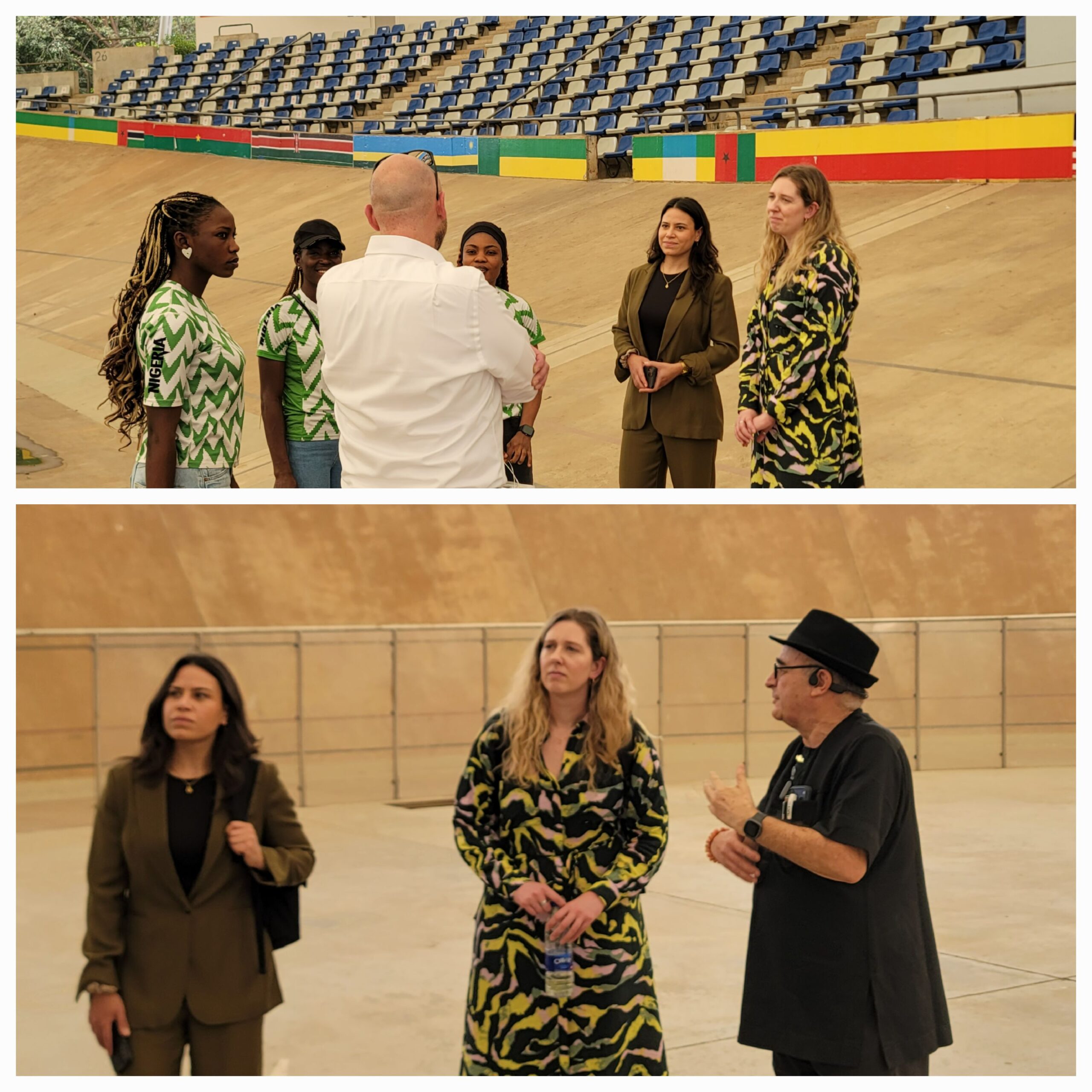
While speaking during the visit to the CFN and the tour of Cyclying facilities inside the Velodrome on Teusday in Abuja, the British Cycling’s Sport and Participation Director, Amy Gardner, reaffirmed the organisation’s commitment to supporting cycling development in Nigeria through strategic partnerships and knowledge sharing.
Speaking after engagements with the Cycling Federation of Nigeria, Gardner said the focus would be on building diplomatic sporting relations, promoting inclusion, and creating sustainable programmes for youth development.
She highlighted plans to support access to bicycles, training, recycling and upskilling initiatives, as well as education programmes to strengthen grassroots cycling.
Gardner also praised Nigeria’s world-class velodrome facility, describing it as a rare and valuable asset in Africa with huge potential to produce future champions and elevate the nation’s cycling profile globally.
In his own, the elated President of Cycling Federation of Nigeria CFN Engr. Chief Giandomenico Massari outlined growing collaboration efforts with British Cycling, aimed at transforming cycling development in the country through strategic partnerships, training, and technical support.
According to him, the relationship began at the 2020 World Championships in Glasgow, where first contact was made with British Cycling’s leadership.
This led to a series of virtual meetings, deeper engagement, and sustained follow-ups focused on potential partnership projects and development assistance.
“Subsequent in-person engagements in Nigeria have strengthened the relationship, opening discussions on athlete training, coaching education, equipment support, and grassroots development.
“The collaboration also includes high-level stakeholder engagement with key national institutions, including the National Sports Commission, National Olympic Committee, and relevant government ministries.”
On his own, the Sport Manager at British Cycling Bruce Karsten stressed that athlete welfare must be the foundation of development.
He noted that improving training quality, coaching standards, competition exposure, and athlete experiences is critical to building confidence and performance at international events.
According to him, regular competitive exposure is key to preparing Nigerian cyclists mentally and physically for global championships.
On British Cycling’s role, he explained that the organisation’s first priority is listening and understanding Nigeria’s specific needs, rather than imposing external solutions.
He said sustained collaboration with the Cycling Federation of Nigeria and other stakeholders would guide meaningful interventions.
Assessing Nigeria’s velodrome, Carsten praised the facility as one of Africa’s finest, describing it as a strong foundation for athlete development, national championships, and future international success, while expressing confidence in its potential to produce world-class champions.