
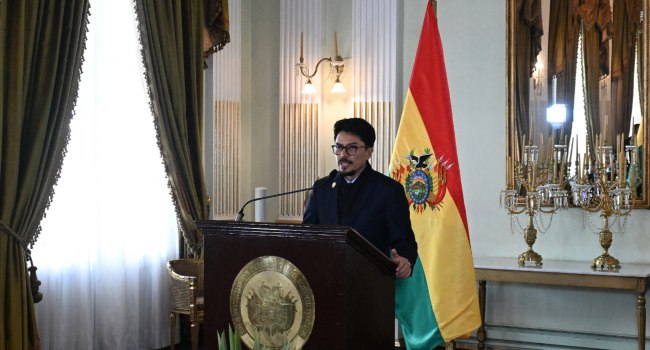
Bolivian President Rodrigo Paz has declared a state of emergency across the country following more than six weeks of protests and road blockades that have disrupted economic activities and heightened political tensions.
Speaking in a televised address on Saturday, Paz said the government had exhausted all available channels of dialogue before taking the decision.
“After exhausting all avenues of dialogue, reaching agreements with those whose demands were legitimate, and identifying those who used violence in an attempt to destabilize Bolivia, we made the decision to declare a state of emergency across the entire national territory,” the president said.
The declaration grants authorities expanded powers to respond to the unrest, which has affected transportation networks, trade activities and the movement of goods and people across several regions of the country.
While the government maintains that the measure is necessary to restore public order and protect national stability, critics are expected to closely scrutinize its implementation amid concerns about civil liberties and the rights of demonstrators.
The protests, which have persisted for more than six weeks, stem from a combination of political and socio-economic grievances. Although authorities say they have reached agreements with groups presenting legitimate concerns, they accuse some elements within the demonstrations of engaging in violence and attempting to undermine the constitutional order.
The state of emergency marks one of the most significant responses by the Bolivian government to the ongoing crisis and signals a tougher approach toward restoring normalcy.
Authorities have yet to provide detailed information regarding the specific measures that will be enforced under the emergency declaration or how long it will remain in effect.
The situation is expected to remain under close observation as security agencies move to implement the government’s directives while negotiations with various groups continue.