…Rejects Compulsory electronic transmission of election results
…As INEC moves to embark on voter revalidation exercise ahead of 2027 general elections
…Says election integrity major priority
By Yahaya Umar, Abuja
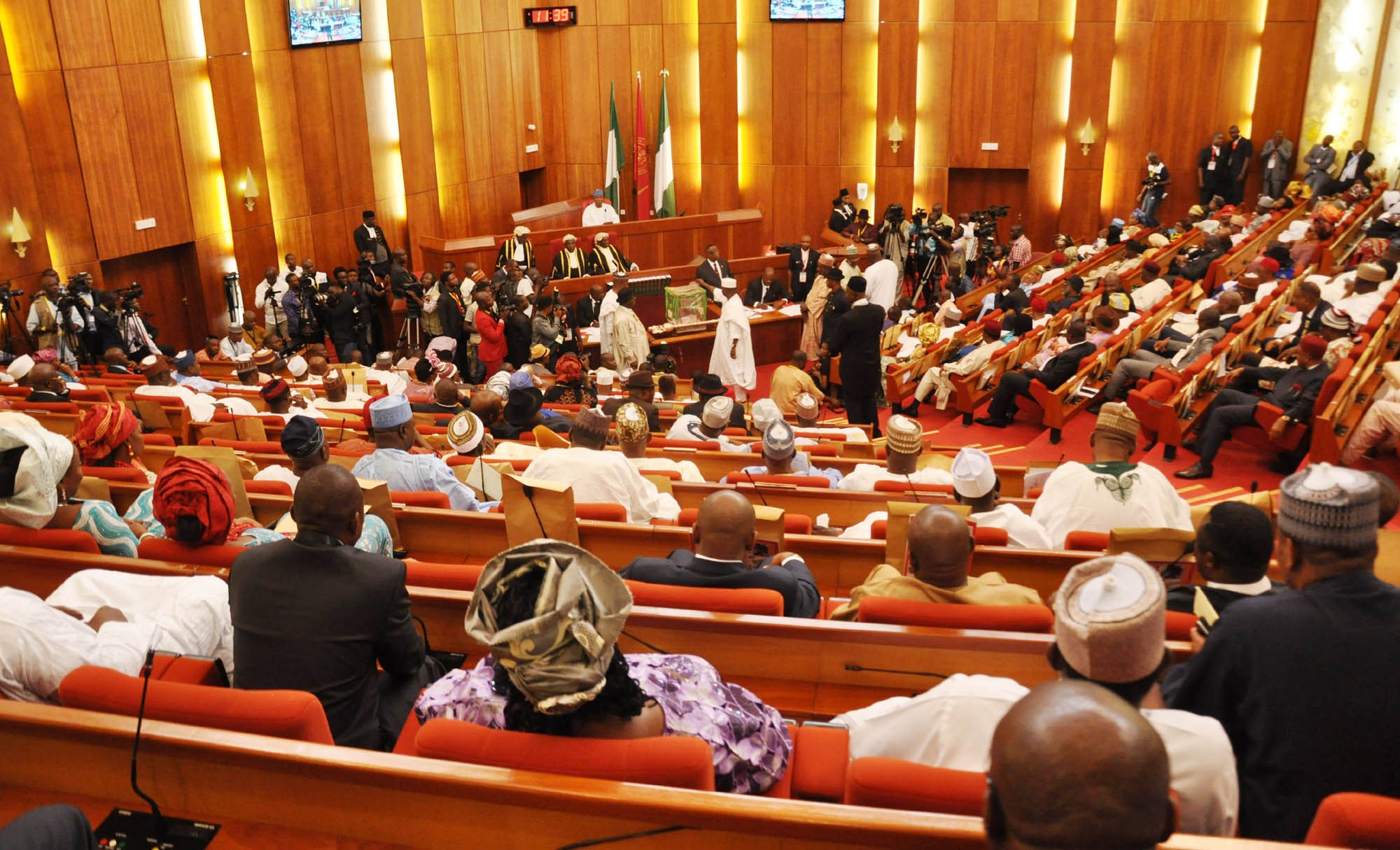
After series of delays, the Senate, yesterday, passed the Electoral Act 2022 (Repeal and Reenactment) Amendment Bill 2026 through the third reading.
The Bill is to regulate, correct, strengthen and bring more transparent conduct of the federal, state and area council elections in the Federal Capital Territory, FCT.
The development followed a clause by clause consideration of the bill by the lawmakers in the Committee of the Whole and laid before the Senate for a final deliberation and voting in support of Electoral Reforms or not.
The federal lawmakers also rejected a proposed amendment to Clause 60, Subsection 3, of the bill, which sought to make the electronic transmission of election results mandatory.
The rejected provision would have required presiding officers of the Independent National Electoral Commission, INEC, to electronically transmit results from each polling unit to the IREV portal in real time, after the prescribed Form EC&A had been signed and stamped by the presiding officer and countersigned by candidates.
The Senate, however, adopted the existing provision of the Electoral Act, which states that “the presiding officer shall transfer the results, including the total number of accredited voters and the results of the ballot, in a manner as prescribed by the Commission”.
In a remark President of the Senate, Senator Godswill Akpabio, denied the rejection of the electronic transmission of results by the Senate.
According to Akpabio, “electronic transmission has always been in our act” “What we did was retain the existing provision, which already makes provision for electronic transmission”, adding that there was no attempt to delay or frustrate the passage of the Electoral Act.
The Senate also rejected a proposed 10-year jail term for buyers and sellers of Permanent Voter Cards, PVCs, under Clause 22, opting instead to retain a two-year imprisonment term while increasing the fine from ₦2 million to ₦5 million.
The decision was taken during consideration of Clause 22 of the Electoral Amendment Bill.
The Senate, however, amended Clause 28 on the notice of election, reducing the timeline from 360 days to 180 days.
It would be recalled that the original provision required the Commission to publish a notice of election in each state of the Federation and the Federal Capital Territory not later than 360 days before the election date.
In Clause 29, the Senate reduced the timeline for the submission of lists of candidates and their affidavits by political parties from 180 days to 90 days.
The amended provision states that “every political party shall, not later than 90 days before the date appointed for a general election under this Act, submit to the Commission, in the prescribed forms, the list of the candidates the party proposes to sponsor at the elections, who shall have emerged from valid primaries conducted by the political party”.
The Senate also retained the provision on the format of ballot papers contained in Clause 44.
Under the clause, the Independent National Electoral Commission, INEC, is required, not later than 20 days before an election, to invite in writing any political party that nominated a candidate to inspect its identity on samples of relevant electoral materials.
Political parties are allowed to respond in writing within two days, indicating approval or disapproval of how their identity appears on the samples.
Under Clause 47, the Senate replaced smart card readers with the Bimodal Voter Accreditation System, BVAS, for accreditation and voting.
However, after extensive debate, lawmakers rejected electronically generated voter identification and adopted the Permanent Voter Card as the mode of identification at polling units.
Furthermore, the Senate struck out Clause 142 on the effect of non-compliance, which provided that “it shall not be necessary for a party who alleges non-compliance with the provisions of this Bill for the conduct of elections to call oral evidence if originals or certified true copies of relevant documents manifestly disclose the non-compliance alleged”.
The provision was removed following arguments that it would amount to a waste of time in court.
Meanwhile, the Independent National Electoral Commission, has said it would conduct a thorough clean-up of the country’s register of voters with a view to further sanitising and strengthening the integrity of the register.
INEC Chairman, Prof. Joash Amupitan, said this during his first Quarterly Consultative Meeting with Civil Society Organisations in Abuja, yesterday.
Amupitan, who also had similar meeting with media executives the same day, said that a credible register of voters remained the bedrock of free, fair and transparent elections, stressing “no electoral process can command public confidence without trust in the integrity of its voters’ register”.
He noted that Nigeria’s national register, first compiled ahead of the 2011 General Election, had since been continuously updated and deployed in the General Elections of 2011, 2015, 2019 and 2023, as well as in several off-cycle governorship and by-elections.
Amupitan, who noted that the country’s voter register as at 2023 general election stood at 93,469,008, said that the persistent challenges however remained.
According to him, the challenges include duplicate registrations, under-age registration, registration by non-citizens, deceased voters and incomplete or inaccurate records.
He added that such anomalies undermine public confidence in the electoral process.
“Accordingly, the Commission will be embarking on a nationwide Voter Revalidation Exercise ahead of the 2027 General Election.
“This is very important for us, because most of the time we talk of voters’ apathy.
“When we conducted Anambra governorship elections there were over 2.8 million registered voters.
“As much as we tried to mobilise, the total number of voters was less than 600,000, and that was about 20% of the registered voters.
“So the general outcry is, oh, voters did not turn up. But sometimes, when we’re looking at the register of voters, for example in Anambra State, we discovered names of prominent politicians in Nigeria that have died; their names are still of the register.
“This, in a way, is an indictment on the register itself.
“So, we’re going to clean up and ensure that we don’t continue to expect dead people to come from their graves and come and vote on the day of election.
“We don’t also expect their posts to come from such elections”, he said.
Providing an update on the associations seeking registration as political parties, Amupitan said that the commission would soon release the details of successful associations ahead of 2027 general election.
The INEC Chairman recalled that INEC received a total of 171 letters of intent from associations seeking registration as political parties.
He said that the associations were assessed in line with Section 222 of the Constitution of the Federal Republic of Nigeria, 1999 (as amended), Section 79(1), (2) and (4) of the Electoral Act, 2022, as well as Clause 2 of the Commission’s Regulations and Guidelines for Political Parties, 2022.
He added that several of the associations were unable to fulfill the constitutional requirements and the requirements of the Electoral Act, 2022, as well as the Regulations and Guidelines for Political Parties.
“Let me assure you that the successful association(s) will soon be announced by the commission”, Amupitan said.
Speaking on the ongoing Continuous Voter Registration, CVR, Amupitan said that the second phase of the exercise commenced on Jan 5 and would run until April 17.
He said that the entire CVR exercise was scheduled to span one year and would be concluded on Aug. 30.
“In the first phase of the ongoing Continuous Voter Registration exercise conducted from Aug. 18 to Dec. 10, 2025, the commission registered a total of 2,782,589 eligible voters”, he said.
“We are encouraged by the strong public response to the exercise, which affirms the belief of Nigerians in the democratic process and in the efforts of the commission to ensure that every eligible citizen is afforded the opportunity to register and vote.
“For transparency purposes, data on completed online pre-registrations and physical registrations are published weekly on the commission’s website”, he said.