By Joel Ajayi
The Head of Nigeria’s Mission to the ongoing 2025 African Youth Games in Luanda, Angola, Amaka Ashiofu, has expressed satisfaction with Team Nigeria’s performance, noting that the country’s efforts have yielded positive results, with several athletes securing qualification places for the Youth Olympic Games scheduled to hold next year in Dakar, Senegal.
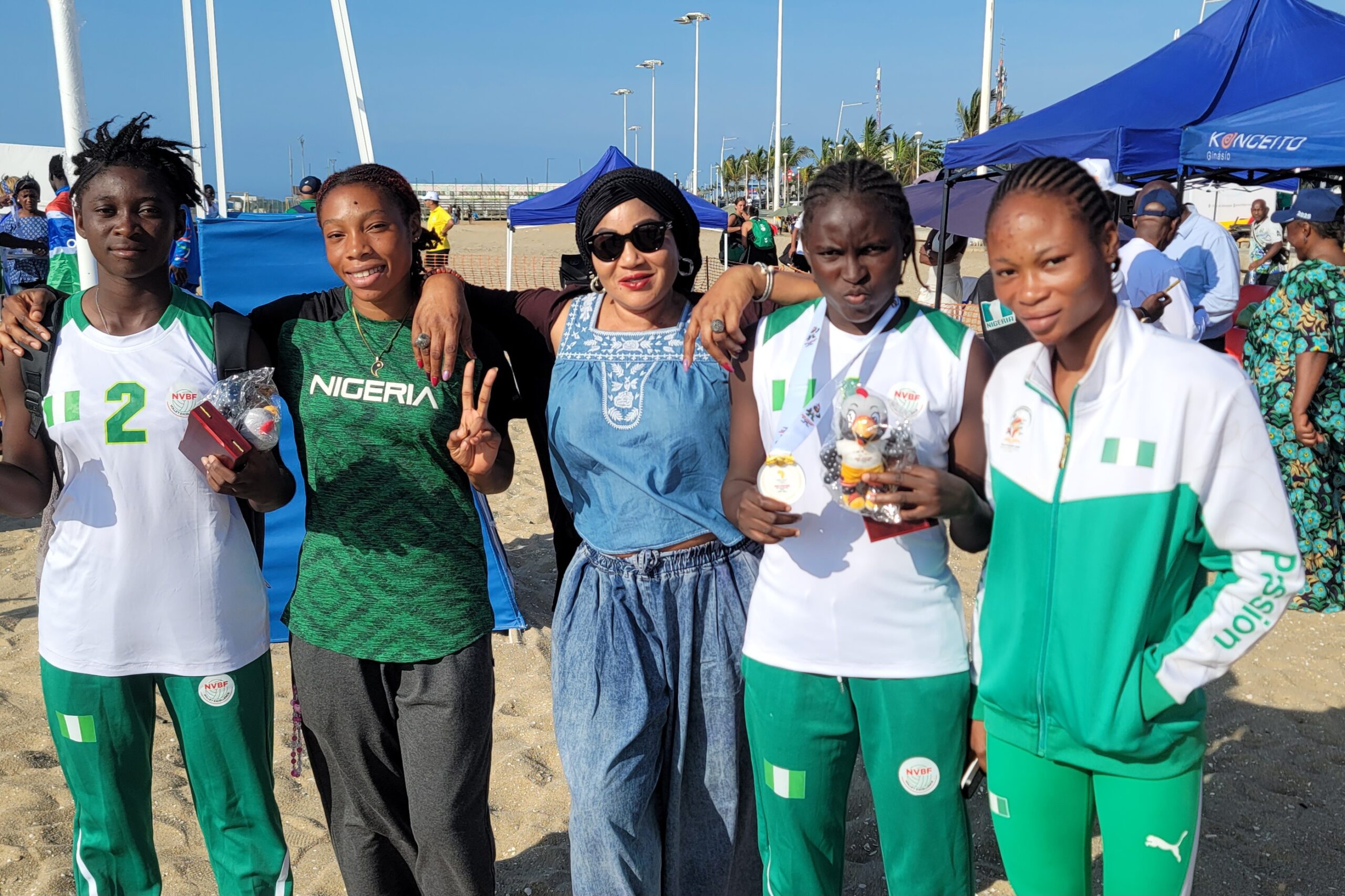
Amaka spoke at the El dorado Beach Park in Luanda after Nigeria’s female beach volleyball team defeated Egypt 2–0 to win the gold medal at the Games.
While acknowledging existing organisational challenges, she praised the resilience and determination of Nigerian athletes.
“We’ve been doing well. Although the organisation hasn’t been very palatable, Nigerians are strong people. No matter the situation, we always find a way to pull through,” she said.
According to Amaka, Nigeria’s participation in the African Youth Games was largely driven by the tournament’s role as a qualifying platform for the Youth Olympic Games, a decision she said has been justified by the athletes’ strong performances across various sports.
“In badminton, Team Nigeria reached the final, while our female beach volleyball team won a gold medal. Automatically, that means they have qualified for the Olympics. Each time they win gold, they secure qualification,” she explained.
She added that Nigeria also recorded notable success in athletics, winning six gold medals, with events such as the relay races and the 100 metres flat believed to be part of the Olympic qualification pathway, further boosting the country’s prospects.
Beyond celebrating the achievements, Amaka raised key concerns about the future, particularly the sustainability of Nigeria’s participation in international youth competitions and the need for structured athlete development.
“The important questions are whether this progress can be sustained in the long term and whether the federation will continue to integrate younger athletes into major tournaments,” she noted.
She stressed that Nigeria is adopting the right approach by fielding genuinely young athletes, unlike some neighbouring countries where age discrepancies are evident.
“When you watch teams like Gambia and Sierra Leone, you can see that some of their athletes are not truly under-17. But with Nigeria, we are trying to get it right. Our athletes are genuinely young,” she said.
Amaka concluded that this youth-focused strategy would ensure continuity and long-term success for Nigerian sports.
“With this approach, the system will be sustainable. These young athletes can be nurtured, developed and gradually transitioned into the elite level,” she added.