
Iran on Saturday widened its military campaign across the Gulf region, targeting critical infrastructure in neighbouring countries and warning that it was prepared to launch a “full-scale offensive” if United States attacks continued.
The latest escalation came after the seventh straight night of American strikes on Iranian territory, further deepening the conflict despite a preliminary agreement reached a month ago that had raised hopes of ending hostilities.
Tehran accused Washington of expanding its targets beyond military sites to include airports, railway stations and bridges, prompting what Iranian officials described as a broader retaliation.
Iranian military adviser to Supreme Leader Ayatollah Ali Khamenei, Major General Mohsen Rezaei, declared that the country would no longer restrict itself to proportional responses.
“Iran will no longer limit itself to retaliatory, like-for-like responses… and no political border will be safe,” Rezaei said, according to Iranian state media.
He added that if American attacks persisted for another two or three days, Tehran would resume “full-scale offensive operations.”
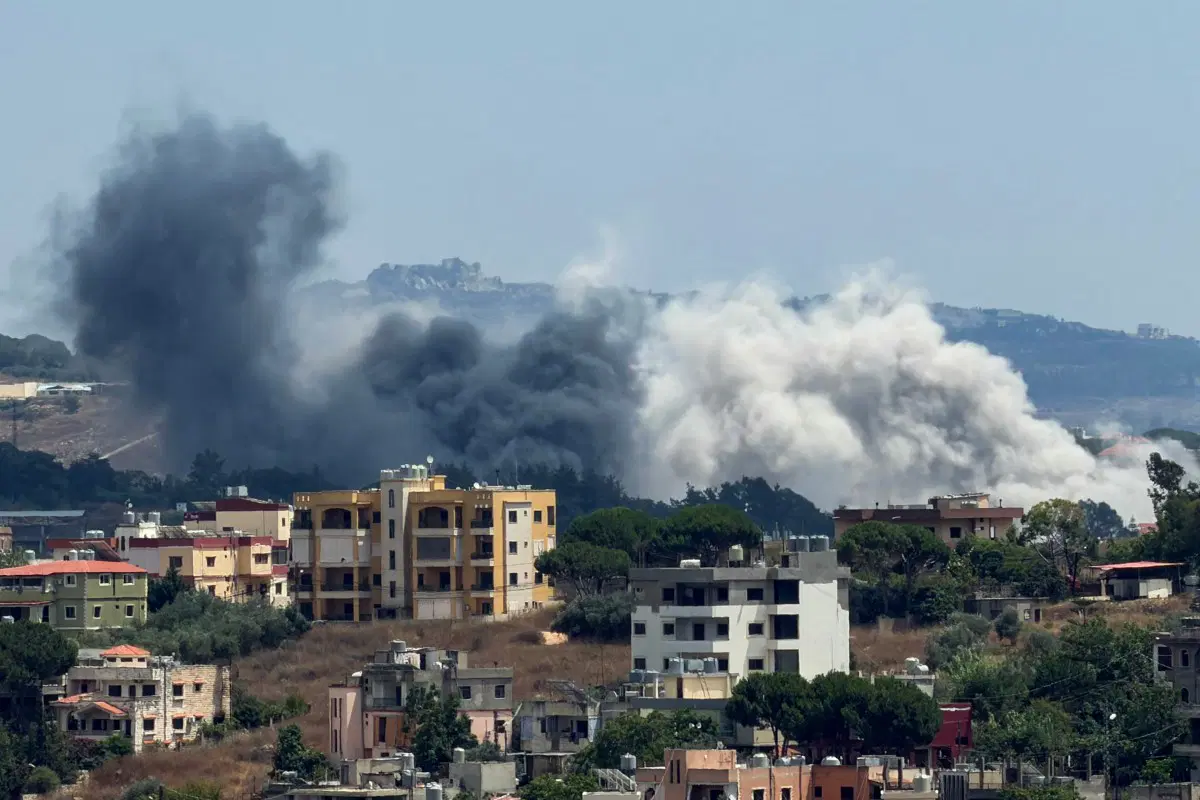
In Kuwait, authorities confirmed that Iranian missiles struck an oil facility as well as a power and water generation plant, damaging vital infrastructure and forcing the shutdown of several electricity generation units.
The latest strike marked the second attack on Kuwait’s power and water infrastructure within two days, following Friday’s assault that triggered a major fire and caused significant damage to another facility.
Kuwait’s state-owned oil company also confirmed that several workers sustained injuries during the attack on the oil installation, while the country’s fire service reported that firefighters were injured while responding to multiple blazes caused by the strikes.
The Kuwaiti government condemned the attacks, accusing Iran of deliberately targeting civilian infrastructure.
Elsewhere in the Gulf, Bahrain announced that its air defence systems successfully intercepted a fresh wave of Iranian aerial attacks.
The Bahraini military said defensive systems destroyed multiple incoming threats before they reached their intended targets.
Iran, however, maintained that it had deliberately targeted the Sheikh Isa Air Base, which hosts United States military assets.
According to Iranian state television, drones struck aircraft shelters, fuel storage facilities and connecting bridges within the military base.
Jordan also reported coming under attack.
Iranian media claimed that fuel storage facilities at Jordan’s Al-Azraq military base were targeted during the operation.
The Jordanian Armed Forces stated that air defence units intercepted and destroyed ten incoming missiles, adding that there were no casualties or significant property damage.
Despite growing diplomatic efforts to restore negotiations, prospects for a ceasefire continue to fade as both sides intensify military operations.
United States President Donald Trump had earlier threatened to target additional Iranian infrastructure if Tehran continued its military actions, although American officials have yet to confirm whether such operations have begun.
Iran’s official news agency, IRNA, reported that fresh American strikes in the southern province of Hormozgan killed three civilians and injured eight others.
Provincial authorities said the attacks damaged telecommunications infrastructure, knocking out approximately 116 communication towers and disrupting mobile, internet and landline services across several communities.
In neighbouring Khuzestan Province, local officials disclosed that American forces had struck 95 separate locations across 12 cities within the last ten days.
According to the province’s deputy governor, the attacks claimed eight lives.
Iranian officials also accused the United States of disrupting essential public services by striking electrical infrastructure and desalination facilities in Bonji village, resulting in the suspension of potable water supplies to surrounding communities.
In response to mounting pressure on the national electricity grid, Iran’s Ministry of Energy appealed to residents to reduce power consumption by limiting the use of air conditioners during peak demand periods.
The country’s Health Ministry announced on Friday that at least 50 people had died since the latest phase of fighting began one week ago, while more than 500 others had sustained injuries.
Middle East analyst David Khalfa of the Paris-based Jean-Jaurès Foundation observed that the conflict was expanding beyond military targets to include strategic civilian infrastructure.
“The paradox is that, while the conflict continues to escalate, neither side has a strategic interest in allowing this dynamic to continue. Yet both perceive any compromise as a form of capitulation,” Khalfa told AFP.
The current round of hostilities began after Iran launched attacks against commercial vessels navigating the Strait of Hormuz, one of the world’s most critical shipping routes for global oil exports.
Iran subsequently closed the strategic waterway after the conflict erupted in late February following joint United States and Israeli military strikes.
The waterway has since become a major point of leverage in the ongoing confrontation between Tehran and Washington.
On Saturday, Iran’s Revolutionary Guards claimed that two oil tankers operating within the Strait of Hormuz exploded after striking naval mines, alleging that the vessels were acting under the direction of American intelligence agencies.
The United States military swiftly rejected the accusation.
Iran’s Revolutionary Guards further announced that they had intercepted and stopped four vessels attempting to transit through the strategic passage.
Meanwhile, Washington has tightened economic pressure on Tehran by reinstating a blockade targeting Iranian ports in an effort to further restrict the country’s oil exports and cut off a major source of government revenue.