Venezuelan authorities have confirmed that more than 5,000 people lost their lives in the twin earthquakes that devastated parts of the country last month, as the government announced the release of hundreds of millions of dollars from the International Monetary Fund (IMF) to support reconstruction efforts.
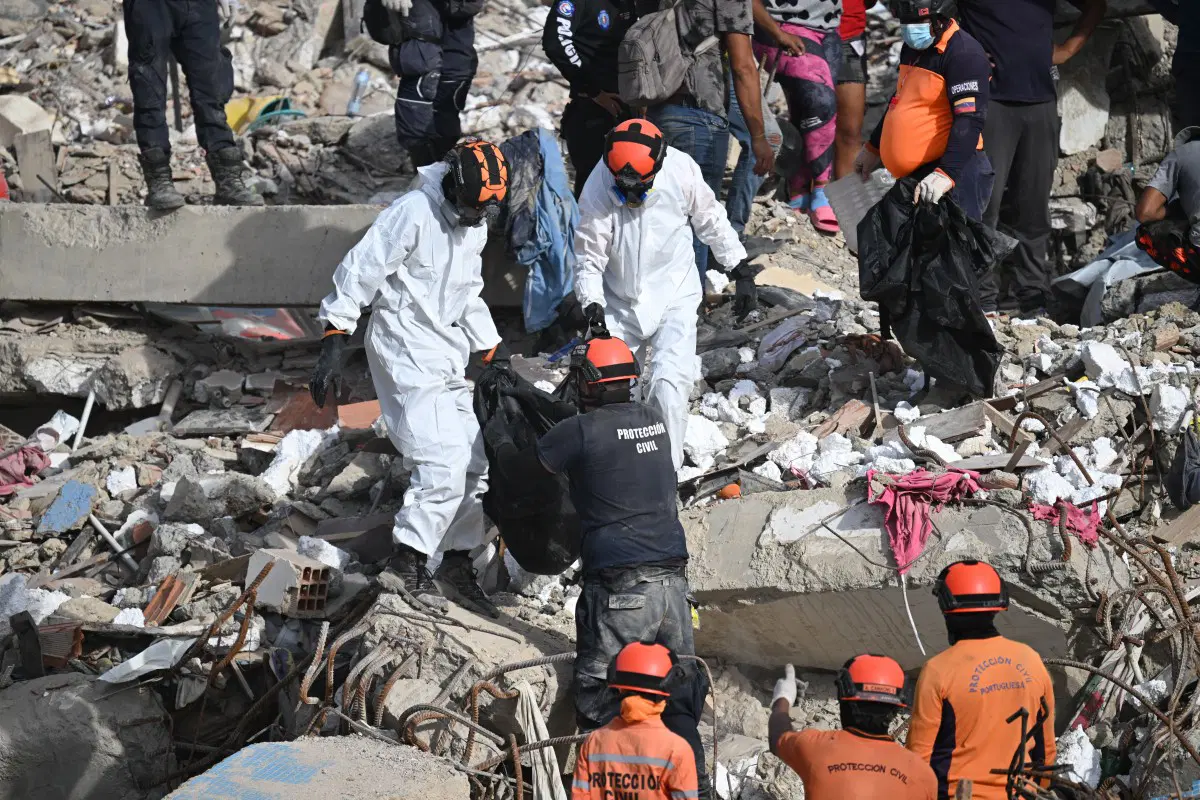
The powerful earthquakes, measuring 7.2 and 7.5 in magnitude, struck within a minute of each other on June 24, causing widespread destruction across the coastal state of La Guaira, located north of the capital, Caracas.
Government officials said the disaster left entire communities in ruins, destroyed critical infrastructure and displaced thousands of residents.
Providing an official update, National Assembly President Jorge Rodriguez disclosed via Telegram that the combined earthquakes claimed the lives of 5,069 people.
According to Rodriguez, the overwhelming majority of the fatalities occurred in La Guaira, the region that suffered the most severe impact from the seismic activity.
Authorities also confirmed that the number of injured remains at 16,740.
Rodriguez noted that although thousands sustained injuries during the disaster, most of those hospitalised have since been treated and discharged.
Emergency response teams continue to provide medical assistance and humanitarian support to those still receiving treatment.
Later on Friday, Interim President Delcy Rodriguez announced that Venezuela had secured $346 million from the International Monetary Fund to support post-earthquake reconstruction and recovery programmes.
The funding is expected to assist in rebuilding damaged infrastructure, restoring essential public services and supporting communities affected by the disaster.
Confirming the financial assistance, IMF Managing Director Kristalina Georgieva stated on X that the international financial institution had worked with relevant stakeholders to facilitate Venezuela’s access to its own resources held by the Fund.
According to Georgieva, the financial support was released to address urgent humanitarian needs arising from the devastating earthquakes.
She explained that the money was drawn from Venezuela’s reserve tranche within the IMF.
The earthquakes left approximately 20,000 people homeless.
Many of those displaced are currently living in temporary camps established by the authorities and humanitarian organisations.
However, officials acknowledge that several of the camps remain overcrowded and continue to struggle with inadequate access to clean water, sanitation facilities and other essential services.
Humanitarian agencies have warned that prolonged displacement and poor living conditions could increase the risk of disease outbreaks unless additional support is provided.
Venezuela currently holds approximately 3.568 billion Special Drawing Rights (SDRs) at the IMF, representing an estimated value of about $5.1 billion.
Access to these resources had previously been restricted because the IMF did not recognise Nicolas Maduro as Venezuela’s legitimate president.
The situation changed earlier this year after political developments led to the restoration of Venezuela’s engagement with major international financial institutions.
In April, both the International Monetary Fund and the World Bank announced the resumption of formal relations with Venezuela.
The renewed engagement followed the removal of Nicolas Maduro from power during a United States-backed military operation in January.
Before the restoration of relations, Venezuela’s interactions with the IMF and World Bank had remained largely frozen since 2019.
The latest financial assistance marks one of the first major international interventions aimed at supporting the country’s recovery following the deadly earthquakes.
Authorities say reconstruction efforts will focus on rebuilding homes, public infrastructure and essential facilities destroyed by the disaster while providing long-term assistance to affected communities.