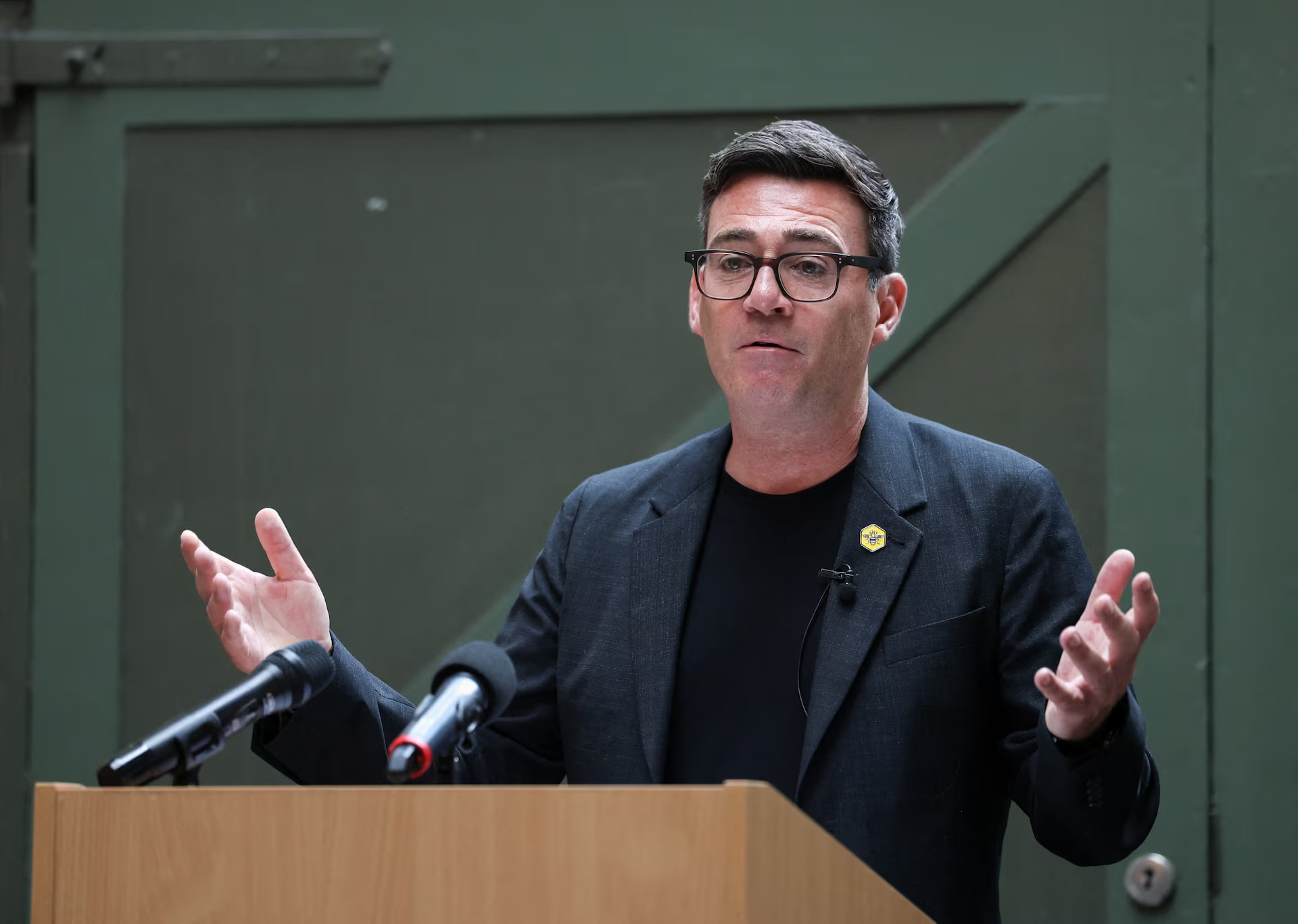
As Andy Burnham prepares to assume office as the United Kingdom’s next prime minister, pressure is mounting on him to address allegations of a long-standing “boys’ club” within the Labour Party by ensuring women occupy half of the senior positions in his first cabinet.
The calls come amid renewed debate over gender representation within Labour, which, despite introducing more equality measures than the Conservative Party, has never elected a woman as its leader.
In contrast, Conservative leader Kemi Badenoch became the fourth woman to lead her party, following former prime ministers Margaret Thatcher, Theresa May and Liz Truss.
Several Labour politicians and party members argue that an entrenched male-dominated culture has prevented women from reaching the highest levels of leadership.
Earlier this year, veteran Labour politician Harriet Harman urged outgoing Prime Minister Keir Starmer to appoint a woman as his effective deputy, arguing that such a move would significantly improve the treatment and representation of women in government.
“We need less lads, lads, lads, and more diversity,” Labour lawmaker Polly Billington told LBC radio earlier this month.
Billington’s remarks reflected growing concerns among female Labour politicians after speculation emerged that Burnham could invite former Foreign Secretary David Miliband back into frontline politics.
“I don’t really need to be organising or advocating for a reunion of the Demon Eyes football club,” she said, referring to a 1998 football team made up of a generation of Tony Blair-era political advisers and future ministers.
Burnham and Miliband were members of the informal football team, alongside several influential Labour figures from the Blair era.
Other former teammates included James Purnell, a former pensions minister reportedly under consideration for the role of Burnham’s chief of staff, and former cabinet minister Ed Balls, who has also been linked with a possible return to government.
Labour Deputy Leader Lucy Powell has also raised concerns about what she described as a culture of hostility toward senior female ministers.
Speaking to The Guardian, Powell said she had personally witnessed “unpleasant” briefings against women serving in the cabinet while working inside Downing Street.
She argued that such behaviour reflected the persistence of a male-dominated political culture at the highest levels of government.
Calls For Equal Representation
Although women have made significant progress in British politics over the past three decades, campaigners argue that representation alone is no longer sufficient.
Before 1997, women accounted for less than 10 per cent of Members of Parliament.
Today, women occupy 266 of the 650 seats in the House of Commons.
Within Labour, women represent 186 MPs, amounting to approximately 46 per cent of the party’s parliamentary members.
Women also currently hold several senior cabinet positions, including Chancellor Rachel Reeves, Foreign Secretary Yvette Cooper and Home Secretary Shabana Mahmood.
Despite those advances, many Labour members believe women continue to be excluded from the most influential decision-making processes.
The Women’s Parliamentary Labour Party has reportedly written to Burnham requesting that women make up 50 per cent of both the cabinet and staff within the Prime Minister’s Office at Number 10 Downing Street.
“We are asking you to demonstrate this change from day one and address the toxicity and misogyny within our own party and government,” they wrote, according to the BBC which saw a draft.
Former minister Jess Phillips also argued that simply appointing women to cabinet positions would not be enough unless they were given genuine authority and influence.
“Giving someone a job … and then just ignoring them when they speak will not work,” she said.
“They have to be imbued with power. Decisions have to be made with women in the room, and those women have to be able to feel that they can speak against the pervading power if that power is a man,” she added.
Burnham has not publicly responded to the demands.
Experts See Opportunity For Change
Political experts say Labour’s failure to elect a female leader remains surprising given the party’s long-standing commitment to gender equality.
Professor Joni Lovenduski of Birkbeck College, University of London, described the situation as unusual, noting that Labour has operated all-women parliamentary candidate shortlists since 1993, unlike the Conservative Party.
She suggested that Labour had historically placed greater emphasis on class representation than gender equality.
Lovenduski also argued that the culture inside Number 10 Downing Street has traditionally been characterised by behaviour that many viewed as “laddish and misogynistic,” regardless of which political party occupied government.
Sarah Childs, a professor specialising in women’s political representation at the University of Edinburgh, said Burnham’s administration could provide an opportunity to reshape political culture.
It was “a moment for potential change because you have got an incoming prime minister who is himself critical of some of the ways of working at Westminster”, she said.