
The United Arab Emirates has accused Iran of launching missile attacks on two commercial vessels navigating the Strait of Hormuz, leaving one crew member dead and eight others injured.
The Emirati government disclosed the incident on Tuesday, describing it as another major escalation in tensions across the Middle East following renewed military exchanges between the United States and Iran.
The latest attack came shortly after the United States carried out another round of strikes against Iranian targets, intensifying the renewed hostilities between both countries.
The UAE, one of Washington’s closest allies in the Gulf region, has in recent days reported several missile and drone attacks allegedly launched from Iran.
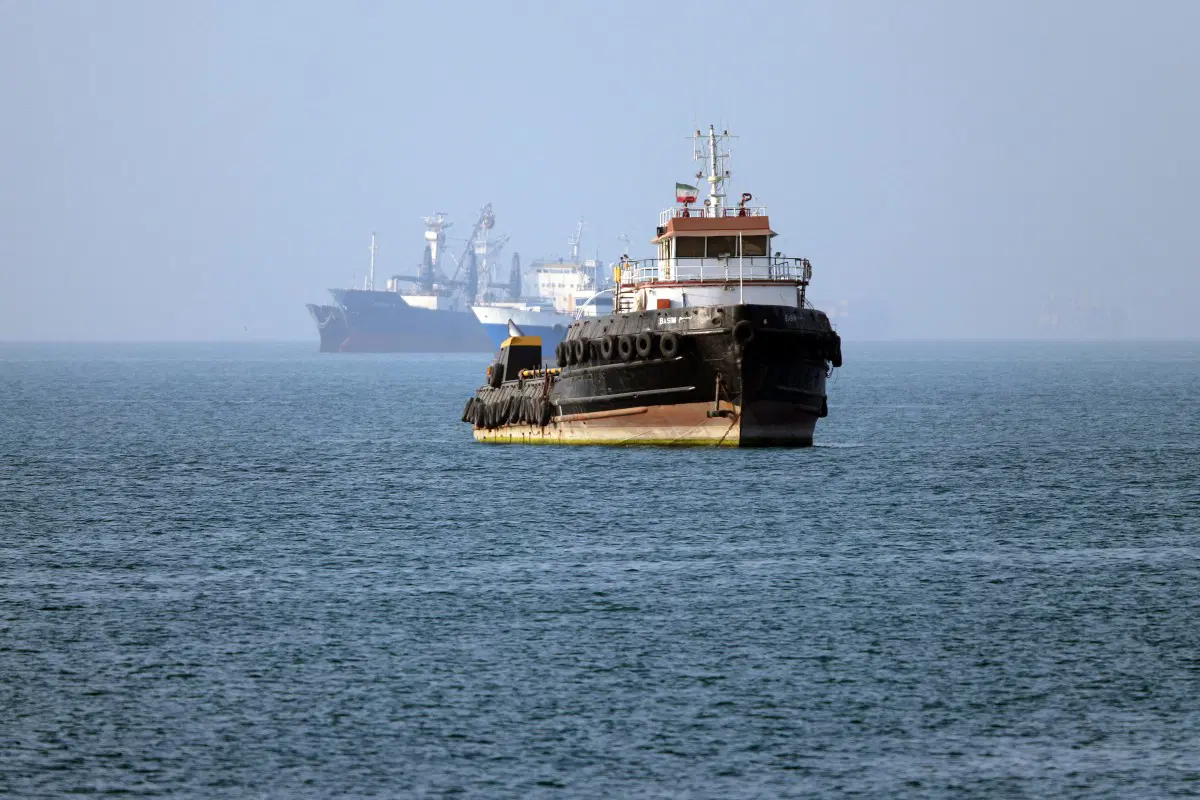
In a statement posted on X, the UAE Ministry of Defence said the vessels were struck while sailing through the southern shipping corridor of the Strait of Hormuz.
“The ministry of Defence announces that the national tankers Mombasa and Al Bahiyah were targeted by two Iranian cruise missiles while transiting the southern shipping lane of the Strait of Hormuz, within Omani territorial waters,” the ministry stated.
According to the ministry, the attack claimed the life of one crew member, identified as an Indian national.
Eight other crew members sustained injuries during the incident, with four of them reported to be in serious condition.
The strikes also ignited fires aboard both vessels, causing significant damage before emergency efforts brought the situation under control.
Authorities said firefighting teams successfully contained the blaze, preventing further destruction to the tankers.
Condemning the attack, the UAE described it as a serious breach of international law and warned that such actions pose a significant threat to regional peace and maritime security.
“The Ministry of Defence condemned this flagrant attack, describing it as a grave violation and a clear breach of international law that threatens regional security and stability,” the statement added.
The Strait of Hormuz remains one of the world’s most strategically important maritime routes, serving as a critical passage for global energy exports.
Before the conflict erupted in February, approximately one-fifth of the world’s oil shipments passed through the waterway, making any disruption capable of affecting international energy markets.
The shipping corridor has remained a central point of dispute between Iran and the United States amid the ongoing regional conflict.
On Monday, US President Donald Trump announced plans to impose charges on all cargo transported through the Strait of Hormuz as compensation for American efforts to keep the route open.
Trump also indicated that the United States would restore restrictions on Iranian shipping that had been lifted under last month’s temporary arrangement between Washington and Tehran.
The renewed violence has heightened concerns over the safety of commercial shipping in the Gulf and the potential impact on global oil supplies as military tensions continue to escalate.