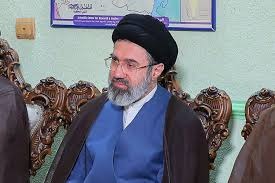
Iran’s Supreme Leader, Mojtaba Khamenei, on Saturday vowed that Tehran would avenge the killing of his father and predecessor, Ali Khamenei, just hours after United States President Donald Trump warned Iran against attempting to assassinate him.
The renewed exchange of threats comes amid heightened tensions between Washington and Tehran following renewed military confrontations that have cast doubt over efforts to restore peace after months of conflict.
Both countries intensified their rhetoric after exchanging attacks earlier this week despite an interim understanding intended to halt hostilities. The conflict, which began in late February after coordinated US-Israeli strikes on Iran, has continued to fuel instability across the Middle East.
In a written message released on Saturday, Mojtaba Khamenei declared that Iran remained committed to retaliating against those responsible for his father’s death.
“Vengeance is the will of our nation and must inevitably be carried out,” he stated.
Mojtaba assumed the position of Supreme Leader following the death of Ali Khamenei during the US-Israeli offensive in February. Since then, he has largely remained out of public view, making Saturday’s statement his first public message since his father’s funeral.
He stressed that Iran’s determination to retaliate was not tied to any individual leader but reflected the collective will of the nation.
“This matter depends neither on my personal existence nor on that of other officials. Whether we are present or not, it will come to pass,” he wrote.
He further disclosed that Iranian authorities had already compiled a list of individuals considered responsible and marked for retaliation.
Earlier on Saturday, President Donald Trump issued a stern warning to Iran through a post on his Truth Social platform, cautioning that any attempt on his life would provoke an overwhelming American military response.
“1000 Missiles are Locked and Loaded and aimed at the Islamic Republic of Iran, with thousands of more to immediately follow, should the Iranian Government act on its threat, pronounced in many corners of the Globe, to assassinate, or attempt to assassinate, the sitting President of the United States of America, in this case, ME!,” Trump wrote.
“Orders have already been given, and the US Military is ready, willing, and able, for a one-year period of time, subject to extension, to completely decimate and destroy all areas of Iran.”
The exchange of warnings came as diplomatic mediators intensified efforts to prevent another full-scale war.
Iranian media reported that a delegation from Qatar travelled to Tehran on Friday in a renewed attempt to revive negotiations between the two countries.
According to Tasnim News Agency, the visit is aimed at reinforcing Qatar’s mediation role in resolving the growing crisis.
Although President Trump has confirmed that talks with Iran will continue, he recently described the negotiations as largely unproductive.
Meanwhile, Iran’s Foreign Minister, Abbas Araghchi, maintained that Tehran had honoured its commitments under the memorandum of understanding reached last month.
According to him, Iran has upheld every aspect of the agreement despite the recent escalation.
“Tehran has so far kept its word,” Araghchi said.
“Reality check: There can only be mutual compliance.”
Despite one round of direct negotiations held in Switzerland and indirect discussions facilitated by Qatar, little progress has been made toward a permanent settlement.
One of the major obstacles remains the future of the Strait of Hormuz, one of the world’s most strategic maritime trade routes.
Iran shut the waterway to commercial shipping during the conflict in retaliation for US-Israeli military strikes, severely disrupting global energy supplies and international trade.
Tehran has since insisted that it intends to maintain control over shipping activities through the strait and has announced plans to impose transit fees on vessels using the passage.
The United States has rejected the proposal, arguing that international law guarantees free navigation through international straits.
Under established international maritime law, countries generally cannot impose tolls on waterways designated for global navigation.
On Saturday, Araghchi arrived in neighbouring Oman for discussions regarding the future administration and security of the Strait of Hormuz.
Reports by Axios and Politico indicated that Washington had issued Tehran a deadline to halt attacks on commercial vessels passing through the strait and publicly acknowledge that navigation remains open.
The latest confrontation followed accusations that Iran targeted three commercial ships it claimed had deviated from approved routes.
In response, the United States launched extensive airstrikes against approximately 90 targets inside Iran, according to the US military.
Iran’s Health Ministry reported on Saturday that the attacks killed at least 17 people and injured another 115.
The American strikes also prompted Iranian retaliatory attacks against several Gulf countries hosting US military installations.
Despite the growing military tensions, Qatar has continued efforts to revive diplomatic engagement.
The Emir of Qatar reportedly held discussions with Pakistani Prime Minister Shehbaz Sharif on Friday as part of broader regional mediation efforts.
Sharif also confirmed speaking with Iranian President Masoud Pezeshkian, urging him to preserve what he described as the region’s “hard-earned peace.”
However, Iran’s Parliament Speaker and chief negotiator in discussions with Washington, Mohammad Bagher Ghalibaf, insisted that Iran would never surrender under external pressure.
“Ending the war is a priority for the countries of the world, but everyone must know that this confrontation will never end with Iran’s surrender,” Ghalibaf said.
He added that the Iranian people remained prepared to defend their country under any circumstance.
“Iranians are fully prepared to defend ourselves,” he declared.