As FG reviews operations
Troops welfare demands raise concerns
Nigerians remain unconvinced
Despite renewed military operations, improved troop welfare and sweeping security reforms by the Federal Government, many Nigerians remain unconvinced that the tide has turned, exposing a widening gulf between official optimism and public confidence, writes DAUDA ISMAIL.
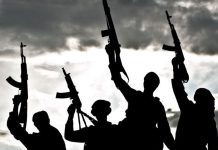
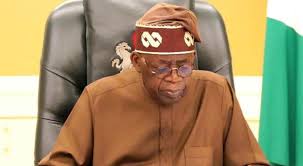
From renewed military offensives and improved troop welfare to high-level security consultations and renewed calls for state police, the Federal Government has intensified efforts to confront Nigeria’s worsening insecurity. Yet, despite these interventions, millions of Nigerians remain unconvinced that the country has fully turned the corner, highlighting a widening gap between official assurances and public perception. That gap became more evident on Thursday, July 9, when President Bola Ahmed Tinubu convened an emergency security meeting at the Presidential Villa, Abuja, bringing together military commanders, intelligence chiefs and senior security advisers to review the nation’s security situation. The closed-door meeting, which lasted over two hours, followed renewed attacks in parts of the country and recent military operations against terrorists and bandits. Although no detailed communiqué was released, sources said discussions focused on strengthening inter-agency cooperation, assessing ongoing operations and developing new strategies to counter emerging threats.
Those present included the National Security Adviser, Mallam Nuhu Ribadu; Defence Minister Mohammed Badaru Abubakar; Chief of Defence Staff, General Christopher Musa; Chief of Army Staff, Lieutenant General Olufemi Oluyede; Chief of Defence Intelligence, Major General Emmanuel Undiandeye; DSS Director-General Adeola Ajayi; NIA Director-General Mohammed Mohammed; Inspector-General of Police Kayode Egbetokun and other senior officials. The meeting came shortly after troops of Operation FANSAN YAMMA, supported by the Nigerian Air Force, disrupted a major terrorist movement in Zamfara and Katsina states. Military authorities said airstrikes targeted a convoy of armed terrorists, while ground troops neutralised several fighters, including a notorious bandit commander linked to a major criminal network.
In the North-East, troops under Operation Hadin Kai have also continued operations against insurgent groups attempting to attack military formations and regain influence. Following an earlier security briefing with the President, General Musa insisted that the Armed Forces remained in control of ongoing operations, maintaining that terrorists and bandits were suffering significant losses. “Contrary to what you may read or hear, the terrorists and bandits are taking heavier casualties. Their commanders are being eliminated regularly,” he said.
While the government points to these operations as evidence of progress, continued attacks across parts of the country show that significant challenges remain.
Investing in Troops and Strengthening Capacity
Beyond military operations, the Tinubu administration has prioritised troop welfare, recognising that morale and operational effectiveness are closely linked. A major intervention has been the increase in soldiers’ remuneration. According to the Defence Minister, the minimum monthly salary of Nigerian soldiers has risen from ₦49,000 to ₦100,000 under the government’s welfare reforms. He acknowledged, however, that defence funding remains below operational requirements, stressing that sustained investment is necessary to maintain counter-terrorism efforts.
The government has also increased spending on logistics, insurance, medical care, accommodation, equipment and mobility, measures defence authorities say are improving the conditions of personnel deployed to dangerous theatres. General Musa has repeatedly emphasised that motivated troops perform better, noting that improved welfare has positively affected military operations.
The Defence Minister has also called for tougher punishment for kidnapping, including possible capital punishment for convicted offenders, arguing that stronger deterrence is needed against increasingly organised criminal groups. On the abduction of schoolchildren in Oyo State, he alleged that criminals were attempting to pressure security agencies into releasing detained kingpins, insisting that government would not yield to such demands. He also dismissed claims of poor feeding among soldiers, describing viral social
media reports as misleading and manipulated.
However, analysts argue that while troop welfare is important, it is only one component of a broader strategy required to address insecurity.
State Police: The Search for a New Security Structure
Beyond military interventions, the Federal Government continues to support the establishment of state police as part of wider security reforms. For years, stakeholders have questioned whether a centralised policing system can effectively manage the security demands of a country with more than 220 million people and diverse regional challenges.
President Tinubu has backed constitutional reforms to allow state police, arguing that decentralised policing could improve intelligence gathering, strengthen community involvement and enhance rapid response. Supporters believe locally controlled police formations would understand their communities better and prevent crimes more effectively. The Nigeria Governors’ Forum has also supported the proposal.
However, concerns remain over political interference, funding, accountability and possible abuse of power. Analysts insist that state police can only succeed with clear constitutional safeguards, professional standards and independent oversight.
The Challenge of Restoring Public Trust
Security agencies have continued coordinated operations against terrorism, banditry, kidnapping and other criminal activities across the country. In the North-East, troops continue campaigns against insurgents, while operations in the North-West and North-Central target bandit networks responsible for attacks on communities and disruption of agricultural activities.
The government has also strengthened cooperation among the military, police, intelligence agencies and other security institutions through improved information sharing and joint operations. The National Security Adviser, Mallam Ribadu, has maintained that progress is being made, although he admits that challenges built over decades cannot disappear overnight.
The administration has further invested in surveillance technology, intelligence capabilities and operational equipment to improve security response. Despite these efforts, the greatest challenge remains restoring public confidence. For ordinary Nigerians, insecurity is not measured by official statements or military statistics but by daily experiences — the ability to travel safely, farm without fear, operate businesses securely and sleep peacefully.
Communities affected by attacks, families of kidnapped victims and displaced farmers often remain sceptical when fresh incidents continue to occur despite government assurances. Security experts argue that defeating criminal groups requires more than military victories. They stress the need for effective policing, swift justice, stronger border control, community participation and solutions to underlying issues such as unemployment, poverty and illegal arms trafficking.
The Federal Government’s security interventions represent a major effort to reshape Nigeria’s response to insecurity. However, their success will ultimately be judged by tangible improvements in the lives of citizens. A farmer returning safely to his land, a traveller moving without fear, and families reunited with kidnapped loved ones will provide stronger evidence of progress than official declarations.
Nigeria’s security battle is therefore being fought on two fronts: defeating those threatening the nation’s peace and rebuilding public trust. Until citizens begin to see measurable improvements that match government assurances, the country’s
journey towards lasting security will remain a work in progress.