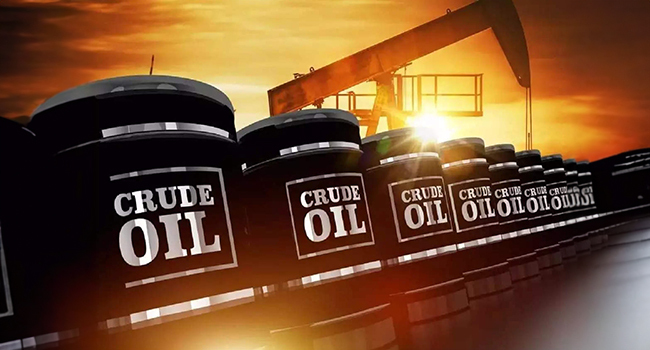
Global oil prices extended their gains on Wednesday after renewed military confrontation between the United States and Iran reignited fears over the security of the Strait of Hormuz, one of the world’s most critical energy shipping routes.
The latest escalation followed fresh US military strikes on Iranian targets after three commercial vessels were reportedly attacked while passing through the strategic waterway.
The renewed hostilities have heightened concerns over the future of peace negotiations between Washington and Tehran and raised fresh uncertainty over the uninterrupted movement of crude oil through the Gulf.
The geopolitical tensions also deepened investor anxiety across global financial markets, adding to an ongoing sell-off in technology stocks driven by concerns over inflated valuations and uncertainty about when companies will begin generating significant returns from massive investments in artificial intelligence.
The United States Central Command (CENTCOM) confirmed that the latest military operation targeted Iran in retaliation for attacks on commercial vessels transiting the Strait of Hormuz.
According to the US military, the strikes were intended to impose “heavy costs” on Iran for threatening international maritime trade.
Reports indicated that the three affected vessels were attacked near Oman, which had earlier proposed the creation of a temporary shipping corridor hugging its coastline to guarantee safer navigation.
However, Iran reportedly rejected the proposal, insisting instead on imposing transit fees on ships using the Strait of Hormuz.
Reacting to the US action, Iran’s Foreign Ministry accused Washington of repeatedly breaching an earlier memorandum of understanding reached between both countries.
The ministry warned that Tehran would take what it described as “decisive measures” to safeguard its national security and strategic interests.
The latest military strikes also came shortly after the United States withdrew a temporary sanctions waiver that had allowed limited trade involving Iranian oil.
The renewed uncertainty immediately pushed crude prices higher.
West Texas Intermediate (WTI) crude gained more than two per cent to trade at $72.03 per barrel, while Brent crude rose over two per cent to $75.76 per barrel, with both benchmarks reaching their highest levels in two weeks.
Security analyst Andreas Krieg of King’s College London said Iran remained determined to enforce its proposal to collect fees from vessels using the Strait of Hormuz.
“We are now in a sensitive period where potential alternatives to an Iranian toll or fee system are being explored,” Krieg said.
“Iran is sending a clear signal that no alternative will be accepted.”
The worsening security situation also weighed heavily on global stock markets.
Asian equities recorded broad losses, with South Korea’s Kospi index dropping more than one per cent after already suffering significant declines in recent sessions.
Technology shares continued to face pressure despite strong earnings from semiconductor giant Samsung, which recently reported a surge of more than 1,800 per cent in second-quarter operating profit, driven largely by growing demand for artificial intelligence chips.
Major indices in Tokyo, Shanghai, Sydney, Singapore, Wellington and Taipei all closed lower, while Hong Kong’s Hang Seng Index bucked the trend with gains of more than one per cent.
Market analysts noted that geopolitical developments had temporarily overtaken artificial intelligence as the dominant influence on investor sentiment.
According to Nick Twidale of AT Global Markets, investors are once again shifting their focus to developments in the Middle East after weeks of AI-driven market optimism.
“After AI and tech sentiment had dominated market moves over the last couple of weeks, investors are now forced to move back to focusing on geopolitical tensions,” Twidale said.
“And this should dominate market sentiment, especially if we see a further escalation in the coming sessions.”
The US dollar also strengthened against major global currencies as traders increasingly anticipated that higher oil prices could keep inflation elevated for longer, potentially forcing the US Federal Reserve to maintain tighter monetary policy or even consider additional interest rate increases.