A single laboratory error can alter the course of a family’s future. In Nigeria, where sickle cell disease already exacts a devastating human and financial toll, inaccurate genotype testing is quietly deepening an unfolding public health crisis despite an emerging hope for patients and their caregivers, writes JULIET IBIMINA.
For Mr and Mrs Matthew Ponfa, a routine hospital visit became the precise moment their lives fractured.
Their 11-month-old son had suddenly dissolved into inconsolable, agonising screams. Nothing they did could soothe him. Panicked, the couple rushed him to a nearby clinic, where the attending doctor asked a seemingly simple question: “What are the parents’ genotypes?”
Matthew quickly pulled up the laboratory results saved on his phone before their wedding. The report was clear: Matthew was AA; his wife was AS. Believing they were genetically compatible, they had married with the serene confidence that they had insulated their future children from the scourge of sickle cell disease.
However, the doctor gently advised them to repeat the test using a more advanced method. The subsequent result brought a devastating truth. Matthew was not AA. He was AS.
Both parents carried the sickle cell trait, and their infant son had inherited HbSS—the most severe, debilitating form of the condition.
A Nation in Pain: The Scale of the Burden
The Ponfas’ nightmare is far from an isolated tragedy. It mirrors a silent crisis reverberating across Nigeria, where inaccurate genotype results from substandard laboratories are quietly inflating the country’s already staggering healthcare burden.
Medical laboratory scientist Mr Timothy Adeoye warns that genotype testing is far too critical to be left to chance.
“One inaccurate result can entirely alter the course of a family’s future,” Adeoye notes. He blames outdated testing methods, poor quality control, and human error for these catastrophic slip-ups, urging a nationwide shift toward High-Performance Liquid Chromatography, HPLC, and molecular testing.
Nigeria’s Sickle Cell Crisis by the Numbers
| Metric | Statistic |
|---|---|
| Trait Carriers | 20% to 30% of the Nigerian population |
| Annual Births (HbSS) | Approximately 150,000 babies per year |
| Global Share | Africa carries the largest global burden |
For those born with the condition, life becomes a relentless battle against their own biology. Dr Ugonna Fakile, a Consultant Haematologist at Lagos University Teaching Hospital (LUTH), explains that the disease mutates normal, pliable red blood cells into rigid, crescent shapes.
“These cells block blood vessels and choke off oxygen supply,” Dr Fakile explains. “It triggers excruciating pain and can lead to strokes, kidney failure, chest complications, and permanent organ damage.”
The Crushing Financial Toll
Beyond the physical torture lies a secondary, slow-burning crisis: absolute financial exhaustion.
Since their son’s diagnosis, the Ponfa family has had to find roughly ₦68,500 every single month just for routine management—including Hydroxyurea, folic acid, and basic pain relief. This figure completely excludes the unpredictable costs of emergency admissions, blood transfusions, and transport.
Consider the mathematics of survival in modern Nigeria: with the national minimum wage hovering at ₦70,000, a single child’s routine healthcare effectively swallows an entire household’s primary income.
“You no longer budget just for food, rent, or school fees,” the couple shares quietly. “You begin to calculate your child’s survival alongside every other household expense.”
For adults living with the condition, like Eno Bassey, Founder of Support for Sickle Cell Nigeria, the struggle is also deeply emotional. Bassey, who is currently undergoing rehabilitation after developing a dependence on pentazocine—a potent opioid frequently used to dull severe crises—emphasises that patients are fighting on multiple fronts: against pain, financial ruin, and societal stigma.
The Phytomedicine Pioneer
Yet, amidst this bleak landscape of institutional strain and financial despair, an extraordinary counter-narrative has been unfolding for decades in a bustling laboratory in Abuja. Enter Professor Benjamin Amodu.
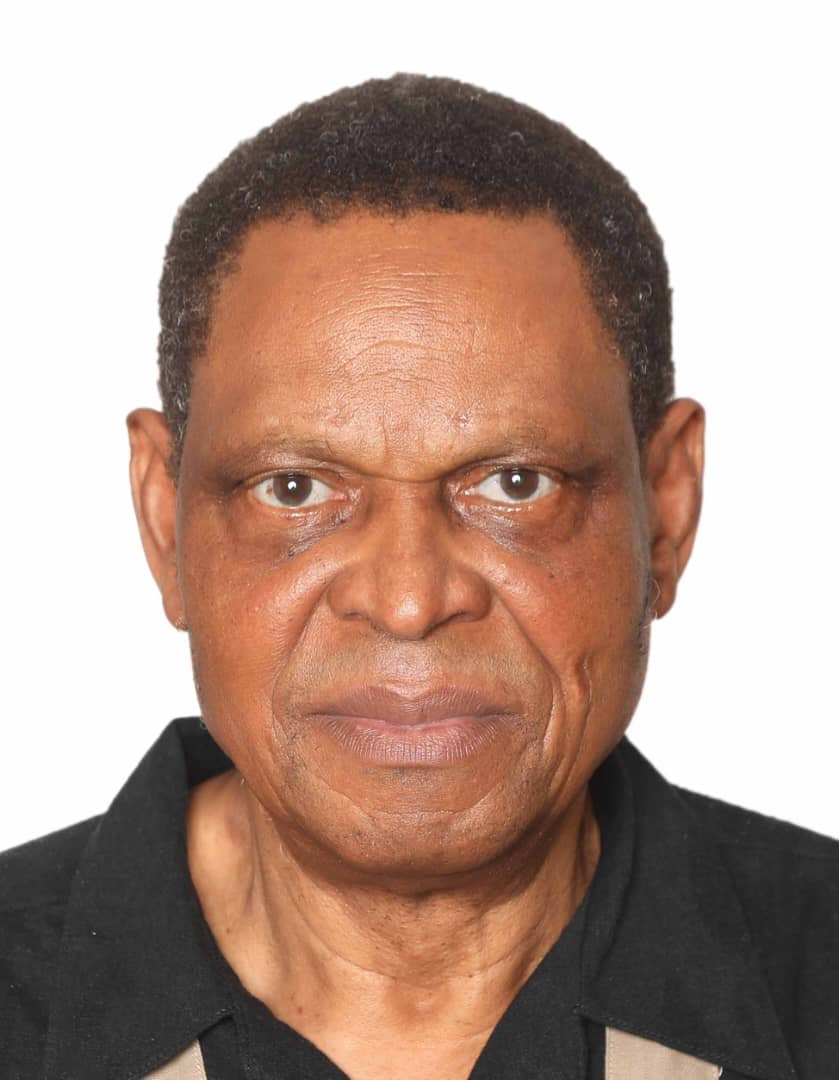
An industrial pharmacist turned phytomedicine researcher, Professor Amodu has spent over forty years pioneering natural therapies that he asserts do something orthodox medicine deems impossible: reversing the sickle cell genotype from SS to AS, or even entirely to AA.
Amodu’s trajectory was set during his 1979/1980 graduation from Ahmadu Bello University, Zaria, when World Health Organisation, WHO, officials delivered a prophetic warning. “They suggested that over time, certain synthetic medicines would begin to lose their efficacy, and that natural medicine would become increasingly vital,” Amodu recalls. “I took that warning to heart.”
Refusing the predictable, lucrative path of synthetic pharmaceutical manufacturing, Amodu threw himself into indigenous herbal research. Today, as a Professor of Phytomedicine from Triune Biblical University in the United States, his formulations are dispatched globally—reaching patients across Asia, the Middle East, Europe, North America, and Oceania.
For Amodu, the objective has never been to replace orthodox medicine, but to create a powerful symbiosis. He points to artemisinin-based malaria treatments—derived from traditional Chinese herbs—as proof that rigorous natural research can reshape global health.
“Interestingly, we have been reversing patients’ genotypes from SS to either AS or even AA, not only here in Nigeria, but as far away as the Netherlands, the United Kingdom, and Australia,” Amodu asserts.
A Way Forward
While the Federal Government, represented by the Coordinating Minister of Health and Social Welfare, Prof. Muhammad Pate, continues to scale up conventional interventions like newborn screening programmes and specialized treatment centres, families on the ground remain trapped in a brutal monthly cycle of financial calculation.
Traditional, Complementary, and Alternative Medicine, TCAM, could offer the systemic relief Nigeria desperately needs. As Professor Amodu observes: “In many developed nations, traditional and conventional medicine complement one another seamlessly. Why should it be any different here in Nigeria?”
Until such integrations are fully realised and standardised, the burden of sickle cell will continue to extract a heavy toll—paid for in the currency of a child’s tears and a family’s empty bank account.