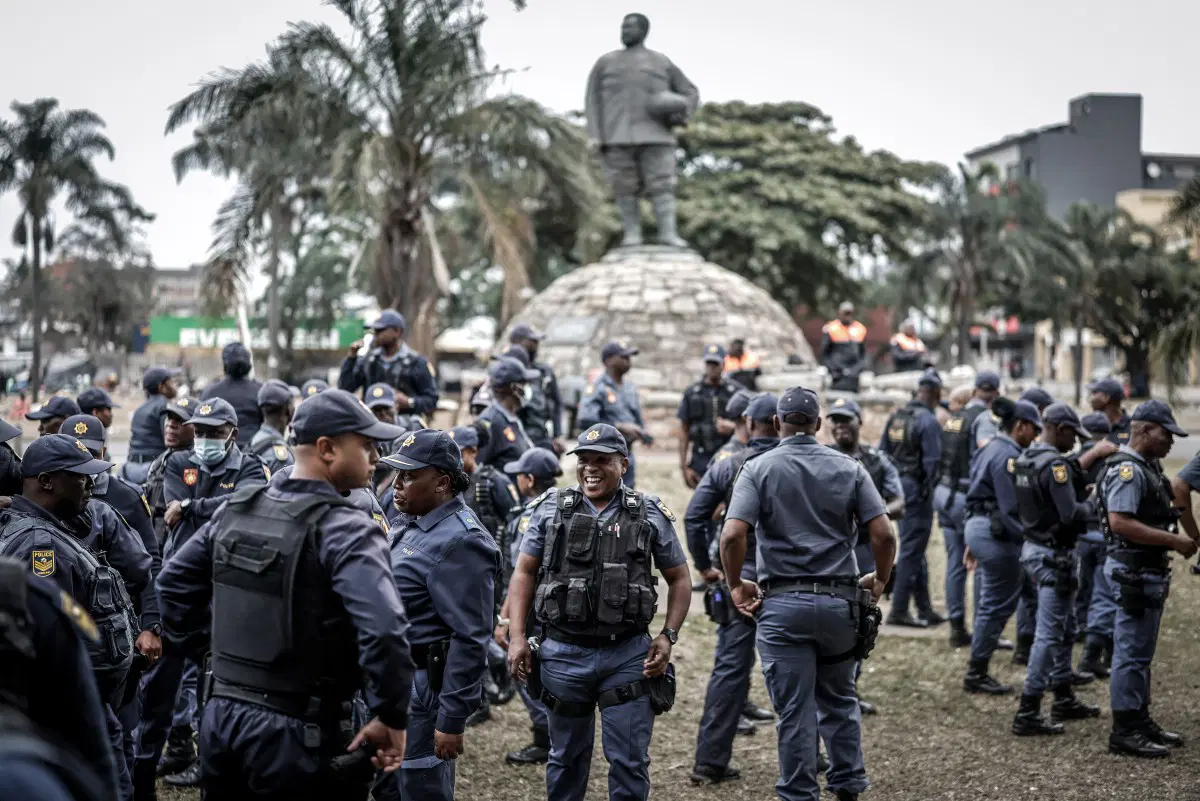
South African police were deployed across several parts of the country on Tuesday to prevent unrest as an unofficial deadline issued by citizen-led anti-immigration groups for undocumented foreign nationals to leave the country came into effect.
The heightened security presence followed weeks of tension that have already forced thousands of migrants to flee, while hundreds sought temporary refuge in different cities awaiting evacuation assistance.
Authorities increased patrols in areas considered vulnerable to violence and looting as fears mounted over possible clashes linked to the anti-immigration campaign.
Recent attacks have claimed the lives of at least four foreign nationals, including two Mozambicans, an Ethiopian and a Malawian.
In response, several African governments have arranged flights and buses to evacuate and repatriate their citizens from South Africa.
One of those preparing to leave, 45-year-old Malawian builder Peter Madsoan, said he chose to return home rather than risk becoming a victim of violence.
“I decided to go to avoid being attacked,” he said while waiting with thousands of others in the port city of Durban.
“I am a breadwinner back at home in Malawi. It is better for me to go than to die in South Africa.”
According to the Border Management Authority, approximately 25,000 people have already been repatriated over the past few weeks.
South African officials disclosed that about 15,000 Malawians had been processed for departure, while thousands of citizens from Zimbabwe, Mozambique, Ghana, Nigeria and several other countries have also returned home.
Uganda has also announced plans to begin evacuating nearly 750 of its nationals in the coming days.
As the June 30 deadline arrived, thousands of migrants gathered outside consulates and designated collection centres in Cape Town and Johannesburg in hopes of securing transportation back to their home countries.
Many claimed they had lost their jobs or been evicted by landlords worried about possible penalties from authorities or attacks by vigilante groups.
Zimbabwean national Evelyn Chinooneka said she and her 10-month-old child had been sleeping outside the Zimbabwean consulate in Cape Town for several days while waiting for transport.
“It was raining, all the clothes are wet now. We need our buses to come,” she said.
Chinooneka explained that she had worked on a farm outside Cape Town for four years before being instructed to leave.
Meanwhile, in Johannesburg, groups of men dressed in traditional Zulu attire marched through Soweto carrying shields and sticks while chanting “Abahambe,” meaning “Let them go.”
The June 30 deadline was declared by the anti-illegal immigration organisation March and March, which described the date as the beginning of a nationwide campaign demanding the deportation of undocumented migrants.
The group’s leader, Jacinta Ngobese-Zuma, insisted the movement was not advocating violence despite growing concerns.
“We are not calling for violence… no one will be killed on the 30th of June, and no looting will take place in our name,” she said.
The government, however, fears a repeat of the widespread unrest experienced in July 2021, when more than 350 people lost their lives during days of riots and looting triggered by the imprisonment of former President Jacob Zuma.
President Cyril Ramaphosa has announced additional measures to tackle illegal immigration while appealing to traditional leaders to help reduce tensions.
KwaZulu-Natal Premier Thami Ntuli also warned against violence and xenophobia.
“Whatever our concerns about undocumented migration, however legitimate the frustrations beneath them, we will not allow this province to be set alight a second time, whether by criminality or by xenophobia,” he said.
South Africa remains one of Africa’s largest economies and continues to attract migrant workers despite facing unemployment exceeding 30 percent, rising crime and deteriorating public services.
While anti-immigration groups argue that undocumented migrants compete for jobs, contribute to crime and place pressure on limited public resources, labour analyst Dale McKinley believes the real issues lie elsewhere.
“The xenophobic groups have got it wrong,” he said.
“This is a problem of governance, corruption, and mismanagement.”
McKinley also argued that anti-migrant sentiments have become increasingly politicised ahead of South Africa’s local government elections scheduled for November.