By Ladi Gbegi
The Medical Rehabilitation Therapists Board of Nigeria, MRTBN, in partnership with Built to Last, BTL, has trained Nigerian physiotherapists on emerging rehabilitation technologies aimed at strengthening professional competence, improving patient outcomes and promoting the adoption of modern physiotherapy practices across the country.
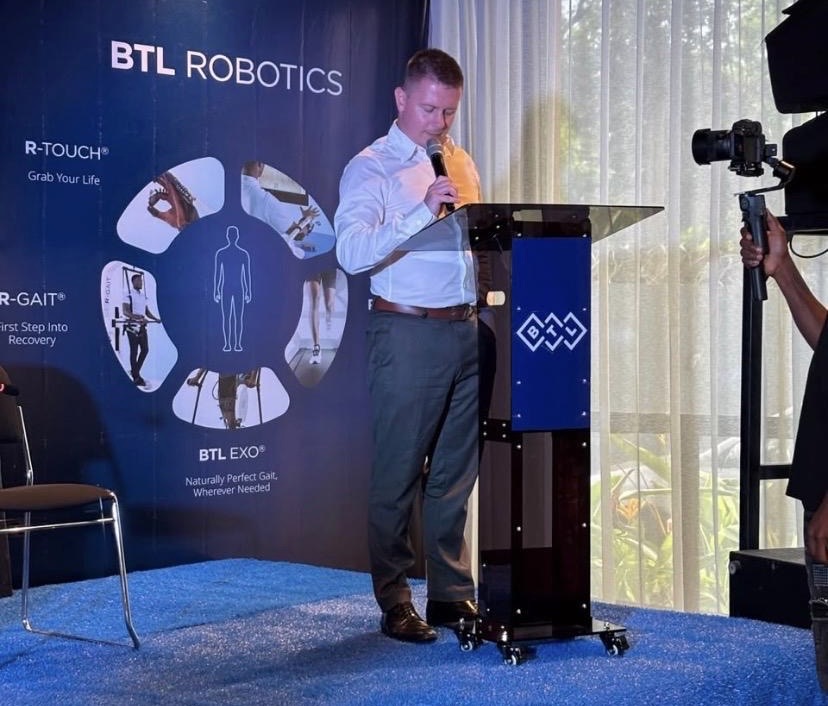
The training, held in Abuja, brought together physiotherapists from across Nigeria for hands-on experience with globally certified rehabilitation technologies, while reinforcing compliance with professional standards and regulatory requirements.
Speaking at the event, the Registrar of the Medical Rehabilitation Therapists Board of Nigeria, Yusuf Rufai, said the collaboration reflects the board’s commitment to ensuring that rehabilitation professionals possess both the clinical knowledge and technical expertise required to utilise modern rehabilitation equipment effectively.
According to him, while BTL provides innovative rehabilitation technologies used in physiotherapy practice, the board is responsible for regulating professional standards, knowledge, skills and practice.
“Our responsibility is not only to regulate practitioners but also to ensure that these technologies are properly integrated into our regulatory framework so that they are used effectively to improve patient outcomes,” Rufai said.
He explained that the programme was designed to strengthen practitioners’ competence while fostering continuous engagement between the regulator and stakeholders, rather than relying solely on enforcement.
We have changed our approach from simply making policies and sanctioning offenders to engaging stakeholders so they understand the policies, because many instances of non-compliance arise from inadequate understanding rather than deliberate misconduct,” he said.
Rufai noted that limited access to rehabilitation technologies and inadequate technical capacity remain major challenges confronting physiotherapy practice in Nigeria. While some health facilities lack modern rehabilitation equipment, others have the technologies but require additional training to maximise their benefits.
He stressed that successful rehabilitation depends not only on sophisticated equipment but also on practitioners’ ability to make sound clinical decisions.
“It is not enough to have the machines. Physiotherapists must understand when and how to use them because applying the wrong technology to the wrong patient could even be detrimental to recovery,” he said.
The registrar disclosed that the board would continue collaborating with industry stakeholders to expand training opportunities while advocating greater investment in rehabilitation infrastructure and workforce development.
He observed that Nigeria’s rehabilitation sector continues to face a significant workforce shortage, with fewer than 10,000 registered medical rehabilitation professionals serving a population of more than 200 million. The shortage, he said, limits access to specialised rehabilitation services, particularly at the community level.
To improve access, Rufai called for dedicated government funding for rehabilitation services, broader health insurance coverage for modern rehabilitation technologies and sustained investment in training more rehabilitation professionals.
He linked the board’s advocacy to the World Health Organisation’s Rehabilitation 2030 Initiative, which seeks to strengthen rehabilitation services by addressing gaps in governance, financing and workforce development. According to him, the Federal Ministry of Health and Social Welfare has already commenced implementation of the initiative.
“We are advocating dedicated budgetary allocations for rehabilitation across government health facilities. We also want health insurance to cover the use of rehabilitation technologies so that providers can be reimbursed for the services they render,” he said.
Also speaking, physiotherapist Nkiru Jibauku underscored the importance of investing in advanced rehabilitation technologies, noting that physiotherapy has evolved far beyond traditional massage-based treatment.
She said modern rehabilitation technologies now support tissue repair at the cellular and molecular levels, significantly reducing recovery times for patients with acute injuries, post-operative conditions and chronic musculoskeletal disorders.
“What previously took about three months to heal can now be managed in about six weeks with the appropriate technology and early intervention,” she said.
The Head of Sales at BTL Medical Nigeria, Tony Odhiambo, said the partnership with MRTBN was designed to familiarise physiotherapists with globally certified rehabilitation devices while promoting the integration of evidence-based technologies into routine clinical practice.
According to him, equipping physiotherapists with modern rehabilitation solutions will strengthen physiotherapy services and ultimately improve patient outcomes across Nigeria.