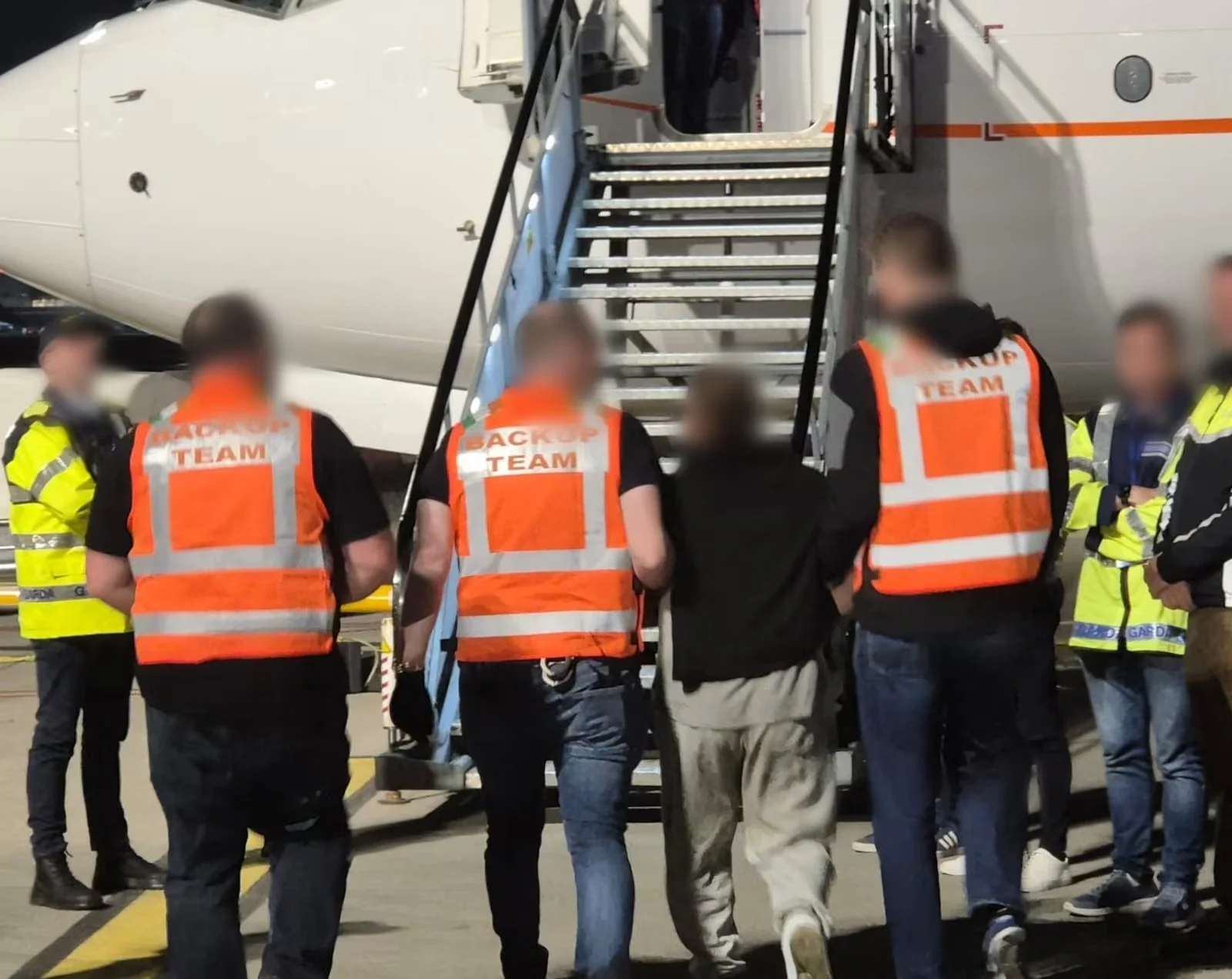
The Irish government has deported 42 South African nationals who were living illegally in the country, sending them back to Johannesburg on a charter flight that cost an estimated €735,000 (about $845,000).
According to reports, the group — made up of nine men, 18 women and 15 children travelling within family units — was removed from Dublin Airport on Thursday and arrived in South Africa on Friday morning. It marks the fourth major deportation flight carried out by Ireland in 2026.
The operation was coordinated by the Garda National Immigration Bureau, which issues deportation orders to individuals found to be residing illegally in the country after they fail to take up voluntary return options.
Irish authorities also confirmed that two of those deported had prior criminal convictions in Ireland.
The Irish government maintains that while South Africa is classified as a safe country of origin, asylum claims are only considered valid where applicants can provide evidence of a direct and credible threat to their safety.
Minister for Justice Jim O’Callaghan defended the operation, stressing that enforcement of immigration laws is essential for maintaining public confidence and system integrity.
“Our immigration system must be rules-based and robust,” he said, adding that deportation enforcement is a necessary part of the legal framework.
He also noted that the €735,000 cost represents an initial estimate, with final figures expected after full invoicing is completed.
Officials said Thursday’s flight is part of a broader enforcement drive, with three earlier operations in 2026 leading to the removal of 130 people, including EU nationals deported on grounds of criminality.
The development comes amid broader migration tensions in South Africa, where rising unemployment and anti-immigrant sentiment have contributed to increased pressure on undocumented migrants.
Reports also indicate that South Africa is facing domestic and international scrutiny over migration-related unrest, with some citizens abroad experiencing backlash linked to broader political and economic tensions.