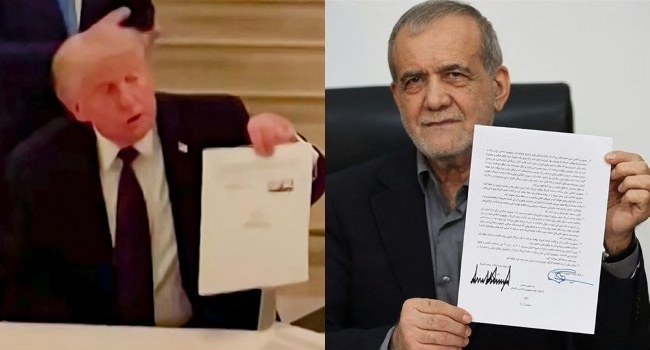
The United States and Iran have signed a memorandum of understanding aimed at ending months of conflict in the Middle East, setting the stage for formal peace negotiations that are expected to culminate in a comprehensive agreement within 60 days.
The agreement was signed by US President Donald Trump and Iranian President Masoud Pezeshkian, with Pakistan playing a key mediation role in bringing both sides to the negotiating table. A formal ceremony is scheduled to take place in Switzerland on Friday, where technical discussions on the implementation of the framework will officially begin.
The memorandum seeks to bring an end to a conflict that erupted on February 28 following coordinated US and Israeli strikes on Iran. The war triggered retaliatory missile and drone attacks by Tehran, disrupted regional stability, and severely affected global trade routes, particularly through the strategic Strait of Hormuz.
President Trump confirmed the signing after a dinner event at the Palace of Versailles held alongside a G7 summit. Iranian officials also acknowledged that the document had been finalized by both leaders.
One of the central pillars of the agreement is a massive reconstruction package for Iran. Under the framework, the United States and its regional partners will work toward establishing an economic recovery and development plan worth at least $300 billion to help rebuild infrastructure and stimulate economic growth.
On the nuclear issue, Iran reaffirmed its commitment not to pursue or develop nuclear weapons. The memorandum states that a mutually agreed mechanism will be created to manage Iran’s enriched uranium stockpiles, with international supervision provided by the International Atomic Energy Agency (IAEA). Until a final agreement is reached, Iran will maintain the current status of its nuclear activities while the United States refrains from imposing new sanctions or deploying additional military forces in the region.
The agreement also contains provisions for a permanent cessation of hostilities. The United States, Iran, and their respective allies have committed to ending military operations on all fronts, including in Lebanon. Both parties pledged not to initiate future military actions against each other and to respect the sovereignty and territorial integrity of countries in the region.
A key aspect of the memorandum is the commitment to conclude a final and comprehensive agreement within 60 days. The negotiation period may be extended if both sides agree.
The United States has also agreed to begin lifting restrictions imposed on Iranian ports, including measures introduced in April. According to the framework, the blockade will be gradually removed and fully terminated within 30 days. Washington also pledged to withdraw its forces from areas near Iran within 30 days after a final peace agreement is concluded.
On maritime trade, Iran agreed to facilitate the safe movement of commercial vessels through the Strait of Hormuz and surrounding waters. Commercial shipping activities are expected to resume immediately and return to full operational capacity within 30 days once the area is declared safe.
The memorandum further provides for the gradual removal of US sanctions against Iran. Washington committed to releasing frozen Iranian assets and issuing waivers to allow the export of Iranian crude oil, petroleum products, and related services, including banking, insurance, and transportation transactions, pending the complete removal of sanctions.
Pakistan’s Prime Minister, Shehbaz Sharif, who helped broker the understanding, described the development as a significant diplomatic breakthrough. He confirmed that the memorandum had been electronically signed and said the Switzerland ceremony would formally launch the technical phase of negotiations.
The agreement also stipulates that any final settlement reached between both countries will be backed by a binding resolution of the United Nations Security Council, providing international legal support for the implementation of the peace framework.
The signing of the memorandum represents the most significant diplomatic engagement between Washington and Tehran in years and is being viewed as a major step toward restoring stability in the Middle East after months of conflict and economic disruption.