

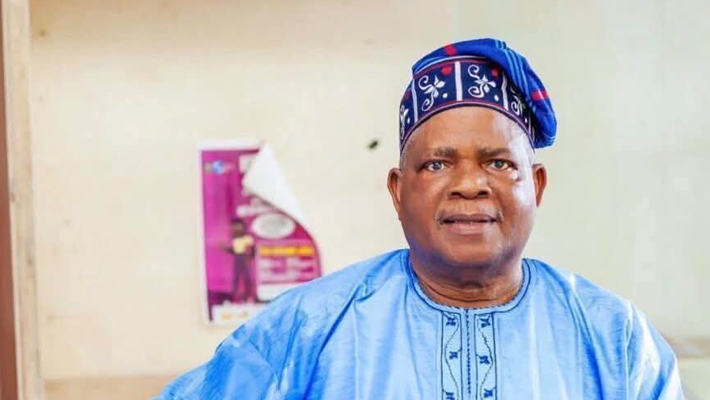
Veteran Nigerian actor, dramatist, filmmaker, and academic, Kola Oyewo, has passed away at the age of 80, bringing an end to a remarkable career that spanned more than six decades in theatre, film, and academia.
The death of the celebrated thespian was announced on Friday by fellow actor Kunle Afod, who paid tribute to Oyewo’s immense contributions to the Nigerian entertainment industry.
In an emotional Instagram post, Afod wrote: “Kola Oyewo has taken his final bow. His remarkable talent, timeless performances, and immense contributions to the Nigerian theatre and film industry will never be forgotten. His legacy will continue to inspire generations to come. Rest well, sir. Your work lives on. It’s a wrap.”
As of the time of reporting, the cause of death had not been officially disclosed. However, Oyewo had previously spoken publicly about his struggle with prostate enlargement, a condition he said affected his health and limited his ability to take on physically demanding acting roles.
Born on March 27, 1946, in Oba-Ile, Ondo State, Oyewo began his acting journey in 1964 with the renowned Oyin Adejobi Theatre Group. Through dedication and exceptional talent, he grew into one of the most respected figures in Yoruba theatre and Nigeria’s performing arts scene.
He became widely known for his portrayal of Odewale in the stage adaptation of The Gods Are Not to Blame, a performance that earned him widespread acclaim and established him as one of Africa’s finest stage actors.
For many Nigerians, Oyewo remains unforgettable for his role in the classic Nigerian film Saworoide, a production that remains one of the most influential movies in Nollywood history. He also featured in notable productions such as Sango, Koseegbe, and the popular television series Super Story.
Beyond the screen and stage, Oyewo distinguished himself in academia. He earned a doctorate degree in Drama from University of Ibadan and lectured at institutions including Obafemi Awolowo University, Redeemer’s University, and Elizade University.
Throughout his academic career, he mentored countless actors, playwrights, directors, and scholars, helping to shape the future of Nigerian theatre and film.
His death marks the loss of one of Nigeria’s most respected cultural icons, whose influence extended far beyond entertainment into education and the preservation of African dramatic traditions.