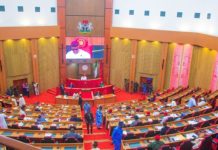
The House of Representatives has passed the State Police Bill, marking a significant step toward the decentralisation of Nigeria’s policing system and the possible establishment of state-controlled police forces.
The resolution was adopted during Thursday’s plenary session presided over by the Speaker of the House, Tajudeen Abbas.
The decision followed a vote in which 289 lawmakers supported the proposal, while one member voted against it. The Speaker abstained from voting.
The House had earlier scheduled Thursday’s sitting for consideration and voting on the State Police Bill amid growing concerns over rising cases of killings, kidnappings, banditry, and other security challenges across the country.
Proceedings were briefly disrupted when Bashir Zubairu, a lawmaker from Kaduna State and member of the African Democratic Congress, raised a point of order.
Zubairu argued that the document prepared by the House Committee on Constitution Review had only been distributed to lawmakers on Thursday afternoon, leaving members with insufficient time to study its contents.
“Mr Speaker, this document was only made available to lawmakers in the chambers, and we are yet to go through it. We cannot do justice to it because we have not gone through it,” he said.
However, the Speaker ruled him out of order and allowed the legislative process to continue.
As deliberations progressed, Abbas guided lawmakers through the various clauses of the bill. Although some members were heard raising points of order during the exercise, the presiding officer proceeded with the consideration.
Before voting commenced, the Speaker informed members that the electronic voting system was not functioning, necessitating a manual voting process based on attendance.
Out of the 290 lawmakers present, 289 voted in favour of the bill, while one opposed it.
The passage of the State Police Bill represents one of the most significant legislative moves in Nigeria’s ongoing debate over policing reforms. Advocates of state police have long argued that decentralised policing would improve security by allowing state governments to respond more effectively to local threats and criminal activities.
Opponents, however, have previously expressed concerns that state-controlled police forces could be abused by political leaders or used for partisan purposes.
The bill is part of broader constitutional reform efforts and will continue through the required legislative and constitutional amendment processes before any changes to Nigeria’s policing structure can take effect.