Joel Ajayi
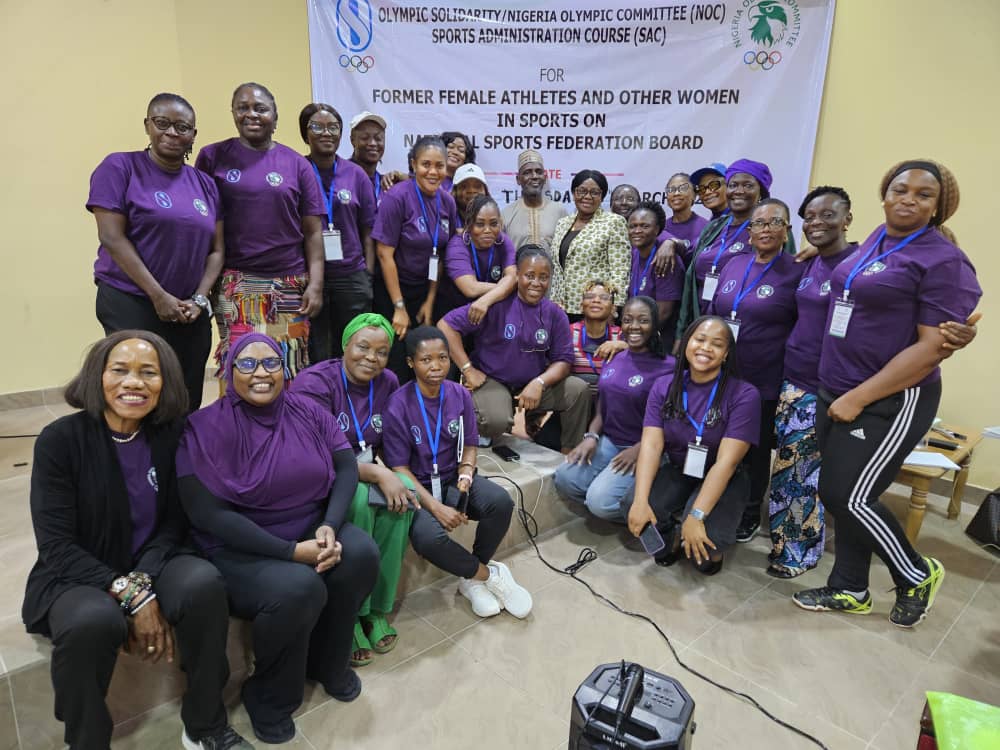
The Nigeria Olympic Committee has reinforced its commitment to gender inclusion in sports governance with the successful completion of a Sports Administration Course (SAC) for former female athletes and women serving on National Sports Federation boards.
Speaking at the closing ceremony on Thursday in Abuja, NOC President, Engr. Habu Gumel, described the initiative as a deliberate strategy to empower women to take up leadership and decision-making roles within Nigeria’s sports sector.
He urged participants to leverage the knowledge gained to actively contribute to sports development across the country.
The programme, organised in collaboration with Olympic Solidarity, focused on equipping participants with critical skills in leadership, strategic planning, financial management, ethics, and organisational development.
Gumel noted that the course aligns with the global educational standards of the International Olympic Committee, with its curriculum drawn from the IOC Sports Administration Course manual to ensure best practices in sports governance.
“This course represents a significant step in strengthening the role of women in sports leadership in Nigeria,” Gumel said. “I encourage you all to apply what you have learned, build strong networks, and play active roles in shaping the future of sports.”
He also commended the facilitators, including IOC-certified course directors, and the organising team for delivering a high-quality programme that promotes professional growth and collaboration.
In her remarks, Toyin Aluko, President of the Former Female Athletes Association of Nigeria and the Netball Federation, described the initiative as a bold step toward addressing gender imbalance in sports leadership.
According to her, the course was introduced to bridge the gap created by low female participation in previous training programmes, stressing the need for more inclusive opportunities.
Aluko highlighted the importance of increasing female representation, noting that more women in leadership would inspire upcoming athletes to transition into administrative roles after their careers. She also called for sustained efforts to achieve at least 45 percent female inclusion in sports governance.
She further encouraged female athletes to pursue education alongside sports, noting that academic qualifications are essential for career growth beyond active competition.
Both leaders reaffirmed the NOC’s commitment to promoting gender-inclusive policies and called on stakeholders to support efforts aimed at ensuring women play a central role in Nigeria’s sports development.