.Interim president, two others to oversee transition as reactions trail killing of Ayatollah
.Killing Iran’s leader violates moral, international law -Putin
.Strikes have created more ‘hostile international order’, says Spain’s PM Sánchez
.EU calls for restraint and diplomacy amid Trump, Netanyahu’s threats of escalation
By. Yahaya Umar, Abuja with agency reports
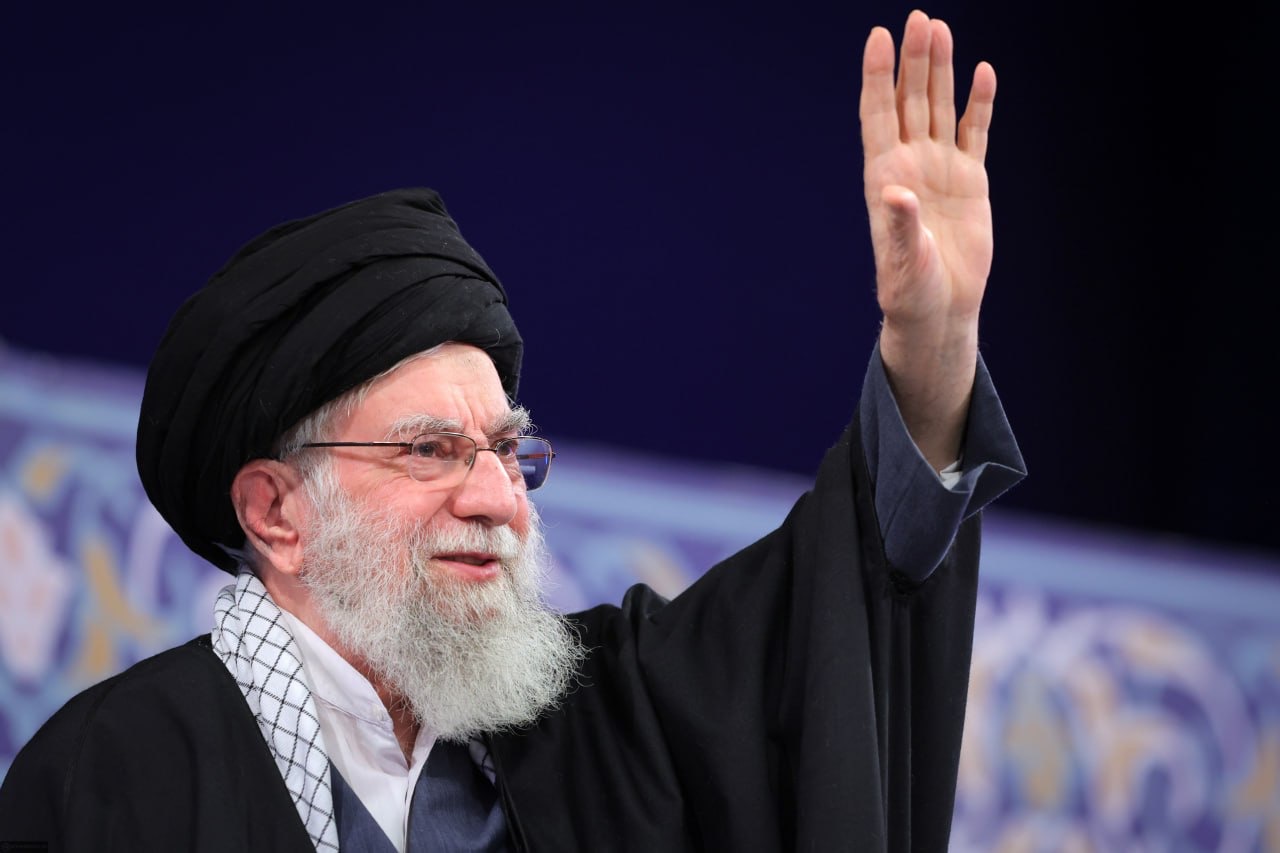
Iran has declared a 40-day national mourning for its supreme leader, Ayatollah Ali Khamenei, following the confirmation of his death yesterday in a coordinated U.S. and Israeli airstrike campaign targeting key Iranian leaders and sites
Iranian State media broadcast early yesterday described Khamenei’s death in Tehran as martyrdom in service to the nation, a term deeply significant in Shi’a Islamic tradition, and called on citizens to observe the mourning period in line with religious customs.
According to Iranian State television, the missile and air strike that killed Khamenei also resulted in the deaths of several senior Iranian defence officials.
The 40 days of mourning, a period of reflection and commemoration rooted in Shi’a tradition, underscores the gravity of the moment for the Islamic Republic and challenges Iran’s political system with a sudden leadership void.
In addition to the extended mourning, state authorities ordered seven days of national holidays and the closure of all official offices, emphasizing the profound national impact of the Supreme Leader’s death.
The announcement comes amid an unprecedented escalation in regional conflict after the United States and Israel launched extensive military strikes on Iranian military and government targets in recent days as part of what U.S. leaders have termed an effort to counter Iran’s missile and nuclear threats.
Meanwhile, Iran on Sunday announced its president, the head of the judiciary, and one of the jurists of the Guardian Council ,a powerful body, will oversee the transition period following the death of Ayatollah Ali Khamenei.
The Assembly of Leadership Experts – a body of clerics, will now turn to appointing Khamenei’s successor, something the constitution says must occur as soon as possible.
But quickly assembling everyone while Iran is under attack by the United States and Israel may prove difficult for safety reasons.
Khamenei himself was appointed the very same day Ruhollah Ayatollah Khomeini died.
Killing of Iran’s Supreme Leader Ayatollah Ali Khamenei was a blatant violation of human moral principles and international law, Russian President Vladimir Putin, Xinhua/NAN quoted the Russian leader as saying yesterday.
Putin said that Khamenei will be remembered in Russia as an outstanding statesman who helped raise bilateral ties to the level of a comprehensive strategic partnership.
He expressed deep condolences over the killing of Khamenei and members of his family, hoping that his sincere condolences would be conveyed to the family and loved ones of the late Iranian leader, as well as to the government and people of Iran.
Iran’s state media yesterday confirmed that Khamenei was killed in U.S.-Israeli attacks on Saturday.
Besides, Russia’s Foreign Ministry called the strikes “a pre-planned and unprovoked act of armed aggression against a sovereign and independent UN member state.”
The ministry accused Washington and Tel Aviv of “hiding behind” concerns about Iran’s nuclear programme while actually pursuing regime change, according to 9News.
The news outlet also reported that Spain stated that strikes have created more ‘hostile international order’
Spain’s Prime Minister Pedro Sánchez said that his country “reject(s) the unilateral military action of the United States and Israel, which constitutes an escalation and contributes to a more uncertain and hostile international order.”
He said that Spain also “reject(s) the actions of the Iranian regime and the Revolutionary Guard”, adding: “we cannot afford another prolonged and devastating war in the Middle East.”
Spanish Foreign Minister Albares later said on X that Madrid demanded respect for international law, de-escalation and dialogue, showing support and solidarity with those who are receiving the strikes.
“The attacks must stop”, he added.
EU calls for restraint and diplomacy
European Union leaders issued a joint statement Saturday calling for restraint and engaging in regional diplomacy in have hopes of “ensuring nuclear safety”.
“Ensuring nuclear safety and preventing any actions that could further escalate tensions or undermine the global non-proliferation regime is of critical importance”, said European Commission President Ursula von der Leyen and European Council President António Costa.
“We call on all parties to exercise maximum restraint, to protect civilians, and to fully respect international law”.
Responding, German Chancellor Friedrich Merz has joined Britain and Franch in calling on the US and Iran to resume talks to reach a negotiated settlement.
”The Iranian people have the right to determine their own future”, the country’s leader said in a statement posted to social media website X.
“Germany is coordinating closely with the United States, Israel and partners in the region.
“We remain committed to peace and security in the region and to Israel’s security”.
“Together with France, the United Kingdom and European partners, Germany has repeatedly called on the Iranian leadership to halt its nuclear program, refrain from military strikes and end the violence against its own population.
“Germany calls on Iran to cease military strikes against Israel and other partners in the region.
“The leadership in Tehran must end the violence against its own people and return to a negotiated solution”.
The U.S. President Donald Trump and Israeli Prime Minister, Benjamin Netanyahu have been talking though warning of escalation in the latest round of aggression against Iran over alleged nuclear clear arms programme pursuit.But the Iranians have always maintained that its nuclear programme is for peaceful purposes until the ongoing war which has resulted in that country’s supreme leader death.
Khamenei, 86, had led the Islamic Republic as Supreme Leader since 1989, wielding ultimate political and religious authority in Iran for more than three decades, making him one of the longest-serving leaders in the modern Middle East.
Born in the north-eastern city of Mashhad in 1939, the son of a religious scholar, Ali Khamenei joined the religious opposition movement of Ayatollah Khomeini in 1962.
After the Islamic Revolution in 1979, Ali Khamenei became deputy defence minister and helped organise the Islamic Revolution Guard Corps, IRGC.
When Khomeini died in June 1989, the Assembly of Experts , a council of clerics – chose Ali Khamenei to be the new supreme leader, changing the constitution to allow him to take charge.