As the world’s most populous black nation, Nigeria, holds a unique place within the African continent and beyond. This stature though belies the rot in its internal governance, including inept national planning and development, assets decay, lack of essential infrastructure and abysmal national growth.
Some analysts have partly blamed the situation on the lack of adequate data to support proper planning that would sustain various sectors of the nation’s diverse interests.
It is disturbing that the nation’s staggering population put at 230 million by recent estimates is merely a guess work and can hardly fit into a standard planning regime.
With a net allocation of N12.78 billion to Nigeria’s population and housing census this year, expected to hold within the year, not a few concerned citizens have expressed varied opinions on the issue of the nation’s lingering census that has been in limbo since the last one considered as the most controversial and disputed in the nation’s census history.
It is worrisome that Nigeria’s population census spanning over a century is yet to translate into what the global space expects of a credible process despite its long existence.
From the archives, the first census was conducted in 1866 and this was followed by Censuses of 1871, 1881, 1891 and 1901. Several others followed afterwards.
Perhaps the Federal Government has determined to re-write the past and give a new fillip to the sector that has been marred by recurring irregularities in decades.
The 1962 population census covered the whole country and was undertaken simultaneously during the month of May. Although the census was given adequate publicity, the results were not acceptable to the regions on grounds of high politicization.
The refusal of the government to accept the population census of 1962 prompted the 1963 population census which critics claimed were arrived at by negotiation rather than enumeration. The result was contested at the Supreme Court which ruled that it lacked jurisdiction over the administrative functions of the Federal Government.
Again, the 1973 Census conducted between November 25 and December 2 was not published on the grounds of deliberate falsification of the figures for political and /or ethnic advantages.
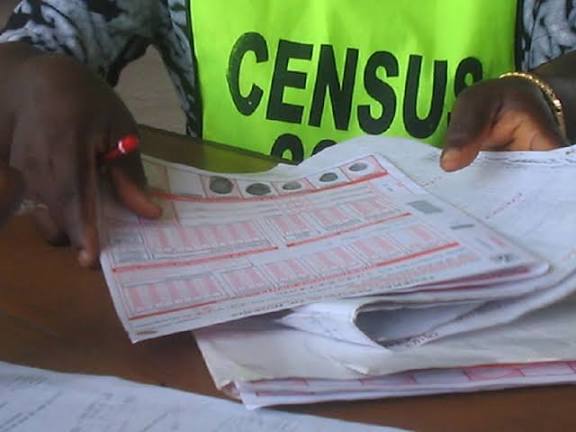
Then came the 1991 Census which was conducted under Decree 23 of 1989 setting up the National Population Commission. It was conducted all over the country from November 27 to December 2, 1991.This was the most scientific and most acceptable until the 2006 Population and Housing Census. In March 2006, Nigeria, for the first time, conducted a Population and Housing Census. Several stages were involved in the project. For the first time, the use of GPS and Satellite Imagery to carve out Geo-referenced EAs was adopted. Also Machine readable forms (OMR/OCR/ICR) were used to record information from respondents.
It was however the most disputed and highly politicised census in modern Nigeria.
Since then, the actual national population has remained at the realm of guesses, occasioned by inconsistent figures being bandied by analysts whose submissions have often been disputed.
Succeeding governments have expressed commitment to ensuring an accurate headcount that would inevitably sustain national viability and planning but despite the huge resources often deployed, the census never took place nearly two decades after the last controversial one in 2006.
Several factors had marred the last event making it one of the worst in terms of credibility as it failed the test against ethnicity, religion and parochial tendencies.
Given the fresh push from the government aimed at giving the nation a credible census soon, it is expected that the National Population Commission, NPC, would this time live to its billing by conducting a census that is not encumbered by the trappings of past discrepancies.
The government must ensure an oversight that would put the NPC on its toes towards ensuring that the census this time stands out as credible and devoid of past pitfalls. With so much given to NPC, the expectations are indeed high and it must live up to its billing by proving critics wrong that it is capable of delivering the goods.