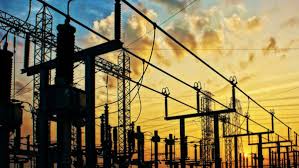
Homes and businesses across five South-East states were thrown into darkness after a partial collapse of Nigeria’s national electricity grid disrupted supply in the geo-political zone.
The Enugu Electricity Distribution Company ,EEDC, confirmed that the system failure occurred at about 11.54 am on February 19, leading to a complete outage across its network.
The company’s Group Head of Corporate Communications, Emeka Ezeh, said the company and all its subsidiary distribution firms were affected.
These include MainPower, TransPower, FirstPower, NewEra and EastLand, which supply electricity to Enugu, Abia, Ebonyi, Anambra and Imo states.
EEDC said the exact cause of the disturbance had yet to be determined and that it was awaiting further updates from the National Control Centre, the body responsible for managing electricity transmission nationwide.
“The cause of the collapse is yet to be ascertained, but we are on standby, awaiting restoration of supply”, the company stated, while apologising to customers for the inconvenience.
According to a report, the outage came despite signs of relative stability in generation earlier in the day. National grid data showed electricity output had climbed to 3,861 megawatts before the disruption.
However, energy experts note that strong generation figures do not automatically guarantee a steady supply. Weaknesses or faults within the transmission network can halt electricity delivery even when power plants are producing near-peak capacity.
For residents and business owners in commercial hubs such as Onitsha, Aba and Enugu, the blackout has immediate economic implications.
Many small and medium-scale enterprises rely heavily on grid power to keep costs manageable. Prolonged outages often force them to switch to expensive diesel or petrol generators, eroding already thin profit margins.
The grid disturbance comes amid broader concerns over declining generation capacity linked to planned gas facility maintenance.
The Nigerian Independent System Operator recently disclosed that a scheduled shutdown at a major gas facility would reduce electricity supply by 934.96 megawatts.
This represents nearly 20% of the country’s available generation capacity of 4,753.10MW, raising the risk of load shedding across several regions.
In a statement titled “Anticipated Gas Supply Constraints and Potential Load Management Measures”, the system operator said the maintenance would temporarily restrict gas supply to key thermal power plants connected to the grid.
The gas facility maintenance is scheduled to run from February 12 to February 15, with full supply expected to resume on February 16.
While the shutdown is temporary, its impact could be significant due to Nigeria’s heavy dependence on gas-fired power stations.
Any disruption in gas flow directly affects generation output, placing additional strain on an already fragile grid. Market participants and electricity consumers have been advised to brace for possible load management measures during the period of reduced supply.
Taken together, the grid collapse in the South-East and the ongoing gas supply constraints underscore the structural vulnerabilities within Nigeria’s power sector.
Until transmission infrastructure is strengthened and generation diversified, recurring outages are likely to remain a feature of the country’s electricity landscape.
Nigeria’s electricity generation declined sharply last weekend after 17 of the country’s 25 power plants stopped producing power, reducing total output by 1,471.69 megawatts ,MW.
Data obtained from the portal of the Nigerian Independent System Operator ,NISO, as of 2:10 pm showed that only eight plants were generating electricity at the time.
The country’s installed generation capacity is above 13,000MW, but under stable conditions, actual supply typically ranges between 4,000MW and 5,000MW. Sunday’s output of 1,471MW represents less than 12% of installed capacity.