By Paul Effiong, Abuja
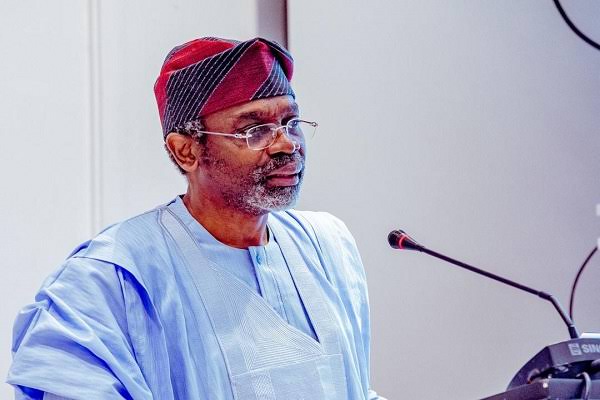
Chief of Staff to the president, Femi Gbajabiamila has noted that education remains the strongest instrument for national development, calling for sustained collaboration to reposition schools for the future.
Gbajabiamila disclosed this yesterday during the 2026 International Day for Education Conference held at the National Assembly Complex, Abuja.
Speaking on the theme, ‘Re-imagining the Future of Education in Nigeria: Collaborative Solutions for a Brighter Tomorrow,’ the former speaker of the House of Representatives urged critical stakeholders to create a conducive atmosphere for students to excel.
Gbajabiamila emphasised that education is not merely another sector of the economy, but a matter of national survival for Africa’s most populous nation.
He commended the Speaker of the House of Representatives, Tajudeen Abbas for convening the conference and demonstrating what he described as a firm commitment to national development through education.
“Education is the bridge between potential and productivity; between aspiration and achievement,” he said.
The former speaker, however, warned that no country could compete globally without sustained investments in learning and human capital development.
He recalled sponsoring the Students Loan Bill during his tenure to ensure that no capable Nigerian student is denied tertiary education due to financial hardship.
Speaking on the economic advantage of the Bill, Gbajabiamila disclosed that within the first three months of the current administration, President Bola Tinubu assented to the bill which has paved the way for the establishment of the Nigerian Education Loan Fund.
He described the move as a clear demonstration that education is central to the president’s Renewed Hope Agenda and praised the 10th House of Representatives for strengthening oversight on tertiary education funding and promoting accountability-driven reforms.
“As chief of staff to the president, you can always count on my support. Education will remain central to the Renewed Hope Agenda,” he said.
He also called on critical stakeholders to move beyond dialogue and generate actionable recommendations to improve funding efficiency and ensure that existing laws reflect present realities.
According to him, parliament must function not only as a law-making body, but as a strategic partner in shaping Nigeria’s future.
Earlier, the Special Adviser to the Speaker on International Cooperation and Educational Development, Abisoye Da Rocha-Afodu noted that the International Day of Education was established by the United Nations General Assembly in 2018 to recognise education as a fundamental human right.
She noted that Nigeria currently has over 20 million out-of-school children, the highest number globally, and faces challenges including poor infrastructure, weak teachers welfare, outdated curricula and limited access to technology.
Also speaking, Chairman of the House Committee on Federal Polytechnic and Higher Technical Education, Fuad Laguda informed that the conference provides an opportunity to assess Nigeria’s educational system against international benchmarks, stressing that meaningful reforms require strong collaboration and increased investments, particularly in polytechnics and higher technical institutions.