
Joel Ajayi
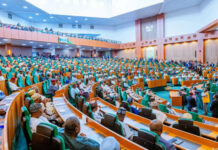
The House of Representatives Committee on Public Petitions has adjourned proceedings on a petition bordering on alleged promotion stagnation, victimisation and disciplinary actions within the Nigerian Nuclear Regulatory Authority (NNRA), directing both parties to explore Alternative Dispute Resolution (ADR).
The matter was adjourned to 11th March, 2026.
The hearing, held on Thursday, was presided over by the Deputy Chairman of the Committee, Hon. Dr. Attorney Nwogu, and followed a petition filed by Abdulhadi Attah Abdullahi, a Deputy General Manager (Legal) with the National Institute of Radiation Protection and Research (NIRPR) and Technical Service Organisation (TSO) to the NNRA.
Listed as Petition No. 732 of 2025, the petition seeks the intervention of the House over the outcome of the 2020 NNRA Committee on Regularisation of Appointment and Staff Audit, prolonged promotion stagnation, alleged denial of salaries and allowances, harassment, and what the petitioner described as a sustained pattern of victimisation and witch-hunt.
In a letter dated 19th January, 2026, addressed to the Chairman of the Committee through the Clerk, Dr. Amos Enobong, Abdullahi alleged that disciplinary actions were initiated against him by NNRA management shortly after he appeared before the committee at an earlier public hearing on 9th December, 2025.
He claimed that the disciplinary measures included the issuance of a query on 5th January, 2026, his response on 6th January, a warning letter dated 8th January, and the immediate constitution of a disciplinary panel on the same day.
According to him, the actions were retaliatory, aimed at intimidating him and undermining the constitutional oversight functions of the National Assembly, while also pre-empting the outcome of the committee’s intervention.
At the hearing, deliberations centred largely on the controversy surrounding his Annual Performance Evaluation Report (APER), which Abdullahi maintained was duly submitted in his promotion year but was allegedly withheld or left unassessed by the appropriate authorities.
He told the committee that the APER was in the custody of the National Nuclear Inspectorate (NNI) and later the Office of the Director-General, adding that documentary evidence and email correspondences confirming receipt had already been submitted to the committee.
He further argued that he could not reasonably be expected to seek assessment from a former supervisor who had since retired, stressing that responsibility for the assessment lay with the directorate supervising his unit at the relevant time.
However, representatives of the NNRA and affiliated agencies, including senior management staff appearing on behalf of the Director-General who was said to be absent on health grounds, disputed aspects of the claims.
They maintained that administrative procedures required proper supervisory assessment of APERs and argued that gaps existed in the evaluation process, describing the situation as an administrative “lacuna” rather than deliberate victimisation.
Committee members, however, observed that there was no outright denial that the APER was submitted, but rather a dispute over who bore responsibility for its assessment and sign-off.
In his intervention, Hon. Nwogu urged both parties to adopt a pragmatic approach,
stressing that governance must remain continuous and that workers should not suffer career stagnation due to procedural gaps beyond their control, especially where supervisors had retired or administrative structures had changed.
He said the committee’s objective was not to leave any party completely dissatisfied, but to find a fair and balanced resolution that would promote justice, institutional stability and administrative harmony.
Following deliberations, the committee proposed Alternative Dispute Resolution (ADR) as the most viable pathway to resolving the dispute, a recommendation that received the consent of both parties.
Consequently, the committee formally adjourned the matter to 11th March, 2026, to allow the parties explore ADR mechanisms towards an amicable settlement.
The committee also reaffirmed its commitment to protecting the constitutional right of citizens and public officers to petition the National Assembly without fear of intimidation, reprisals or administrative sanctions.