
•Schools, churches, communities targeted
•Opinions divided over US Christian genocide claim
•President Trumps alleged military threat blame
•Masses live in apprehension, as FG closes secondary schools
By Anthony Ochela, Dauda Ismail and Juliet Ibimina
In towns once defined by their gentle rhythms the murmur of markets, the bustle of schoolchildren and the steady toll of church bells an unsettling hush now prevails. Across northern and central Nigeria, a renewed surge of violent banditry has left residents suspended between fear and exhaustion, uncertain whether dawn will bring relief or bloodshed.
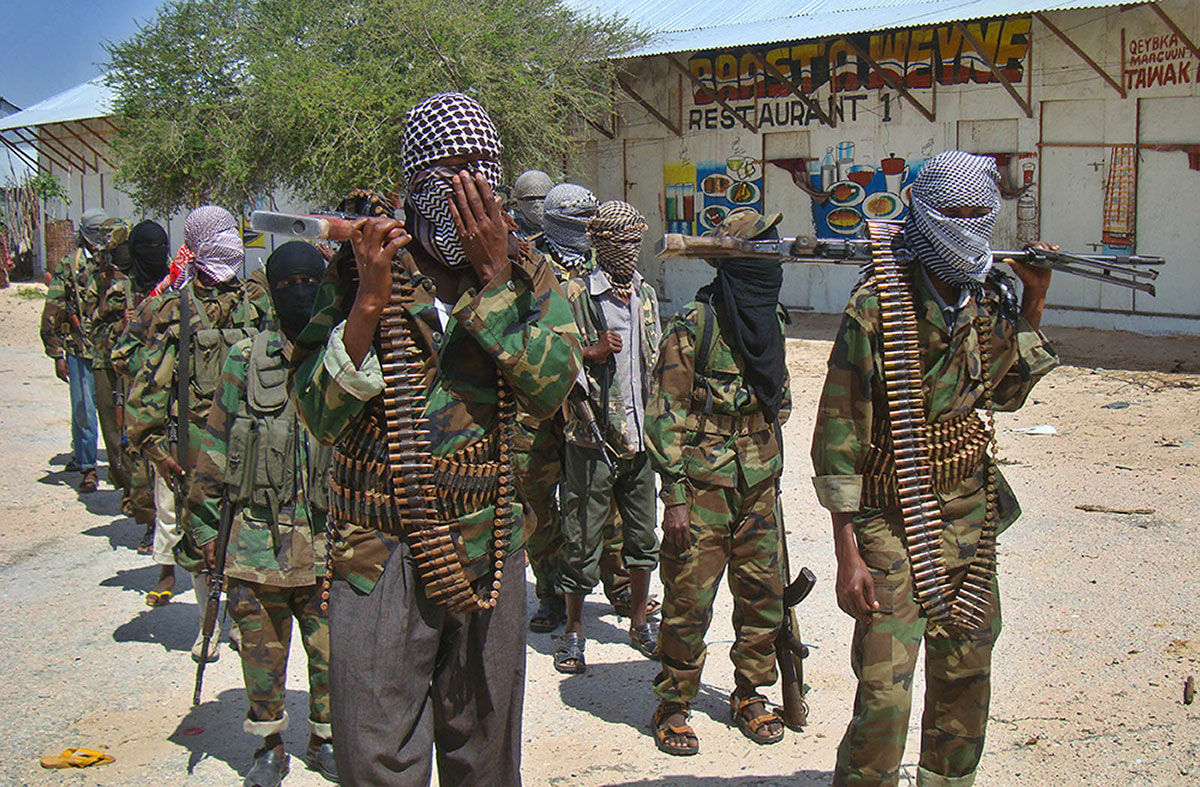
From Kebbi to Kwara, Niger to the Federal Capital Territory, FCT, the accounts are disturbingly similar: villages razed under cover of darkness, commuters seized on highways, pupils and teachers marched out of classrooms at gunpoint, worshippers attacked mid-service, families displaced without warning. Banditry, once thought to be receding, appears instead to have evolved more daring, more organised, and more determined.
The fragility of the situation became apparent when, only hours after the Nigerian Army reported major successes against terrorists and oil thieves, six directors of the Federal Ministry of Defence were kidnapped along the KabbaLokoja highway. The senior officials, all serving at Command Day Secondary School, Ojo, Lagos, were en route to Abuja for a promotion examination when their convoy was ambushed on Monday, November 10. Reports indicate the gunmen halted the vehicle before abducting them.
Those kidnapped were identified as Mrs Ngozi Ibeziakor, Mrs C.A. Emeribe, Mrs C. Helen Ezeakor, Mrs C.A. Ladoye, Mrs J.A. Onwuzurike and Mrs Catherine O. Essien.
Barely a week later, was an evening worship service broadcast live from Christ Apostolic Church, CAC, Oke Isegun, in Eruku, Ekiti Local Government Area of Kwara State, violently disrupted on Tuesday, November 18. Terrorists stormed the church, reportedly killing at least three people and abducting around 38 congregants.
Then on Friday, November 21, gunmen struck again, this time in the Papiri community of Niger State, abducting 215 schoolchildren and 12 teachers. The Secretary to the State Government, Abubakar Usman, said the news had been received with deep sadness, confirming that pupils from St Marys School in Agwara Local Government Area had been taken. Police spokesperson Wasiu Abiodun later added that armed men had descended on the school around 2 a.m., prompting the deployment of police tactical units, the military and other security operatives.
The wave of kidnappings extended to Kaduna State, where the Archdiocese confirmed the abduction of Rev. Fr Bobbo Paschal following an assault on Kushe Gugdu village in Kagarko Local Government Area on Monday, November 17. According to the Chancellor, Rev. Fr Christian Okewu Emmanuel, armed men infiltrated the village and seized the priest, who serves as Parish Priest of St Stephen Catholic Parish. Several other residents were abducted, and Mr Gideon Markus, a brother of Rev. Fr Anthony Yero was killed.
Residents say this period ranks among the most traumatic in recent memory. Entire neighbourhoods empty out after dusk, and churches now host daily vigils for the safe return of abductees and for the endurance of those left behind.
Security analyst Friday Agbo of Alterconsult Think Tank argues that the pattern of violence from the North-West to the Middle Belt suggests deliberate coordination. He cites the killing of three Catholics in Aye Twar, Benue State, around 14 November, and the massacre of 25 Christians in Southern Taraba roughly a week earlier; part of a broader escalation across several rural communities.
Meanwhile, in Guto village, a border community in Bwari Area Council of the FCT, a planned abduction turned deadly when about 30 gunmen invaded in the early hours of Thursday, November 20. Police officers responded swiftly, engaging the attackers in a fierce exchange of gunfire. One officer sustained fatal injuries and was later pronounced dead in hospital.
The increasing boldness of these criminals is particularly evident in their targeting of schools and churches. In Benue, a Sunday service was violently interrupted when armed men burst into the aisles, demanded money and mobile phones, and then abducted members of the choir. Communities still attempting to rebuild after previous attacks now find themselves facing yet another cycle of displacement.
As the crisis deepens, a fierce international debate has erupted. Some US lawmakers and advocacy groups have revived claims that Nigerias Christians are facing genocide, pointing to the pattern of attacks on churches and predominantly Christian villages. The argument has polarised religious leaders at home: some say the violence amounts to persecution, while others insist it stems from criminality, economic despair and weak governance rather than religious motives.
Dr Nathaniel Ubah, a peace studies scholar, warns that international terminology can oversimplify a highly complex conflict. Banditry, farmerherder tensions, political grievances and poverty all interact, he says. No single explanation captures the whole picture. Calling it genocide may stir sympathy abroad, but it also risks inflaming tension here.
Yet, within Benue State, the debate has intensified. While the state governor recently dismissed claims of religious genocide, the Nigerian Catholic Diocesan Priests Association, NCDPA, Makurdi Diocese, publicly supported Bishop Wilfred Anagbe, who urged the US Congress to designate Nigeria a Country of Particular Concern. In a strongly worded statement, the priests said the suffering in Benue bears every mark of genocide, asserting that entire populations were being targeted and ancestral lands occupied by armed groups.
They reported that more than 20 churches and mission stations have been destroyed or abandoned, several priests have been shot, kidnapped or killed, and thousands of vulnerable residents including women, children and the elderly have been murdered in their sleep or displaced to overcrowded camps.
Entire communities and farmlands have been taken over by armed invaders operating with impunity, they claimed, accusing federal and state authorities of downplaying the crisis for political reasons. Instead of decisive action, our people are met with explanations that contradict lived realities. We feel wounded, abandoned and bitterly betrayed.
But for many ordinary Nigerians, such debates, wheather ideological, international or political, feel remote. Whether they attack because we are Christian, or because we are poor, or because they want ransom, the pain is the same, says a cleric in Southern Kaduna. We need protection, not theories.
Meanwhile, the insecurity is reshaping daily life in profound ways. Markets now shut well before dark. Parents escort their children to school in groups. Churches have introduced bag checks, staggered entry and volunteer security teams. Conversations on buses and in taxis quickly turn to which road is safe or which community was attacked overnight. Fear has woven itself into the fabric of daily existence.
This collective anxiety surged again on Friday evening when rumours spread that a school in Nasarawa State had been attacked. The reports were swiftly debunked. Police spokesperson SP Ramhan Nansel said pupils had mistaken hunters carrying Dane guns for kidnappers, sparking a false alarm. Security personnel searched the area thoroughly, found no threat and restored calm.
The schools proprietor condemned the misinformation, labelling it mere hearsay unworthy of publication, while urging journalists to verify their reports.
Similarly, the headmistress of Peter Quality Foundation Academy, Mrs Esther Ndernen, confirmed that no child was missing, explaining that the scare began when a pupil encountered farmers in dark clothing and panicked.
And, as the situation continues to deteriorate, the Federal Government has announced the closure of 47 Federal Unity Colleges nationwide a stark indicator of how deeply insecurity has penetrated the countrys educational system.