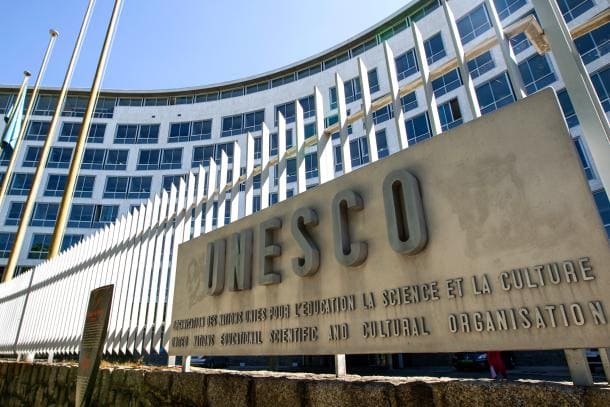
United Nations Educational, Scientific and Cultural Organisation, UNESCO, said if societies are to thrive and sustain democratic values, information integrity must be embodied in people, not only in systems and structures.
Communication and Information Specialist at the organisation, Alton Grizzle stated this yesterday during a webinar organised by the United Nations Information Centre, UNIC, in Nigeria.
Speaking during the webinar with the theme; ‘Prioritising Media and Information Literacy in Promoting Information Integrity,’ Grizzle noted that information integrity refers to an ecosystem that produces accurate, trustworthy and reliable information that people could depend on while being exposed to a diversity of ideas.
He said information integrity is about people’s engagement with the creation, dissemination and use of information, beyond technical systems and governance structures.
“Information integrity must ultimately be embodied in people, in lives and in human existence.
“Without this, societies will never achieve the fullness of integrity required to thrive,” he said.
The UNESCO official stressed that Media and Information Literacy, MIL, must be made central to education, media practice, digital governance and formal and informal learning.
According to him, UNESCO views MIL as a combination of information, media and digital competencies that go beyond technical skills to include critical thinking and evaluation.
“We must empower people to distinguish fact from opinion, truth from propaganda and identify misinformation, disinformation and manipulated content.
“We must also understand how Artificial Intelligence, AI, functions, and why human verification remains essential,” he said.
Grizzle noted that such competencies would help citizens use media and digital tools to promote equality, peace, intercultural dialogue, freedom of expression and sustainable development.
He warned that declining trust in the media, governments and international institutions pose a danger to democracy and freedom.
According to him, if the media is not trusted, then democracy and freedom are under threat as well.
Grizzle called for a united approach that integrates information, media, digital, AI and communication skills across institutions, noting that every organisation could incorporate MIL through training and policy.
He added that returning to the principles of quality education, universal access to information, freedom of expression, multilingualism and cultural diversity would help restore public trust and resilience.