
…Foreign investors, stronger reserves back currency rebound
By Charles Ebi
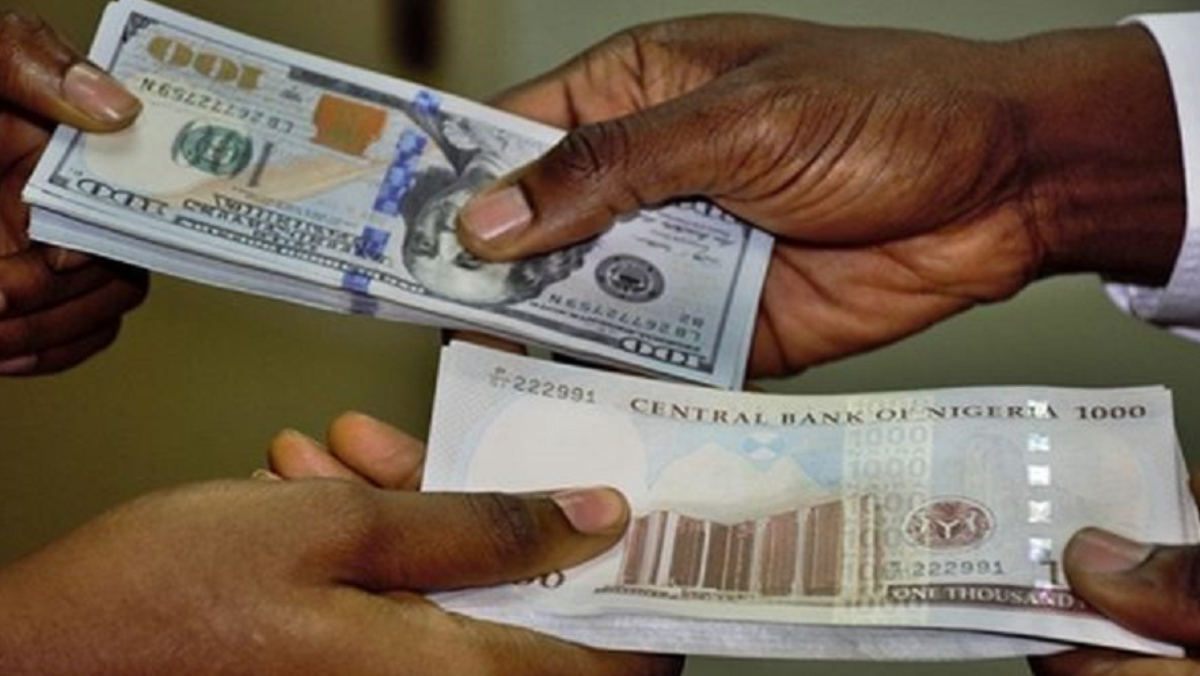
Naira is expected to remain stable, underpinned by robust FX liquidity and an efficient FX market. Specifically, analysts expect sustained inflows from foreign portfolio investors ,FPIs, due to stronger market confidence. Additionally, improving non-oil exports, as well as limited incentives for naira speculation, are expected to reinforce steady inflows from domestic sources.
The long-term stability of the naira has been predicted, given the rising inflows of foreign capital and surge in foreign reserves levels.
In the last week, the naira appreciated by 1.1 per cent to N1,520.00/$, supported by the Central Bank of Nigeria’s intervention of $50m and increased inflows from Foreign Portfolio Investments ,FPIs, following the Open Market Operation ,OMO, auction.
President, Association of Bureaux De Change Operators of Nigeria ,ABCON, Dr Aminu Gwadabe, said that with more foreign exchange inflows into the economy, the long-term stability of the naira is expected.
Already, data from the National Bureau of Statistics ,NBS, showed that capital inflows into the economy hit $5.6bn in the first quarter of 2025.
The inflows represent significant gains from diverse reforms instituted by the CBN to make Nigeria an attractive destination for local and foreign investors. For many stakeholders, the $3.1bn inflows to the banking sector represent 55.44% of the total capital inflows.
Analysts from Cordros Securities who predicted long-term naira stability further explained that gross FX reserves increased to the highest level since December 2021, growing by $353.47m week-on-week to $41.08bn on August 21, and further rose to $41.10bn on August 22.
According to CBN data, the reserves earlier hit $40.72bn on August 13, driven largely by rising forex inflows and a marginal increase in crude oil output.
According to the apex bank, the gross reserves moving average stood at $39.3bn on August 1, and reached $39.5bn on August 6, and hit $40.2bn on August 8.
The sustained reserves accretion, decline in inflation rate, commodities prices dip, as well as long-term naira stability are all positive fallout of the ongoing economic reforms instituted by the federal government.
Aside from the reserves, the naira has also seen sustained stability while the inflation rate has continued to decline, closing July at 21.88%.
Part of the reserves accretion was triggered by the FX reforms, instituted by the Olayemi Cardoso-led CBN. New policies instituted by the Federal Government to boost local production, reduce forex demand pressure, and lessen domestic prices have been instrumental to macroeconomic stability.
The expectations are that the apex bank sustains the forex reforms while the fiscal authority strengthens efforts at enhancing FX earnings, especially from gas, oil and non-oil exports.
President, Association of Bureaux De Change Operators of Nigeria, Dr Aminu Gwadabe, said the apex bank under Cardoso has been cultivating multiple FX sources to increase dollar inflows, boost dollar access to manufacturers and retail end users.
“From moves to improve diaspora remittances through new product development, the granting of licenses to new International Money Transfer Operators ,IMTOs, implementing a willing buyer-willing seller FX model, and enabling timely access to naira liquidity for IMTOs, the apex bank has simplified dollar-inflow channels for authorised dealers and other players in the value chain”, he said.
The CBN had embarked on a series of bold reforms to attract more foreign capital to the economy, achieve price and exchange rate stability.
In 2023, the new administration and the CBN-led by its Governor, Olayemi Cardoso, liberalised the foreign exchange market, stopped central bank financing of the fiscal deficit, and reformed fuel subsidies. The government also strengthened revenue collection and took strategic steps to reduce the surging inflation rate.
Since these reforms were implemented, international reserves have increased, and anyone can now access foreign exchange in the official market.
Nigeria successfully returned to international capital markets last December and was recently upgraded by rating agencies. A new domestic, private refinery is positioning Nigeria up the value chain in a fully deregulated market.
CBN’s policies, including the currency reforms, led to investment inflows from abroad and reduced interventions in the domestic forex market.
The unification of exchange rates and the clearing of over $7bn FX backlog raised the country’s investment outlook, with multilateral organisations, like the World Bank, describing it as a bold intervention to improve the economy’s sustainability in the long run.
Also, Nigeria’s sovereign risk spread has fallen to the lowest level since January 2020, erasing the premium accumulated during the pandemic and subsequent strain on its economy. All these are deliberate efforts to woo investors and sustain capital inflows to the economy.
According to the latest “Nigeria Capital Importation Q1 2025” report released by NBS, in Q1 2025, total capital importation into Nigeria stood at $5.642bn, higher than $3.37bn recorded in Q1 2024, indicating an increase of 67.12%.
“In comparison to the preceding quarter, capital importation increased by 10.86 per cent from $5.08bn in Q4 2024″, the report stated.
The NBS also stated that portfolio investment ranked top with $5.2bn, accounting for 92.25%, followed by other investment with $311.17m, accounting for 5.52%.
The report indicated that, “Foreign Direct Investment recorded the least with $126.29m accounting for 2.24% of total capital importation in Q1 2025″.
According to the NBS, the banking sector took the lead with the highest inflows in Q1 2025.
The report stated, “The Banking sector recorded the highest inflow with $3.1bn, representing 55.44% of total capital imported in Q1 2025, followed by the Financing sector, valued at $2.09bn ,37.18%, and Production/Manufacturing sector with $129.92m ,2.30%”.
The report further noted that capital importation during the reference period originated largely from the United Kingdom with $3681.96 million, showing 65.26% of the total capital imported.
In an emailed note to investors, Managing Director, Afrinvest West Africa Limited, Ike Chioke, explained that Portfolio Investment ,92.2% of total capital, dominated flows, rising by 30.1% quarter-on-quarter, and 150.8% year-on-year to $5.2bn.
The bulk of the FPI flows was to Money market instruments ,up 162.2% year-on-year to $4.2bn, while Bonds ,up 108.5%, and Equities ,up 137.7%, attracted $877.4m and $117.3m respectively.
Nigeria’s hope of achieving a $1tn economy by 2030 will gain significant support from the banking sector.
Nigeria’s Statistician-General, Adeyemi Adeniran, had explained how the economy fared in the rebased Gross Domestic Product ,GDP, report. He said: “In nominal terms, the rebased GDP for 2019 stood at N205.09tn, N213.63tn in 2020, N243.30tn in 2021, N274.23tn in 2022, N314.02tn in 2023, and N372.82tn in 2024”.
The NBS noted that in 2019, the rebased nominal GDP at basic prices represented an increase of 41.7% over the nominal GDP of 2019 of the old base year (2010), 39% in 2020, 38.7% in 2021, 36.1% in 2022, 34.6% in 2023 and 35.4% in 2024.
“The results show that the structure of the Nigerian economy has changed significantly with a rise in the share of agriculture and services sectors and a fall in the share of the industries sector in nominal terms, indicating a shift in the structure of the Nigerian economy than earlier reported”, the NBS said.
Adeniran further explained that the rebasing allows the country to better reflect the realities of the economy. “It’s not just about a bigger number but about accurate, timely data that supports smarter policy and economic planning”, he said.
A well-recapitalised banking sector is undeniably crucial for the growth of the domestic economy. Hence, Cardoso advised banks to prepare for a new round of recapitalisation to ensure they have the necessary capital to support the Federal Government’s plan to achieve a $1tn Gross Domestic Product ,GDP, target by 2030.
He said that President Bola Tinubu’s economic plan aims to reach a $1tn GDP by 2030, emphasising that the current bank capitalisation is insufficient to support such a large economic scale.
Cardoso asked: “Will Nigerian banks have sufficient capital relative to the financial system’s needs in servicing a $1tn economy in the near future? In my opinion, the answer is “No!” unless we take action. That action was the ongoing recapitalisation of banks, meant to prepare them for expansion and attract big-ticket transactions to support economic growth”.
The Policy Advisory Council report on the national economy had set an ambitious goal of achieving a GDP of $1tn, with clearly defined priority areas and strategies.
“Besides, Nigeria’s local market is seen as less correlated with global risk conditions than more liquid EM peers”, he said.
Going forward, the CBN anticipates a steady uptick in reserves, underpinned by improved oil production levels, and a more supportive export growth environment expected to boost non-oil FX earnings and diversify external inflows.
The CBN remains committed to prudent reserve management, transparent reporting, and macroeconomic policies that support a stable exchange rate, attract investment, and build long-term resilience.