By Abdul-Azeez Suleiman
In the complexities of Nigerian politics, the African Democratic Congress, ADC, has emerged as a significant player, representing the aspirations of a diverse electorate. However, recent events have cast a shadow over its leadership dynamics, particularly the attempt by Senator David Mark and a cohort of old school politicians to usurp control of the party.
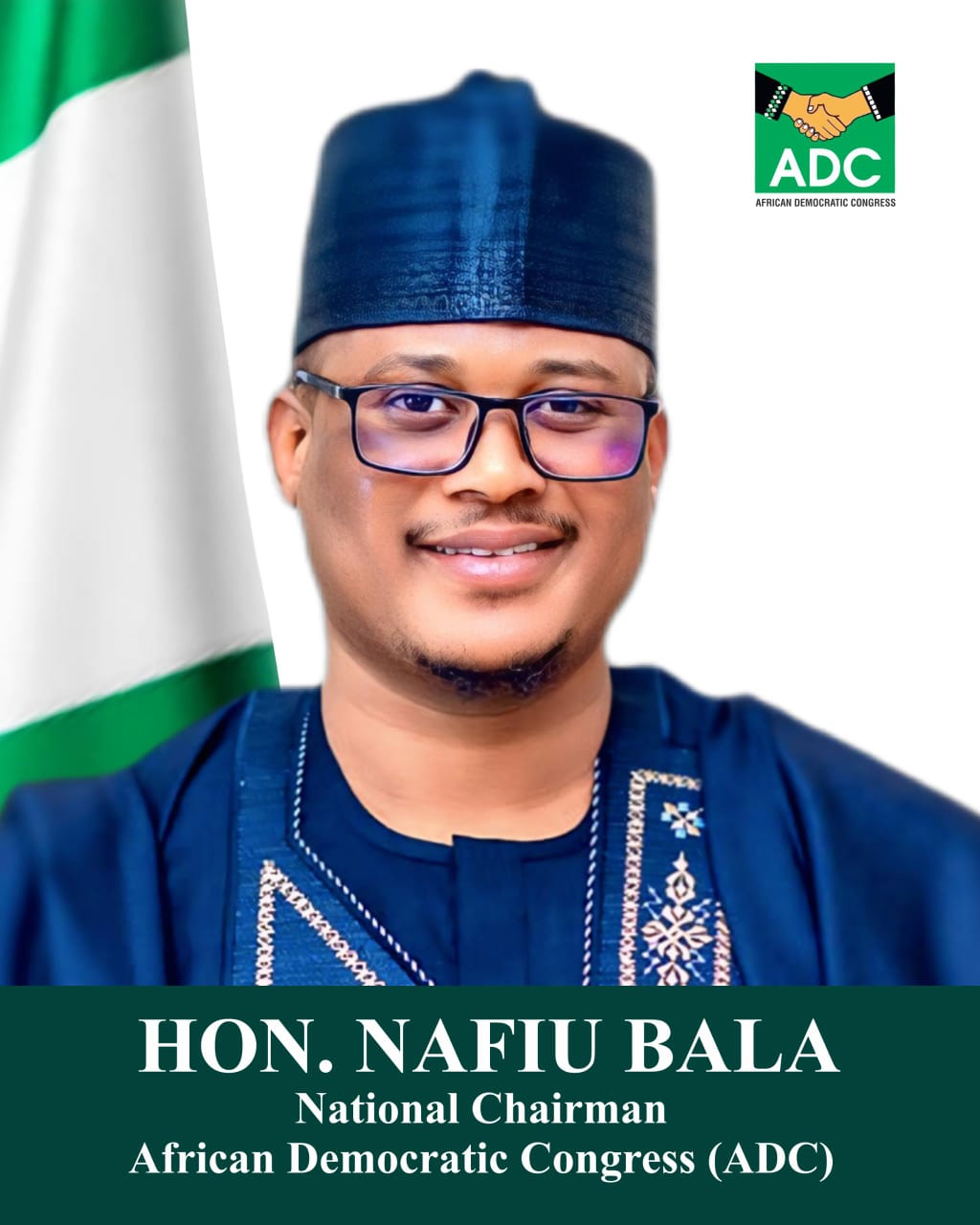
The ADC has historically positioned itself as a progressive alternative in Nigeria’s political arena. However, the resignation of Dr. Ralph Nwosu the former National Chairman, after the party joined an opposition coalition, set the stage for a contentious power struggle. The backdoor appointment of Mark, a former President of the Senate, as Interim National Chairman was seen by many as a strategic move to consolidate power among the political elite. This decision, however, was met with resistance from within the party, particularly from Nafiu Bala, the legitimate Deputy National Chairman.
Bala’s assertion of authority as the “authentic party leader” is grounded in the provisions of the Electoral Act and the ADC constitution, which empowers the deputy chairman to assume leadership in the absence of the substantive chairman. His formal resumption of office not only underscores his commitment to party integrity but also reflects a broader struggle for legitimacy in a political environment often plagued by opportunism and manipulation.
The crux of Bala’s argument lies within the legal frameworks established by the Electoral Act and the ADC constitution. These documents serve as a blueprint for democratic governance within the party, delineating the roles and responsibilities of its leaders. By invoking these legal provisions, Bala positions himself as a defender of democratic principles, emphasising that his ascension to the role of National Chairman is not merely a matter of ambition but a legal right.
The significance of this legal grounding cannot be overstated. In a political landscape where power dynamics often shift with the winds of influence, the adherence to constitutional mandates serves as a bulwark against the erosion of democratic values. Bala’s insistence on legality in leadership succession not only reinforces his claim but also highlights the importance of institutional integrity within political parties. This legalistic approach serves as a reminder that political legitimacy should be anchored in established laws rather than the whims of powerful individuals.
The involvement of seasoned politicians such as David Mark, former Vice President Atiku Abubakar, Nasir El-Rufai, Abubakar Malami, and Rauf Aregbesola in the ADC’s leadership snatch raises critical questions about the motivations behind their actions. While their experience and influence could potentially benefit the party, their underhand attempts to consolidate power through the appointment of an interim chairman may also reflect a desperate bid to maintain relevance in a rapidly changing political environment.
This scenario is emblematic of a broader trend in Nigerian politics, where established politicians often seek to manipulate party structures to safeguard their interests. The “hijack” of the ADC by these figures can be interpreted as a reaction to the shifting allegiances and the rise of new political movements that threaten the status quo.
Unfortunately, such maneuvers can stifle the growth of grassroots leadership and undermine the democratic processes that political parties are meant to embody.
The involvement of desperate politicians in the ADC leadership grab serves as a cautionary tale about the perils of political opportunism. The fact that these seasoned politicians could be “deceived into buying a dummy” by Nwosu underscores a critical vulnerability within the political elite: the tendency to prioritise personal ambition over collective progress. This desperation can lead to hasty decisions that not only jeopardize party unity but also alienate the very electorate that these leaders seek to serve.
Moreover, the actions of these politicians reflect a broader disconnection from the grassroots, where the true essence of political leadership resides. In a democratic system, leaders are expected to represent the voices of their constituents, yet the pursuit of power often leads to a detachment from the realities faced by ordinary citizens. The ADC, in its quest for authentic leadership, must navigate these challenges by fostering a culture of inclusivity and transparency that empowers its members rather than sidelining them in favor of elite interests.
As the ADC grapples with this imposed, the path forward must be rooted in the reaffirmation of democratic values. Nafiu Bala’s assumption of the National Chairmanship presents an opportunity for the party to realign itself with its foundational principles. By prioritising transparency, accountability, and inclusiveness, the ADC can position itself as a beacon of hope in a political atmosphere often marred by corruption and self-interest.
To achieve this, the party must engage in a thorough introspection of its internal processes and governance structures. Establishing mechanisms for member participation in decision-making, fostering open dialogue, and promoting a culture of accountability will be essential in rebuilding trust among party members and the electorate. Furthermore, the ADC should actively seek to engage with civil society organizations and grassroots movements to ensure that its policies and actions reflect the needs and aspirations of the people it serves.
The leadership hijack attempt of the African Democratic Congress by David Mark and his fellow politicians underscores the fragility of democratic institutions in Nigeria. Nafiu Bala’s assertion of his role as the authentic leader of the party serves as a critical reminder of the importance of legitimacy and adherence to constitutional principles in political leadership. As the ADC navigates this tumultuous period, it stands at a crossroads—a moment that could either reaffirm its commitment to democratic values or succumb to the pressures of political opportunism.
In a nation yearning for transformative leadership, the ADC has the potential to emerge as a model of integrity and accountability. By embracing the principles of democracy and prioritising the voices of its members and constituents, the party can reclaim its position as a formidable force in Nigerian politics. The journey ahead may be fraught with challenges, but it is also ripe with opportunities for growth, renewal, and the reaffirmation of the ideals that underpin a truly democratic society.