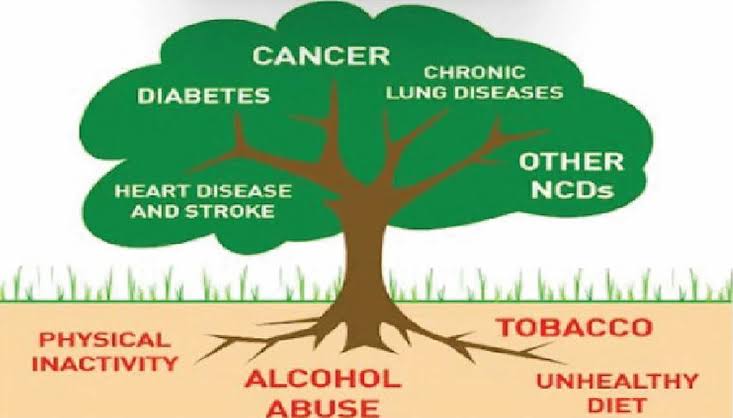
Some experts in the health sector have suggested the adoption of a multi-sectoral and evidence-based approach to address the burden of Non-Communicable Diseases, NCDs, in Nigeria.
The experts gave the suggestion at a one-day capacity-building workshop for journalists organised by Brand Journalists Association of Nigeria, BJAN, in Lagos.
According to them, it is imperative that the federal government considers the approach, as failure to do so can overwhelm the healthcare system and compromise national development.
The programme had as theme: ‘Rethinking the NCDs Crisis: Having a Holistic Approach to the Debate in Nigeria.’
The event was attended by public health experts, members of Health Writers Association of Nigeria, HEWAN, policy analysts, among others who deliberated on Nigeria’s growing NCDs crisis and the role of the media in shaping public awareness and policy change.
Keynote speaker at the event, Dr Ajibola Arewa of Lagos State University, LASU, Ojo, decried the high rate of sudden death in Nigeria, which he said, was caused by non-communicable diseases such as cardiovascular conditions, diabetes, cancers and chronic respiratory diseases.
Arewa spoke on the title: “Understanding the Many Factors Behind NCDs”.
Making reference to a data from the World Health Organisation, WHO, he revealed that NCDs accounted for 24 percent of total deaths in Nigeria in 2011, rising to 29 percent in 2021—an increase of over 21 percent within just nine years.
“In a short time, the figures may continue to increase if certain factors are not addressed.
“NCDs are not caused by a single issue; they are results of multiple factors ranging from poor lifestyle choices, unhealthy diets, weak environmental standards, to a health system strained by a doctor-patient ratio of one to 5,000, far below the WHO-recommended one to 600,” he said.
The don decried the narrow policy response such as the taxation of Sugar-Sweetened Beverages, SSBs, stressing that they are not supported by sufficient evidence and fails to address the root causes.
He said taxing sugar alone is a malicious and oversimplified response.
“Sugar itself is not the enemy — the problems are overconsumption and lack of regulation. What the country needs is public education, proper food labelling and access to healthier alternatives.
“It is time for government to go beyond mere policy statements without due implementation.
“We need full enforcement of the existing strategies, investment in preventive healthcare, support for community-led fitness and nutrition campaigns.”
Arewa, therefore, called for tax incentives for healthier product formulation, support for small businesses during the transition to healthy options and improved accountability in the health sector.
Speaking, the President of BJAN, Mr Daniel Obi, underscored the role of journalists in public health reporting, especially as misinformation and poor framing of health narratives could result to policy “missteps.”
A public health consultant, Dr Yvonne Olaloku said policies must be backed by rigorous research to ensure effectiveness and equity.
She extolled the importance of evidence-based data in health policymaking.
She also emphasised the importance of accountability, transparency and inclusive data collection in ensuring that health interventions reach all Nigerians fairly.
“Health policies must be informed by reliable data so that they address the real problems, target the right populations and are implemented without discrimination.
“There is also the need for strong collaboration between researchers, policymakers, healthcare providers and the civil society. Without proper research, policy formulation, implementation and evaluation become guesswork,” she said.
On his part, Dr Godswill Iboma, who spoke on ‘Lifestyle and Environment in NCDs Prevention,’ outlined everyday practices and environmental factors that heighten NCD risks.
Iboma identified smoking, physical inactivity, alcohol abuse, high salt intake and air pollution as key risk factors and recommended nationwide public health campaigns to promote exercise, stress management, mental health care and clean energy initiatives.
“Lifestyle and environment are the biggest drivers of NCDs. If we can change how people eat, move, work and live, we will see dramatic reduction in preventable diseases,” he said.
President of HEWAN, Mrs Vivian Ihechu, who commended BJAN for organising the programme in collaboration with HEWAN, noted that the theme is apt.
The communique urged continuous capacity building, collaborative research and media-policy engagement, as these are critical in equipping journalists to function better.
It asserted that the roles of journalists are germane in bridging the gap between scientific knowledge and public understanding.