
…Govt must act decisively, say diaspora professionals
…Tinubu’s efforts genuine but economic handlers failing -Bloggers Association
By Yahaya Umar, Abuja
Worried by the persistent scarcity of Premium Motor Spirit, PMS, otherwise known as petrol and the recent hike in the price of the product, about 1,000 Civil Society Organisations, CSOs, under the auspices of Coalition Of Civil Society Organisations, CCSOs, have faulted President Bola Ahmed Tinubu’s Economic Team and called “for immediate reconstitution”.
CCSOs in a statement signed and issued at the weekend by their National Coordinator, Mallam Ibrahim Mohammed, also pointed out that the economic well-being of Nigerians is at a low ebb and the citizens’ patience is wearing off as a result of the deteriorating economy.
In this vein, CCSOs expressed deep worry over the state of the economy and escalating fuel prices which it noted is “compounding the hardship” being faced by Nigerians despite the recent protest.
The coalition then urged Tinubu to take measures with a view to avoiding further determination of the prevailing economic hardship in the country.
“The current situation across the country has cast doubt on the competence of Tinubu’s economic team, it added.
“The Coalition of Civil Society Organisations is seriously concerned about the deteriorating state of the Nigerian economy, which is becoming increasingly unbearable for millions of citizens.
“It is evident that the recent hike in fuel prices and the unstable exchange rate are the direct results of economic mismanagement by those responsible for overseeing our nation’s financial policies. The ripple effects of these failures are being felt in every household across the country, worsening poverty and crippling economic activity.
“The floating of the Naira, which was initially sold to Nigerians as a means of stabilizing our currency, has done little to prevent the continued devaluation of the Naira. In fact, the exchange rate disparity has widened significantly, with the Naira losing value daily, impacting the cost of living, basic commodities, and inflation.
“While this policy was expected to ease foreign exchange pressure, it has instead deepened economic challenges due to poor implementation and lack of strategic foresight”.
The coalition also expressed concern over what it described as death trap of indebtedness of the Nigerian National Petroleum Company Limited, NNPCL, which also they claimed had slowed down importation of Premium Motor Spirit, PMS, hence the current shortage of PMS across the country.
“Of equal concern is the precarious position of the Nigerian National Petroleum Company Limited, NNPCL, which finds itself in a debt trap, with global suppliers of petroleum products losing confidence in Nigeria’s ability to honour its obligations.
“Reports have shown that NNPCL has accrued debts totalling over $6 billion, causing petrol supply shortages. International suppliers are now reluctant to continue providing fuel on credit, exacerbating supply chain issues and pushing up the price of petrol at the pump”, CCSOs claimed.
It also asserted that, “We hold the managers of the Nigerian economy responsible for these disturbing developments. Their inability to provide sound policies and long-term solutions has left the nation in this predicament.
“It is clear that there is no cohesive strategy to address the rising debt, the growing imbalance in the foreign exchange market, or the country’s heavy reliance on importation for petrol supply. The recent hike in fuel prices reflects the collapse of responsible economic management and accountability.
“Nigerians are left to bear the brunt of these failures. Businesses are shutting down, transportation costs have skyrocketed, and citizens are spending an increasingly larger percentage of their income on basic necessities. This state of affairs is unacceptable”.
The groups, therefore, demanded “comprehensive and transparent plan to stabilise the Naira, restore confidence in the petroleum supply chain, and negotiate a restructuring of NNPCL’s debts to ensure continuous fuel supply.
“Accountability for economic mismanagement: Those responsible for the reckless management of our foreign exchange policies and NNPCL’s debts must be held accountable. The government must also disclose its plan to mitigate the rising fuel costs and economic burden on Nigerians.
“A return to sound financial policy: The floating of the Naira has proven ineffective under current conditions. We call for a re-evaluation of monetary and fiscal policies to stabilize the economy, reduce inflation, and attract foreign investment.
“In conclusion, the Coalition of Civil Society Organisations reiterate that without immediate corrective measures, the economic situation will continue to deteriorate, leading to further hardship for the average Nigerian. The government must act decisively and responsibly to reverse this downward spiral”.
Earlier, in a related development, Nigerians in the diaspora, under the umbrella of Nigerian Professionals in Diaspora, NPID, has called for an urgent reassessment of the country’s monetary policies, following the recent hike in fuel prices.
In a statement released and signed by it President as well as Secretary, Dr Obiora Okereke and Mrs Bukola Shonekan, NPID expressed deep concern over the current state of Nigeria’s economy, particularly the recent spike in fuel prices, which has exacerbated the already challenging economic conditions for millions of Nigerians.
The group blamed the economic managers of the President Bola Ahmed Tinubu administration for failing to support the President’s vision with competent and effective policies, citing the poorly implemented floating of the Naira as a glaring example.
NPID noted that instead of stabilizing the currency and attracting foreign investment, the policy has resulted in further depreciation of the Naira, leading to an unstable exchange rate that has driven up the cost of goods and services across the board.
The group also called for the restructuring of the Nigerian National Petroleum Company Limited debts, reportedly exceeding $6 billion, which has put the nation in a precarious position regarding fuel supply.
“We believe that President Tinubu’s vision for Nigeria is clear, but the implementation of his economic policies by his advisers and managers are lacking in strategic foresights and execution”, NPID stated.
The group urged the President to take immediate action to address the economic challenges facing the country, including reassessing monetary policies, restructuring NNPCL’s debts, and holding economic managers accountable for their actions.
Similarly, Bloggers and Vloggers, Content Creators Association of Nigeria, BAVCCA, has said it is shocking that Nigeria, a major crude oil-producing nation, finds itself in significant debt, particularly with the NNPCL, reportedly owing over $6 billion to global suppliers.
BAVCCA, in a press conference in Abuja said it is alarmed by the continuous rise in fuel prices and the worsening economic situation across the country, noting that this current crisis is a direct result of the failure of those entrusted with managing Nigeria’s economy.
The group noted that there must be a clear and transparent explanation of how Nigeria’s oil revenues have been managed, adding that the current state of affairs suggests that funds have been misused or misallocated, and those responsible must be held accountable.
“While we commend President Bola Ahmed Tinubu for his genuine and consistent efforts to lead Nigeria to greatness, it is evident that his economic handlers are failing to support his vision. The inability to effectively manage the country’s resources and finances is crippling the economy and placing an unbearable burden on Nigerians”, the group noted.
The association stated that those responsible for the reckless mismanagement of Nigeria’s resources and economy should be held accountable.
“We demand that those who have mismanaged NNPCL’s finances and plunged the nation into debt be thoroughly investigated and penalized for their actions.
“In addition, the policy of floating the Naira, which was expected to stabilize the currency and bring economic relief, has instead caused further depreciation of the Naira, leading to inflation and skyrocketing costs for essential goods and services. The growing disparity between the official exchange rate and the black market is a testament to the poor management of the economy by the President’s economic team.
“The President must reconsider the composition of his economic management team. Nigeria needs capable, forward-thinking professionals who can implement sound policies to stabilize the Naira, reduce inflation, and restore public confidence in the economy”.
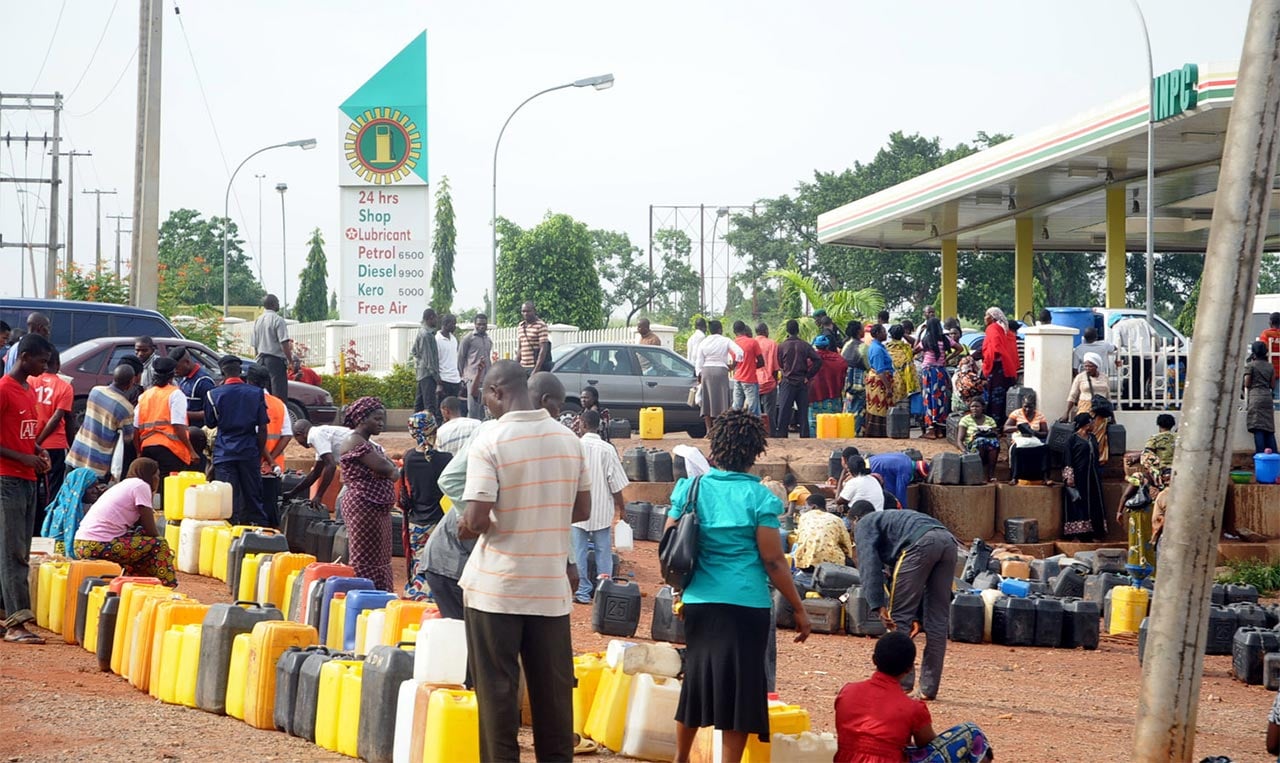
AljazirahNigeria reports that prior to the recent hike in pump price of Premium Motor Spirit, PMS, long queues have refused to disappear from Petroleum stations for more than three weeks despite the removal of subsidy. Nigerians were shocked when the NNPCL hiked the pump price of fuel on the Dangote Refinery announced it’s coming on stream to produce petrol; which has added excruciating hardship to the generality of the citizenry, though the poor and the middle class are hard hit making the cost of basic commodities to skyrocket and transport fares for inter and intra states movements are beyond the reach of Nigerians.