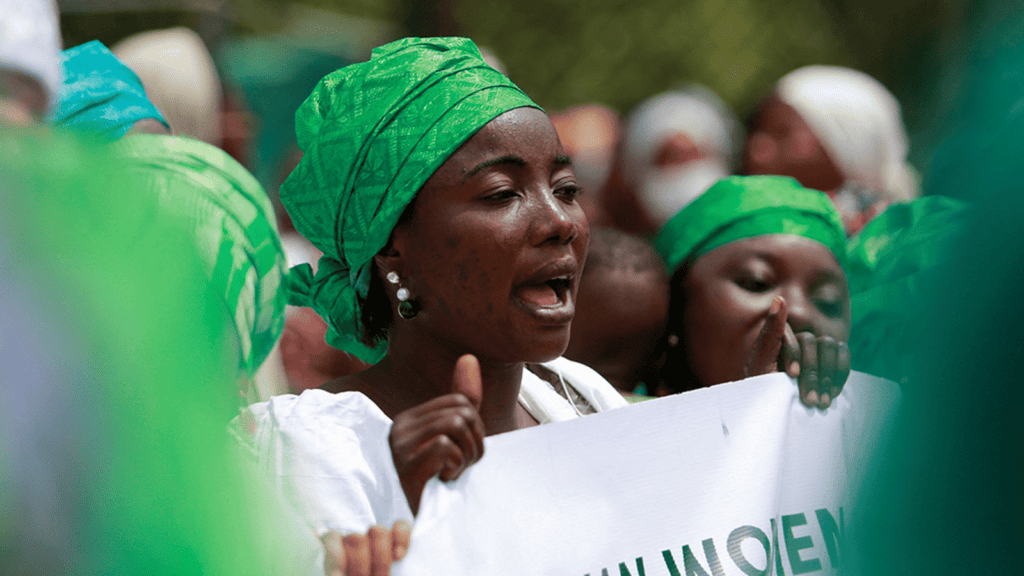
No fewer than 36,000 women in Bauchi State have urged the National Assembly to pass the Reserve Seats Bill, to enhance women’s participation in governance.
The women under the aegis of Nigeria League of Women Voters, NLWV, submitted their signatures to the House of Representatives in support of the bill.
Chairperson of the league, Hajiya Zainab Mohammed, said this in an interview with the News Agency of Nigeria NAN, in Bauchi, Monday.
She said the organisation conducted awareness activities, to sensitise communities on the importance of increased women inclusion in governance at all levels.
The chairperson said the consultations gained support among men and youths who endorsed the demand for reserved seats for women.
“We conducted a town hall meeting to raise awareness on women participation in politics and the clarion call made an impact,” she said.
Members of the league attended the public hearings organised by the National Assembly and submitted signatures collated in support of the bill.
She said the group also encouraged women to muster courage and build resilience to actively contest political positions, especially at the grassroots.
“Intimidation and financial constraints in vying for political offices are the major outcry by women.
“Religion and tradition are also challenges and experts shed more light on these issues. Women are being encouraged to stay engaged,” she said, stressing that they constitute a larger population of voters in the state.
The chairperson noted that women had been instrumental in the development of Nigeria’s nascent democracy.
“Women appointed or elected into political offices support families, empower other women and impact more in the community.
“They generally have innovations and unique ideas in spite of being vulnerable to ensure inclusiveness,” she stated.
Also, women activists in Jigawa and Gombe States advocated for enhanced participation in politics for sustainable social and economic development in the country.
Chairperson, Jigawa Women Consultative Forum, Balaraba Abdullahi, advocated exclusive reservation of elective posts for women, to end gender and political marginalisation.
She underscored the need for women to contest elective positions and take advantage of their numerical strength to venture into the political arena at all levels, adding that enhanced access to financial and moral support would propel them to take greater political responsibilities and make a difference.
She, however, expressed concern over the persistent negation of women to occupy reasonable positions.
“Women have been left behind in various fields of human endeavour, ranging from politics, social development, economic empowerment, education, health and other day-to-day activities.
“They should strive hard to meet their target because the present day needs more women participation in politics and leadership,” she said.
She also identified lack of unity, envy and jealousy among women, as some of the setbacks behind their inability to attain political and leadership positions.
“For instance, when a woman contests an election, her peers conspired and voted for men instead,” she said, and advised women to support each other in all ramifications.
Similarly, Mustapha Yunusa, a Gombe-based political analyst, said the bill would address the underrepresentation of women in governance and decision-making processes.
He said women are being sidelined in spite of their significant contributions to Nigeria’s political history.
“It is unacceptable that in 2025, they still occupy less than 10 percent of seats in the National Assembly.
“Nigeria must take deliberate steps including constitutional amendments to reserve seats for women just like other developed democracies,” he said.
Citing the legacies of iconic Nigerian women such as Margaret Ekpo, Gambo Sawaba and Funmilayo Ransome-Kuti, Yunusa said women played vital roles in shaping the political direction of the country.
Ekpo, he recalled, was the maiden elected female representative in the Eastern Regional House of Assembly in 1954.
He described her as a fierce advocate for women’s participation in governance and worked to ensure that their voices were heard at a time when politics was dominated by men.
The expert also lauded Sawaba as a fearless activist of northern extraction who championed the cause of social justice, women’s rights and political inclusion during the colonial era.
Yunusa said the lady lived as a strong voice for the voiceless in spite of repeated imprisonments.
“These women paved the way, yet we fail to build on the foundation they laid, we must honour their legacies by creating real opportunities for women to lead, starting with guaranteed representation in our legislative houses,” he said.
Yunusa decried the rejection of the gender bills by the National Assembly in 2022, which included proposals for the 35 percent affirmative action in political appointments and reserved legislative seats for women.
“The rejection of these bills is a major setback for gender equality. It shows that without legal reforms, women will continue to be excluded. Reserved seats are no longer a luxury, it is a necessity,” Yunusa said.
He urged lawmakers to revisit the bills and adopt sound legislations towards institutional reforms to ensure adequate women representation in governance. NAN